 By
By
cities in Morocco complete guide 2026 Marrakech Fes Chefchaouen Essaouira Agadir
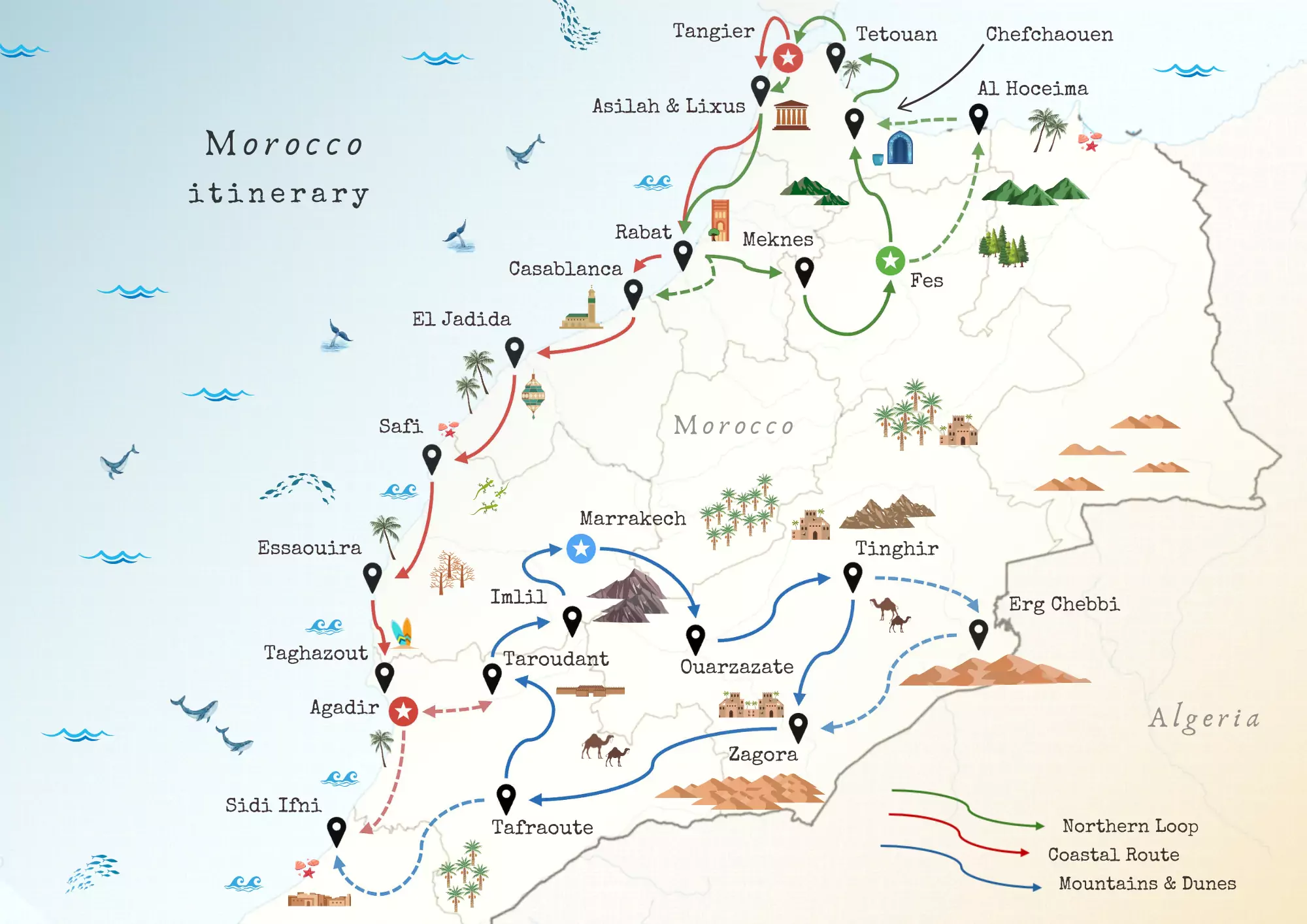
Table of Contents
- Cities in Morocco: Introduction
- Cities in Morocco: Marrakech — The Red City
- Cities in Morocco: Fès — The Spiritual Capital
- Cities in Morocco: Chefchaouen — The Blue Pearl
- Cities in Morocco: Essaouira — The Wind City
- Cities in Morocco: Casablanca — The Modern Metropolis
- Cities in Morocco: Rabat — The Elegant Capital
- Cities in Morocco: Agadir — The Atlantic Resort
- Cities in Morocco: Tangier, Meknès and Beyond
- Cities in Morocco: Planning Your Journey
Introduction
Cities in Morocco represent one of the most extraordinary and most diverse collections of urban destinations available anywhere in the world — a kingdom whose major cities span more than a thousand years of architectural history, half a dozen distinct cultural traditions, three different coastlines, and an extraordinary range of geographic and atmospheric character that makes each Moroccan city genuinely and fundamentally different from every other.
Cities in Morocco are not interchangeable stops on a generic North African itinerary. Marrakech is sensory overload and imperial grandeur. Fès is medieval Islamic civilization preserved in living amber. Chefchaouen is mountain serenity painted in extraordinary blue. Essaouira is Atlantic wind and salt-bleached walls and Gnawa music. Casablanca is modern Moroccan ambition expressed in Art Deco and Islamic architecture on a continental scale. Rabat is elegant, unhurried, and genuinely underrated. Agadir is sunshine, surf, and the best beach in Morocco. Tangier is literary history and the meeting point of continents. Each of the cities in Morocco tells a completely different story about what this extraordinary kingdom is and what it has been throughout its more than 2,000 years of continuous civilization.
In 2026, the cities in Morocco are more accessible, better documented, and better supported by tourism infrastructure than at any previous point in the kingdom’s history. Morocco’s preparation for the 2030 FIFA World Cup has driven significant investment across every major urban center — new transport links, restored heritage sites, improved accommodation, and expanded cultural facilities that make the cities in Morocco more rewarding to experience than ever before.
This guide covers every major city in Morocco — its essential character, its finest attractions, its best accommodation options, and the practical visitor information that makes the difference between a good trip and an unforgettable one in 2026.
Before exploring the specific cities in Morocco, get the complete country overview by reading our comprehensive Morocco country guide and our Morocco tourism guide — the most thorough resources available for understanding Morocco as a whole before diving into its individual urban destinations.
Cities in Morocco: Marrakech — The Red City
Marrakech is the most internationally famous of all the cities in Morocco — a destination whose reputation for sensory intensity, architectural magnificence, and cultural vitality has made it one of the world’s great travel cities for generations and continues to deliver on every aspect of that extraordinary reputation in 2026.
Why Marrakech Is the Essential Starting Point
Of all the cities in Morocco, Marrakech is the one that most immediately and most completely announces what Morocco is — the medina’s UNESCO World Heritage labyrinth, the legendary Djemaa el-Fna square, the ancient souks, the Bahia Palace, the Ben Youssef Madrasa, and the Majorelle Garden create a concentration of extraordinary experiences within a compact medina that no other single destination in the kingdom can match for sheer density of world-class cultural and architectural content.
Djemaa el-Fna — the UNESCO Intangible Cultural Heritage square at the medina’s heart — is one of the great public spaces on earth. By day it fills with orange juice vendors, acrobats, and henna artists. By evening it transforms into an open-air theatre of food stalls, musicians, storytellers, and magicians that has operated continuously for centuries and continues to operate with the same chaotic, joyful, irresistible energy that has made it the defining image of Morocco’s urban culture worldwide.
Key Attractions in Marrakech
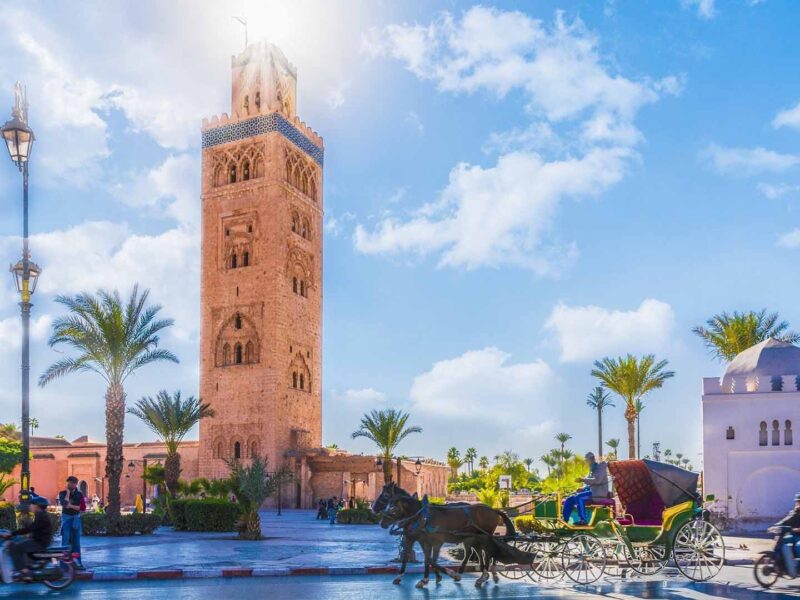
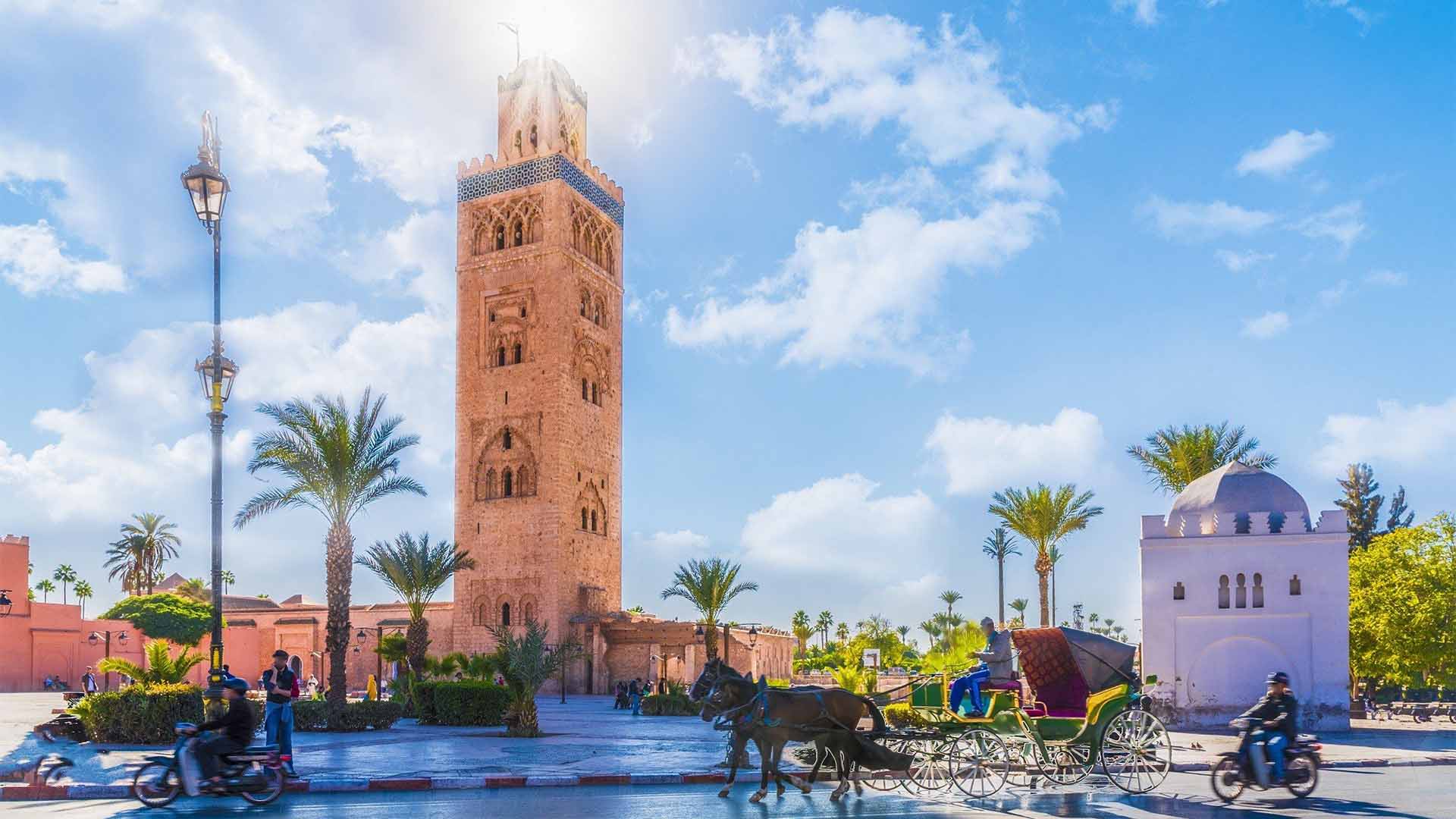
The Bahia Palace — a late 19th-century masterpiece of Moroccan palatial architecture featuring painted cedar ceilings and marble courtyards. The Ben Youssef Madrasa — a 16th-century Koranic school of breathtaking architectural refinement whose central courtyard is one of the finest interior spaces in the Islamic world. The Saadian Tombs — a 16th-century royal necropolis of extraordinary decorative magnificence. The Majorelle Garden — the cobalt-blue botanical paradise created by Jacques Majorelle and restored by Yves Saint Laurent. The Koutoubia Mosque — the 12th-century minaret that defines the Marrakech skyline.
Marrakech as a Base for Morocco Exploration
Among the cities in Morocco, Marrakech is uniquely positioned as a base for exploring the country’s most dramatic natural landscapes — the High Atlas Mountains rise 60 km to the south, the Sahara road begins beyond them, and the Atlantic coast from Essaouira to Agadir is accessible within 2.5–3 hours by road.
For a complete guide to Marrakech, read our dedicated Marrakech Morocco guide. For the finest road trip connection between Marrakech and the Atlantic coast cities, read our from Marrakech to Essaouira guide.
Best for: First-time Morocco visitors, culture and history lovers, food and souk enthusiasts, photographers, luxury riad experience seekers. Minimum stay: 3 days. Ideally 5.
cities in Morocco Marrakech Red City Djemaa el-Fna medina souks Koutoubia mosque
Cities in Morocco: Fès — The Spiritual Capital
Fès is the most profound and most intellectually demanding of all the cities in Morocco — a medieval Islamic city of such extraordinary completeness, historical depth, and cultural authenticity that it consistently redefines the expectations of visitors who arrive expecting great things and receive something greater.
Why Fès Is Unlike Any Other City in Morocco
Among the cities in Morocco, Fès occupies a completely unique position — it is not merely old, not merely well-preserved, not merely culturally significant. Fès el-Bali is the world’s largest car-free urban area and the most completely intact medieval Islamic city anywhere on earth — a 1,200-year-old living city whose 9,000 streets conceal a civilization still fully operational in its ancient form, where craftsmen in guild quarters still work by hand using techniques unchanged for centuries and where the Al-Qarawiyyin University — founded in 859 AD — continues to educate students in the oldest continuously operating educational institution in the world.
Key Attractions in Fès
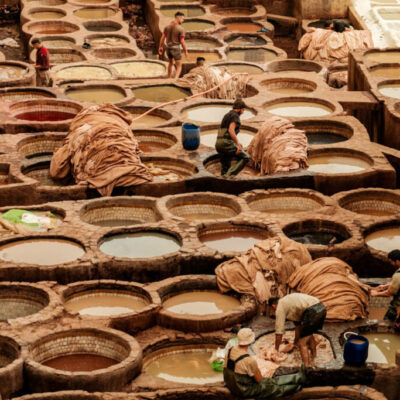
The Chouara Tannery — best viewed from rooftop leather shops above the circular dyeing vats, whose ancient colors create one of the most photographed scenes in all of Morocco’s cities. The Al-Qarawiyyin Mosque and University — the oldest university in the world, its courtyard accessible to non-Muslim visitors for exterior appreciation. The Bou Inania Madrasa — a 14th-century Islamic college of intricate tilework, carved cedarwood, and stucco of breathtaking refinement. The Nejjarine Museum of Wooden Arts and Crafts — housed in a beautifully restored 18th-century funduq. The Andalusian Quarter — across the river from the main medina, quieter and more residential in character.
Navigating Fès
Among all the cities in Morocco, Fès is the one that most benefits from guided exploration — the medina is genuinely disorienting even for experienced travelers, and the difference between a self-guided medina walk and a private full-day tour with a licensed scholar guide is the difference between surface observation and genuine cultural understanding. Hire a licensed guide for your first morning at minimum — the investment delivers dividends for every subsequent independent exploration.
Best for: History and architecture lovers, serious cultural travelers, photographers, anyone seeking the most authentic and challenging urban Morocco experience. Minimum stay: 2 days. Ideally 3.
Cities in Morocco: Chefchaouen — The Blue Pearl
Chefchaouen is the most visually distinctive of all the cities in Morocco — a Rif Mountain city whose medina of blue-washed buildings, cascading flowerpots, and dramatic mountain backdrop has made it one of the most photographed destinations in all of Africa and one of the most instantly recognizable cities in Morocco’s urban portfolio.
Why Chefchaouen Captivates Every Visitor
Among the cities in Morocco, Chefchaouen’s appeal is rooted in a combination of extraordinary visual beauty, mountain tranquility, and genuine cultural character that together create an atmosphere unlike any other in the kingdom. The medina’s palette — every shade of blue from deepest indigo to the palest sky — applied to walls, stairs, flowerpots, and doorways creates a visual harmony of extraordinary and immediately recognizable beauty. But Chefchaouen is far more than its famous aesthetics — the Rif Mountain hiking, the local cheese tradition, the relaxed artistic community, and the genuinely welcoming character of a city that has served as a historic mountain refuge all add dimensions that make extended stays richly rewarding.
Key Attractions in Chefchaouen
The blue medina — every street a photograph waiting to happen, every alleyway a composition of stairways, potted geraniums, and receding blue perspective. The Place Uta el-Hammam — the main square lined with cafés and the imposing 15th-century Grand Mosque. The Kasbah museum at the medina’s heart. The Spanish Mosque on the hill above the town — a 20-minute hike rewarded with panoramic views across the medina and the Rif Mountains. The Ras el-Maa waterfall at the medina’s eastern edge.
Best for: Photographers, Instagram-focused travelers, hikers, anyone seeking a relaxed mountain alternative to the intensity of Marrakech or Fès. Minimum stay: 1–2 days.
Cities in Morocco: Essaouira — The Wind City
Essaouira is the most atmospherically distinctive of the Atlantic coast cities in Morocco — a UNESCO World Heritage walled city whose character has been shaped by Atlantic wind, maritime trade, and centuries of cultural crossroads into something genuinely unique among all the cities in Morocco.
Why Essaouira Is Different from Every Other City in Morocco
Among the cities in Morocco, Essaouira occupies a completely distinctive position — smaller than Marrakech, less overwhelming than Fès, less visually extreme than Chefchaouen, but possessed of an atmospheric quality that is impossible to fully explain and impossible to fully forget. The salt-bleached white walls, the blue shutters, the cannon-lined Atlantic ramparts above the crashing ocean, the working fishing port, the thuya wood artisan workshops, and the extraordinary Gnawa music culture combine into a city experience of unique richness that rewards slow exploration and extended stays.
Key Attractions in Essaouira
The Skala de la Ville ramparts and Atlantic cannon battery — the most dramatically positioned defensive fortification among all the coastal cities in Morocco. The working fishing port and morning fish market. The thuya wood artisan quarter. The Place Moulay Hassan café culture. The beach and windsurfing/kite-surfing conditions. The Gnawa music that permeates the medina’s squares and tea houses.
For a complete guide to Essaouira and everything it offers, read our dedicated Essaouira Morocco guide and our comprehensive Essaouira what to do guide. For accommodation guidance, read our Essaouira hotels guide and our riad in Essaouira guide.
Essaouira also serves as the northern gateway for the extraordinary Atlantic coastal road south through Sidi Kaouki, Imsouane, and Taghazout to Agadir — one of the most beautiful coastal drives available from any of the cities in Morocco. For the complete coastal road guide, read our Essaouira to Imsouane road trip guide.
Best for: Art and culture lovers, seafood enthusiasts, windsurfers and kite-surfers, photographers, travelers seeking a relaxed alternative to the imperial cities in Morocco. Minimum stay: 2 days. Ideally 3.
Cities in Morocco: Casablanca — The Modern Metropolis
Casablanca is the most misunderstood of all the cities in Morocco — a modern commercial metropolis of over 4 million people that most travelers pass through on their way to more obviously photogenic destinations, yet that consistently surprises those who stop with a depth of architectural, culinary, and cultural experience that its reputation as merely a commercial hub entirely fails to convey.
Why Casablanca Deserves More Than a Transit Stop
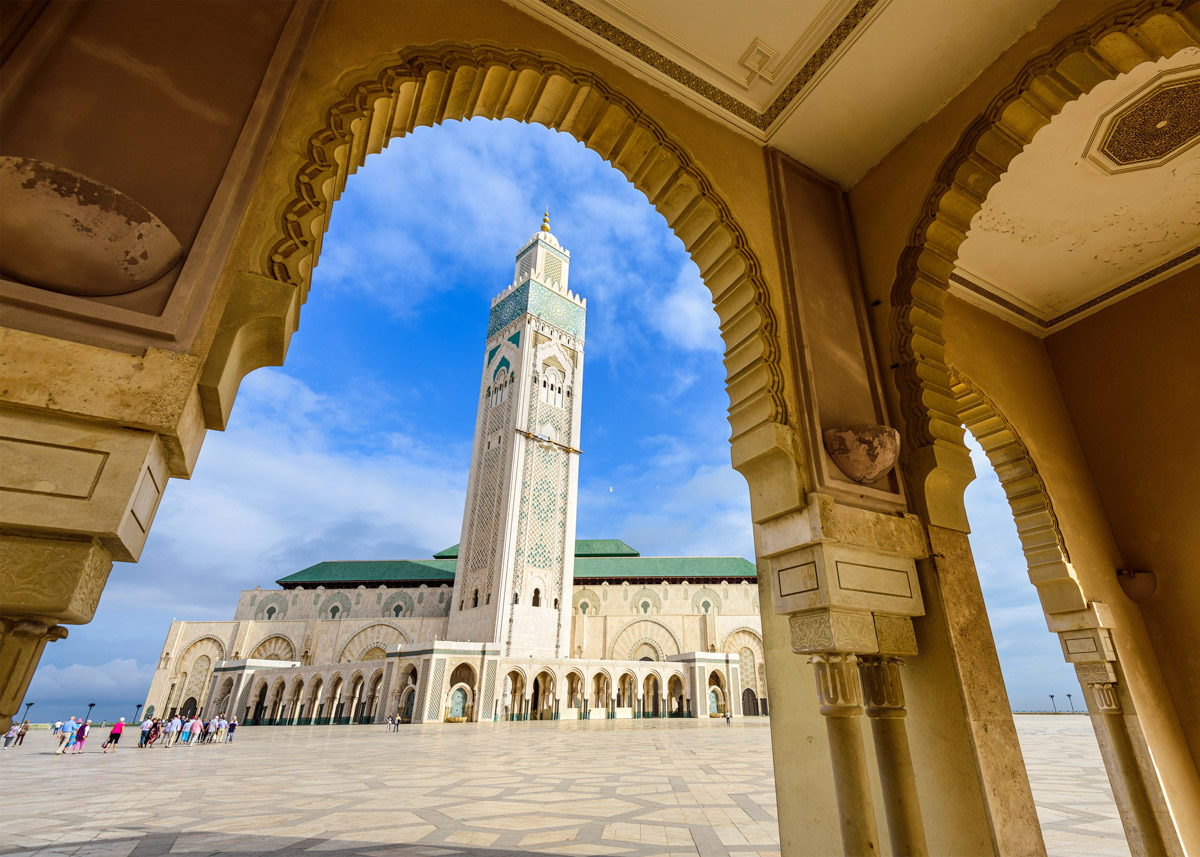
Among the cities in Morocco, Casablanca is the one whose gap between reputation and reality is widest — and most pleasingly in the visitor’s favor. The Hassan II Mosque — built partially over the Atlantic Ocean, accommodating 105,000 worshippers, its 210-metre minaret the tallest in the world — is genuinely one of the most technically and aesthetically remarkable buildings in contemporary Islamic architecture and one of the finest single attractions available among all the cities in Morocco.
The Art Deco architecture of Casablanca’s city center — produced during the French protectorate period by some of the finest architects of the early 20th century — is among the most significant Art Deco collections in the world outside Miami and Chicago. The Corniche seafront promenade, the Morocco Mall, and the vibrant contemporary restaurant scene complete a picture of a city whose modernity is as rewarding in its own way as the medieval heritage of the imperial cities in Morocco.
Key Attractions in Casablanca
The Hassan II Mosque — non-negotiable and genuinely extraordinary. The Art Deco walking circuit in the city center — centered on the Central Market, the Wilaya building, and the streets of Quartier Habous. The Corniche and its oceanfront cafés. The Old Medina — smaller and more accessible than any other medina in the major cities in Morocco. Rick’s Café — improbably delightful.
Best for: Architecture lovers, business travelers with free time, travelers seeking to understand modern Morocco, Art Deco enthusiasts. Minimum stay: 1 day.
cities in Morocco Casablanca Hassan II Mosque Art Deco Corniche modern Atlantic
Cities in Morocco: Rabat — The Elegant Capital
Rabat is the most underrated of all the cities in Morocco — a capital city of genuine elegance, historical depth, and modern sophistication that receives a fraction of the international tourist attention directed at Marrakech and Fès, creating an experience that is more relaxed, more authentically contemporary Moroccan, and in many respects more personally rewarding.
Why Rabat Rewards the Traveler Who Stops
Among the cities in Morocco, Rabat occupies a unique position as the country’s political, diplomatic, and cultural capital — a city where ancient medina and 12th-century fortress exist alongside modern ministries, contemporary art museums, and the elegant infrastructure of an internationally engaged national capital. The combination of all these layers in a single, manageable, pleasantly uncrowded city makes Rabat one of the finest and most underappreciated urban experiences available in Morocco.
Key Attractions in Rabat
The Kasbah of the Udayas — a 12th-century fortress overlooking the Atlantic and the Bou Regreg river estuary, with an Andalusian garden of extraordinary tranquility. The Hassan Tower — the unfinished minaret of a 12th-century mosque surrounded by the ruins of its prayer hall’s broken columns. The Mausoleum of Mohammed V — a masterpiece of modern Moroccan architecture and one of the finest 20th-century buildings among all the cities in Morocco. The Chellah — a Roman and medieval Islamic necropolis outside the city walls, overgrown with vegetation and inhabited by nesting storks.
Best for: History and architecture lovers, travelers seeking a less crowded alternative to the major imperial cities in Morocco, those interested in modern Moroccan political and cultural life. Minimum stay: 1–2 days.
Cities in Morocco: Agadir — The Atlantic Resort
Agadir is the most resort-oriented of all the cities in Morocco — a modern beach city that was almost entirely destroyed by a catastrophic earthquake in 1960 and rebuilt from scratch in the decades that followed, creating Morocco’s finest sandy bay, excellent infrastructure, and year-round Atlantic sunshine in a destination that welcomes more European package tourists than any other of the cities in Morocco.
Why Agadir Is More Than a Beach Resort
Among the cities in Morocco, Agadir is the one whose reputation most significantly undersells the surrounding destination. The city itself is genuinely pleasant — the 9 km beach is the finest urban beach in Morocco, the Souk El Had is one of the largest traditional markets in the country, and the Agadir Oufella ruins on the hilltop above the city provide panoramic coastal views of extraordinary scale.
But Agadir’s greatest asset is its position as the gateway to the extraordinary Atlantic surf coast north toward Taghazout, Imsouane, and Essaouira. For visitors using Agadir as a base for coastal exploration — combining the city’s resort amenities with day trips to Morocco’s finest surf and authentic coastal community destinations — it delivers the finest combination of convenience and adventure available among all the cities in Morocco.
For everything you need to know about Imsouane — the extraordinary bay village 70 km north of Agadir that represents the Atlantic coast’s finest destination — read our comprehensive Imsouane bay guide. For investment opportunities around Agadir, read our guide to buying land in Agadir.
Key Attractions in Agadir
The Agadir beach and Corniche promenade. Souk El Had — one of the largest traditional markets in Morocco. The Agadir Oufella ruins and panoramic hilltop views. The Agadir Museum of Amazigh Culture. Day trips north to Taghazout, Imsouane, and Essaouira. Day trips inland to the Souss-Massa National Park.
Best for: Families, beach lovers, surfers using Agadir as a hub for the Atlantic surf coast, travelers seeking resort amenities with easy access to authentic Morocco. Minimum stay: 2 days as a base. More for day trip exploration.
Cities in Morocco: Tangier, Meknès and Beyond
Beyond the headline cities in Morocco covered above, several additional destinations deserve specific mention for visitors planning comprehensive Morocco city itineraries.
Tangier — Where Africa Meets Europe
Tangier is among the most dramatically positioned of all the cities in Morocco — sitting at the crossroads of the Atlantic and Mediterranean, Africa and Europe, with the Spanish coast visible 14 km across the Strait of Gibraltar and a unique history of international intrigue, literary bohemianism, and cultural collision that has attracted William Burroughs, Paul Bowles, Tennessee Williams, and Henri Matisse.
The Kasbah museum, the Grand Socco market square, the American Legation Museum (the oldest American diplomatic property in continuous use anywhere in the world), and Cape Spartel lighthouse — where the Atlantic and Mediterranean visibly meet — make Tangier one of the most intellectually stimulating of all the cities in Morocco. The ferry connection to Tarifa, Spain makes Tangier uniquely accessible for visitors entering or exiting Morocco overland from Europe.
Meknès — The Forgotten Imperial City
Meknès is the most undervisited and most underrated of Morocco’s four imperial cities — a destination whose extraordinary Bab Mansour gate, Heri es-Souani royal granaries, and proximity to the Roman ruins of Volubilis (UNESCO World Heritage Site, 33 km from the city center) make it one of the finest full-day stops among the imperial cities in Morocco. The Meknès medina is less touristy and more authentic than Fès or Marrakech — making it an excellent introduction to medina life for visitors who find the more famous medinas overwhelming.
Ouarzazate — Gateway City to the Sahara
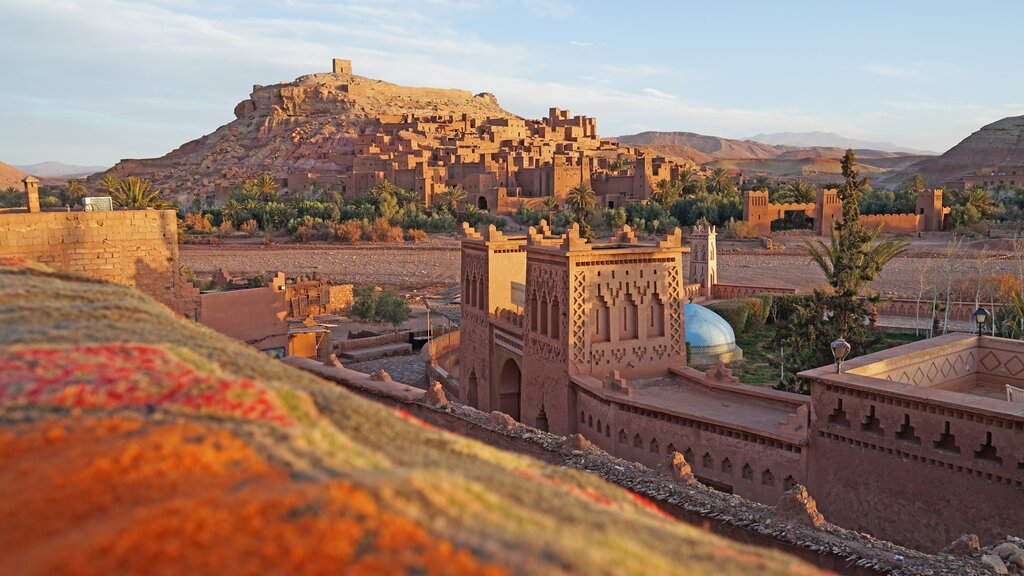
Ouarzazate occupies a unique position among the cities in Morocco as the primary gateway to the Saharan south — the Atlas Film Studios (the largest in Africa), the Taourirt Kasbah, and the extraordinary 30-km day trip to Aït Benhaddou UNESCO kasbah make Ouarzazate an essential overnight stop on any Marrakech-to-Sahara itinerary. Known internationally as the Hollywood of Africa, Ouarzazate has appeared as a filming location in Lawrence of Arabia, Gladiator, Game of Thrones, and dozens of other major productions.
Smaller Atlantic Coast Destinations
Beyond the major cities in Morocco, several smaller Atlantic coast communities deserve specific recognition among travelers exploring the southern Atlantic corridor. Imsouane — approximately 70 km north of Agadir — is not technically a city but is the most extraordinary Atlantic coast destination in Morocco, combining the legendary right-hand surf bay, authentic Berber fishing village character, and ancient argan forest setting into an experience that rivals any of the major cities in Morocco for depth of travel reward.
For a complete guide to Imsouane and all it offers beyond the major cities in Morocco, read our articles on the 15 best things to do in Imsouane, reasons to visit Imsouane, and our comparison guide to Imsouane vs Taghazout.
For a complete guide to all of Morocco’s finest urban destinations in a single resource, read our must-visit cities in Morocco guide.
cities in Morocco Tangier Meknes Ouarzazate Imsouane Atlantic beyond imperial
Cities in Morocco: Planning Your Journey
How to Connect the Cities in Morocco
The cities in Morocco are connected by an improving and increasingly comprehensive transport network that makes multi-city itineraries genuinely practical without a rental car — though car hire remains the most flexible and most rewarding option for visitors who want to fully experience the landscapes between the cities.
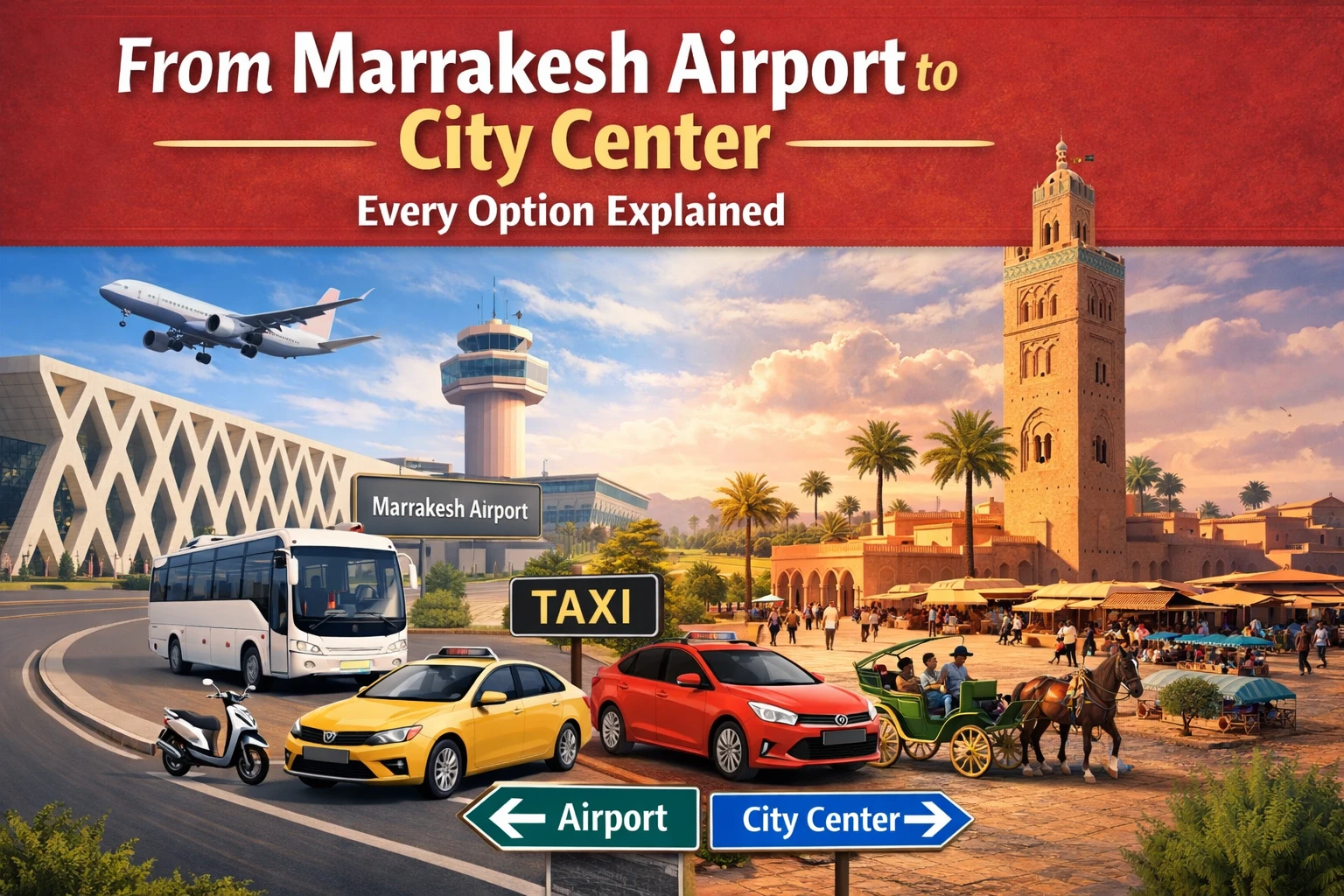
The ONCF national railway connects Casablanca, Rabat, Meknès, Fès, and Marrakech with comfortable, affordable, and reliable services. The Al Boraq high-speed train connects Casablanca to Tangier in just over two hours — one of the finest rail experiences available among the cities in Morocco. CTM and Supratours long-distance buses serve destinations not covered by rail — including Agadir, Essaouira, Chefchaouen, Ouarzazate, and the southern Atlantic coast.
Suggested Cities in Morocco Itineraries
One week — Best of the Imperial Cities: Marrakech (3 nights), day trip to Atlas Mountains or Saharan road, Fès (2 nights), Chefchaouen (1 night), return via Rabat.
Two weeks — Imperial Cities plus Atlantic Coast: Casablanca (1 night), Rabat (1 night), Meknès (1 night), Fès (2 nights), Chefchaouen (1 night), Marrakech (2 nights), Essaouira (2 nights), Imsouane (2 nights), Agadir departure. For the complete coastal road planning resource connecting the Atlantic cities in Morocco, read our Morocco road trip guide.
Three weeks — Complete Morocco: All of the above plus 3 nights Sahara desert circuit via Ouarzazate, Aït Benhaddou, and Erg Chebbi — completing the full Morocco experience that encompasses every major region and every distinct landscape type the kingdom contains.
Best Time to Visit the Cities in Morocco
The finest season for exploring the cities in Morocco is autumn — specifically October — when temperatures are comfortable across all urban destinations, the imperial city medinas are manageable without summer heat, and the Atlantic coast cities benefit from ideal surf conditions and balanced crowd levels. Spring (March–May) is equally excellent. For a complete seasonal guide covering every city in Morocco, read our best time to visit Morocco guide.
Budget for the Cities in Morocco
The cities in Morocco vary significantly in cost — Marrakech and Fès are the most expensive for tourist-facing experiences and quality accommodation. Meknès, Rabat, and Tangier offer better value for comparable quality. Agadir and the Atlantic coast cities offer the finest value for beach and surf accommodation. For complete budget planning across all the cities in Morocco, read our Morocco travel cost and budget guide.
Entry Requirements for Visiting the Cities in Morocco
For a complete guide to passports, visas, health documentation, and customs regulations for visiting Morocco, read our dedicated Morocco travel requirements guide.
Things to Do Across the Cities in Morocco
For the most comprehensive guide to activities and experiences across every city in Morocco and beyond, read our Morocco things to do guide and our complete things to do in Morocco guide.
External resource: Official Morocco Tourism — City Guides
External resource: UNESCO World Heritage Sites Across Morocco’s Cities
External resource: Morocco Travel Safety — UK Foreign Office
cities in Morocco planning itinerary transport budget best time practical guide 2026
Cities in Morocco Will Redefine Urban Travel for You
The cities in Morocco in 2026 constitute one of the world’s most extraordinary and most diverse collections of urban travel destinations — a kingdom whose major cities span more than a thousand years of architectural history, multiple cultural traditions, and an extraordinary range of geographic and atmospheric character that makes every city in Morocco genuinely and fundamentally different from every other.
From the overwhelming medina intensity of Marrakech to the medieval Islamic completeness of Fès. From the blue-washed tranquility of Chefchaouen to the Atlantic wind-character of Essaouira. From the modern metropolis ambition of Casablanca to the elegant understatement of Rabat. From the beach resort comfort of Agadir to the literary crossroads energy of Tangier — and beyond all the recognized cities in Morocco to the extraordinary Atlantic bay of Imsouane where the finest urban abstraction gives way to the most elemental and most authentic coastal community life available anywhere on the Moroccan coast.
Come to the cities in Morocco with time. With curiosity. With the willingness to be surprised by what exists behind medina walls, beyond canal facades, and around corners that no photograph has yet fully captured. The cities in Morocco will not disappoint. They will exceed every expectation — and generate the irresistible desire to return.
Have questions about the cities in Morocco or planning your perfect Morocco journey? Leave a comment below or explore our full collection of guides — including our Morocco country guide, Morocco tourism guide, Marrakech Morocco guide, must-visit cities in Morocco, Essaouira Morocco guide, Essaouira what to do guide, Essaouira hotels, riad in Essaouira, Imsouane bay guide, best time to visit Morocco, Morocco travel cost guide, Morocco travel requirements, Morocco road trip guide, Morocco things to do guide, luxury Morocco holidays, from Marrakech to Essaouira, and our complete Essaouira to Imsouane road trip guide — for everything you need to experience the cities in Morocco to their absolute fullest in 2026.
Comments