 By
By
Essaouira to Imsouane scenic coastal road trip Morocco Atlantic 2026
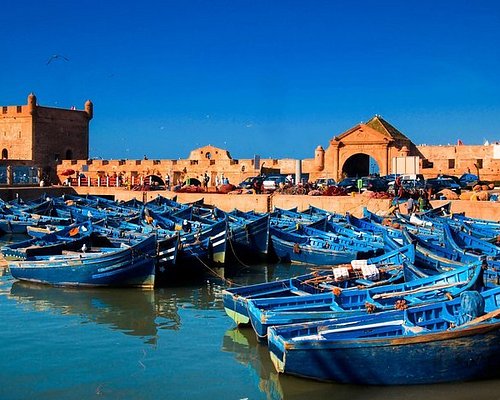
Table of Contents
- Essaouira to Imsouane: Why This Road Trip Is Special
- Essaouira to Imsouane: Route Overview and Distance
- Essaouira to Imsouane: Best Stops Along the Way
- Essaouira to Imsouane: Driving Tips and Road Conditions
- Essaouira to Imsouane: Getting There Without a Car
- Essaouira to Imsouane: What to See in Essaouira First
- Essaouira to Imsouane: What Awaits You at the End
- Essaouira to Imsouane: Where to Stop Overnight
- Essaouira to Imsouane: Best Time to Make the Journey
- Essaouira to Imsouane: Practical Travel Tips
Essaouira to Imsouane is one of the most beautiful and most rewarding coastal road trips available anywhere in North Africa. The route follows Morocco’s southern Atlantic coastline southward from one of the continent’s most beloved walled cities to one of its most extraordinary surf bays — approximately 80 km of dramatic cliff scenery, ancient argan forest, wild Atlantic beaches, and traditional Berber fishing villages connected by a road that deserves to be driven slowly, with windows open and no particular rush to arrive.
The Essaouira to Imsouane journey takes approximately 90 minutes to two hours by direct road — but the travellers who enjoy it most are those who allow half a day or a full day for the drive, stopping at the surf town of Sidi Kaouki, the wild beaches south of Cap Sim, and the traditional fishing communities that dot the coastline between the two great destinations at either end.
In 2026, this road trip is more accessible than ever. The coastal route has been upgraded and improved in sections, new accommodation options have appeared in previously overlooked villages along the way, and the growing international recognition of both Essaouira and Imsouane as world-class destinations has made the journey between them one of Morocco’s most documented and most recommended coastal drives.
This guide covers everything you need to plan and execute the Essaouira to Imsouane road trip — the route, the stops, the driving conditions, the accommodation options, the practical logistics, and the insider knowledge that transforms a pleasant drive into an unforgettable journey.
Before diving into the specifics of the Essaouira to Imsouane route, get the full picture of Morocco’s Atlantic coast road trip possibilities by reading our complete Morocco road trip guide — the most comprehensive resource available for planning any self-drive journey along Morocco’s extraordinary coastline.
Essaouira to Imsouane: Why This Road Trip Is Special
The Essaouira to Imsouane road trip is special not because it is particularly long or particularly challenging — it is neither — but because of the specific quality of the landscape it traverses and the extraordinary contrast between the two destinations at either end.
Two World-Class Destinations Connected by Wilderness
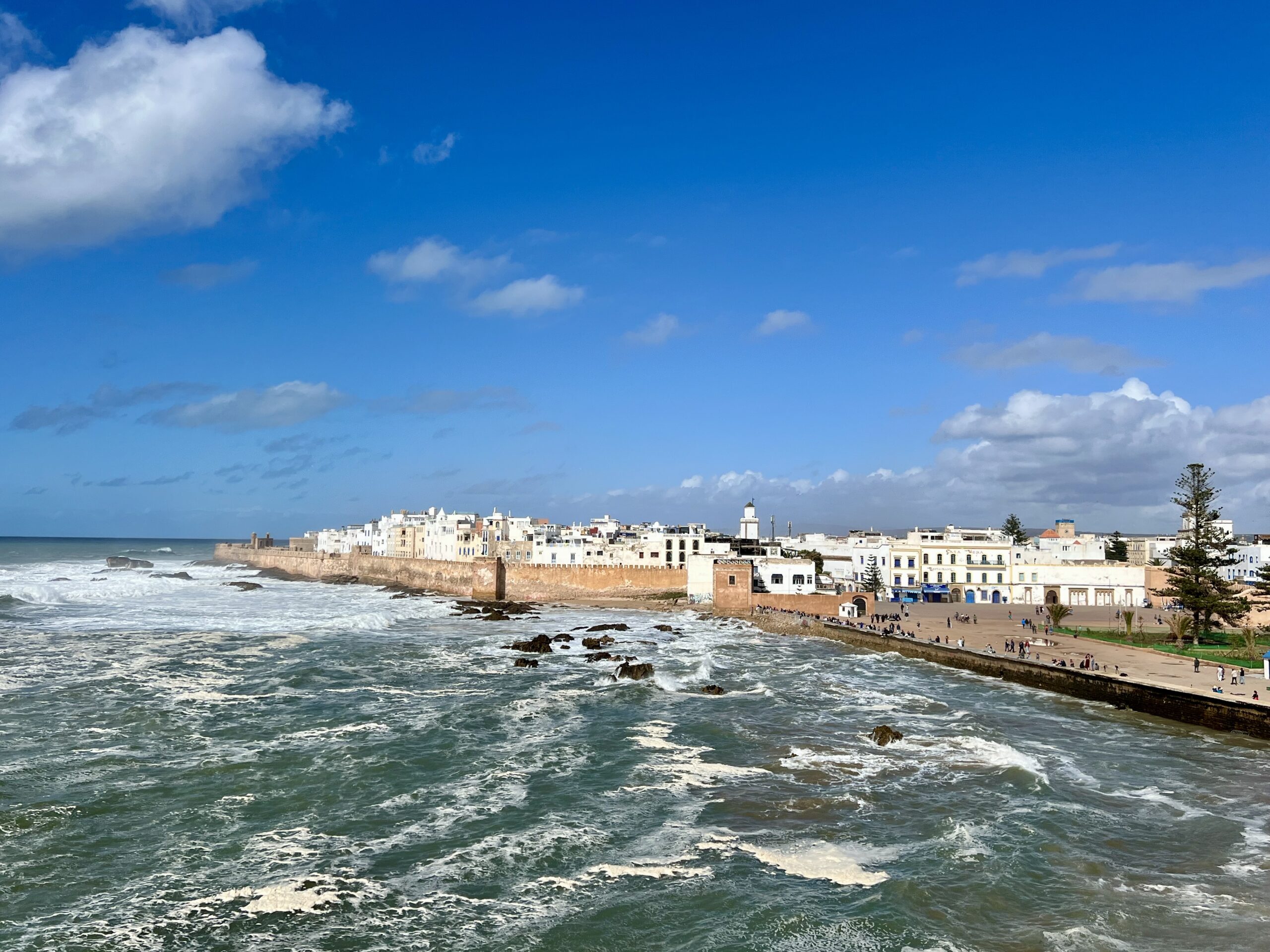
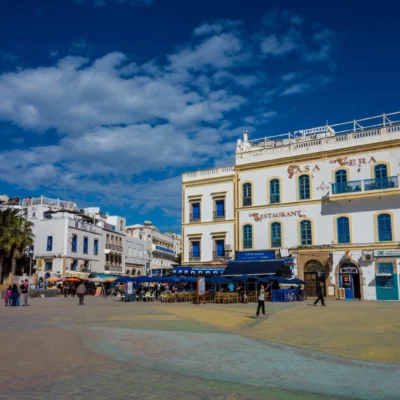
Essaouira is one of Morocco’s most architecturally and culturally magnificent coastal cities — a UNESCO-listed medina of blue-and-white buildings, wind-battered Atlantic ramparts, a thriving arts and craft scene, and a history of cultural crossroads that has attracted Jimi Hendrix, Orson Welles, and generations of artists and writers to its windswept streets. It is a city of layers and depth that rewards days of exploration.
Imsouane is Essaouira’s opposite in almost every way — not a city but a village, not elaborate but elemental, not about architecture and culture but about the raw relationship between a Berber fishing community and the Atlantic Ocean that has sustained it for generations. The bay, the wave, the harbor fish grill, the argan forest behind the village — Imsouane’s qualities are natural and ancient rather than constructed and cultural.
The road between them — the Essaouira to Imsouane coastal route — connects these two extraordinary and contrasting destinations through a landscape of dramatic transition. Argan forest gives way to coastal cliff, cliff gives way to wild Atlantic beach, beach gives way to fishing village, village gives way to open ocean headland. Every 10 km offers a completely different relationship between land and sea.
The Argan Forest Corridor
One of the most distinctive qualities of the Essaouira to Imsouane route is the argan forest that lines both sides of the inland sections of road. The Arganeraie Biosphere Reserve — the only place on earth where argan trees grow naturally — covers the hillsides and plains between Essaouira and Agadir in a landscape of ancient, drought-resistant trees that creates an atmosphere unlike any other road in Morocco. Driving through the arganeraie at dawn or dusk, with the low light filtering through the silver-green canopy and goats perched improbably in the upper branches, is one of the most uniquely Moroccan driving experiences available anywhere in the country.
For everything you need to know about Imsouane as a destination and the argan forest culture that surrounds it, read our complete Imsouane bay guide.
Essaouira to Imsouane road trip argan forest coastal Morocco Atlantic drive
Essaouira to Imsouane: Route Overview and Distance route
The Essaouira to Imsouane route follows the N1 national road south from Essaouira before connecting to the coastal road that hugs the Atlantic through Sidi Kaouki and the Haha coast to the Imsouane junction.
Key Route Facts
Total distance: Approximately 80–85 km depending on the exact route taken.
Driving time: 90 minutes to 2 hours direct. Allow 3–5 hours for a leisurely journey with stops.
Road quality: Generally good on the main N1 sections. The coastal road through Sidi Kaouki and toward Cap Sim is paved but narrower and slower. The final descent to Imsouane village is a winding paved road that requires care but presents no serious difficulty for a standard vehicle.
Terrain: Flat coastal plain south of Essaouira, gradually becoming more dramatic as the road approaches the Haha coast cliffs north of Imsouane.
The Two Main Route Options
Option 1 — The Coastal Route (Recommended) Leave Essaouira south on the coastal road toward Sidi Kaouki and Cap Sim. This route is longer and slower than the inland option but offers dramatically superior scenery — Atlantic cliffs, wild beaches, argan forest, and traditional fishing villages that reward every extra minute of driving time.
Option 2 — The N1 Inland Route The N1 national road provides the fastest and most direct Essaouira to Imsouane connection — passing through the argan forest plains inland from the coast before joining the coastal road at the Imsouane junction. This route is better for travellers making the journey in poor weather or with limited time.
The coastal option is strongly recommended for any traveller making the Essaouira to Imsouane journey for the first time — the scenery justifies every extra minute of travel time and the stops along the way are among the finest on the entire Moroccan Atlantic coast.
Essaouira to Imsouane: Best Stops Along the Way
The stops along the Essaouira to Imsouane coastal route are among the finest arguments for driving this journey slowly rather than rushing to the destination.
Stop 1 — Sidi Kaouki (25 km South of Essaouira)
Sidi Kaouki is the first and most rewarding stop on the Essaouira to Imsouane coastal journey — a small beach village approximately 25 km south of Essaouira that has developed from a deserted Atlantic outpost into one of Morocco’s most beloved kite-surfing and windsurfing destinations.
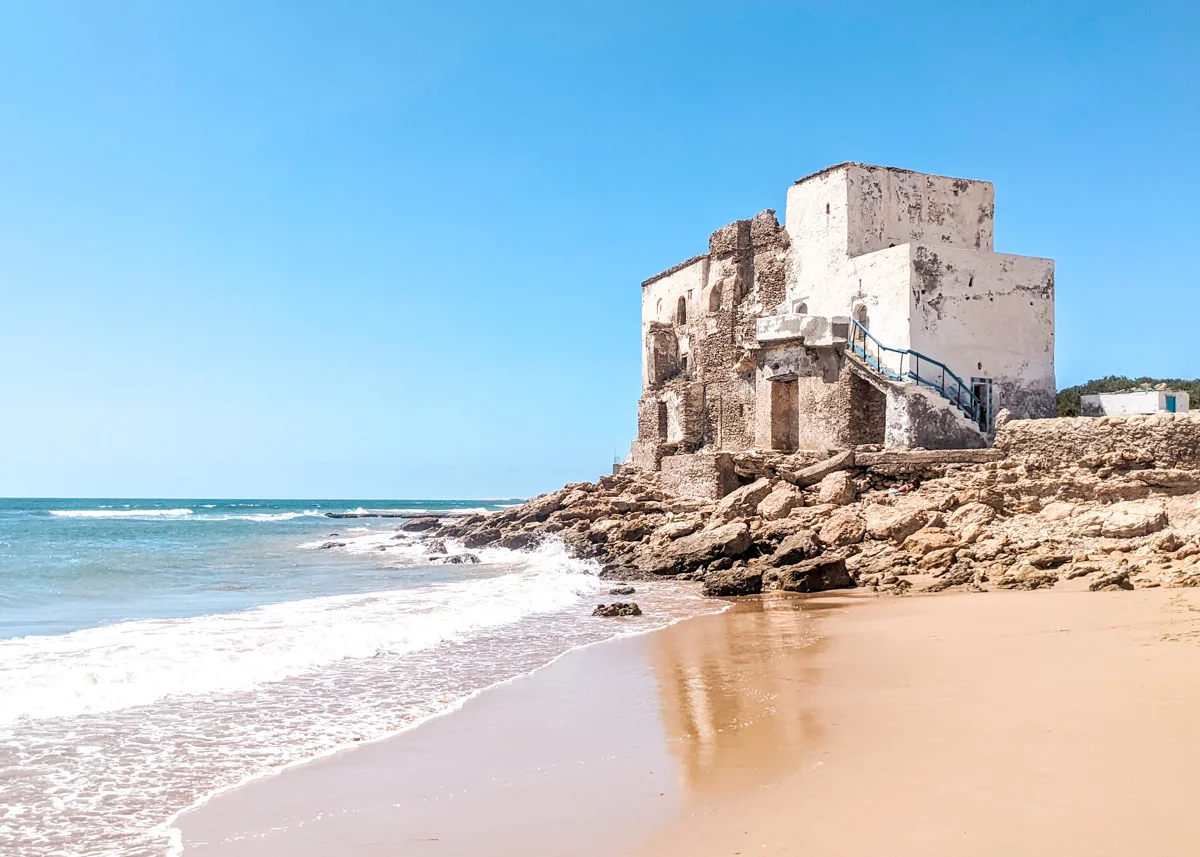
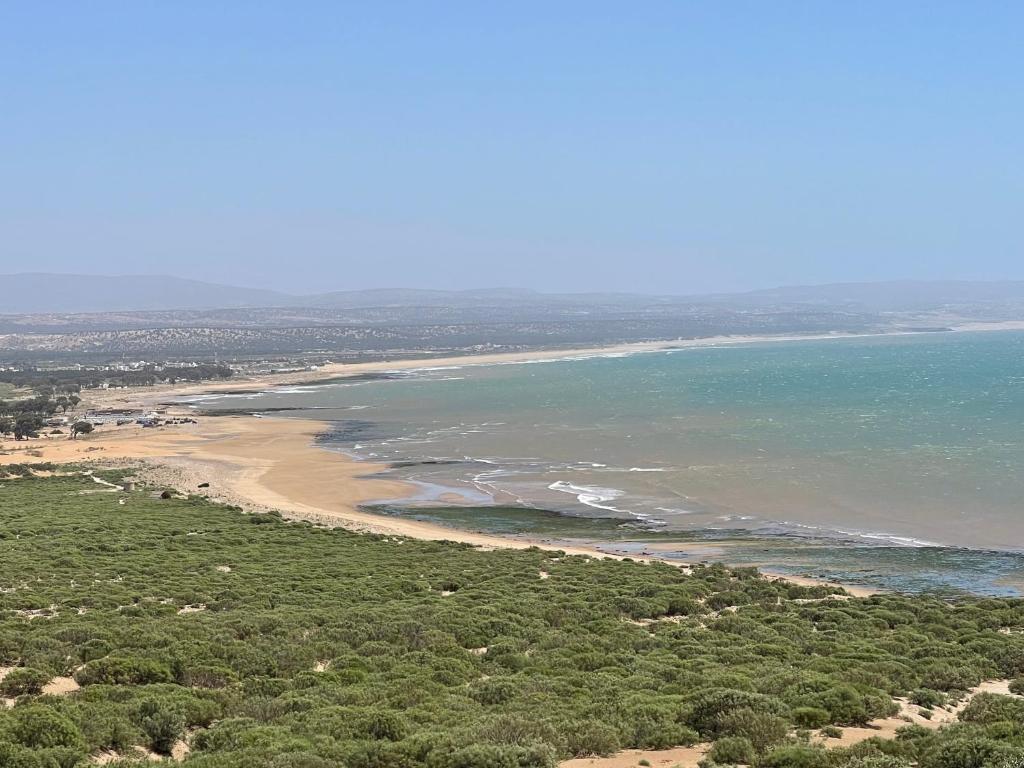
The beach at Sidi Kaouki is long, wild, and powerful — a sweeping arc of Atlantic sand backed by low dunes and argan scrub, with the small white dome of the Sidi Kaouki marabout shrine at the north end providing the visual anchor for one of the most photogenic beach compositions on the entire Moroccan coast. The surf here is strong and consistent — predominantly beach break conditions that suit experienced surfers and attract kite surfers from across Europe.
A small but good selection of guesthouses and surf cafés has grown up behind the beach at Sidi Kaouki — making it an excellent option for an overnight stop on the Essaouira to Imsouane journey for travellers who want to break the drive and spend a night in this extraordinary location.
Distance from Essaouira: 25 km — approximately 35 minutes Worth stopping for: Wild beach, kite surfing, marabout shrine, dramatic Atlantic scenery
Stop 2 — Cap Sim and the Wild Coast
South of Sidi Kaouki, the coastal road passes through the Cap Sim headland — a dramatic rocky promontory where the Atlantic meets the Moroccan coast with particular force and beauty. The clifftop views from Cap Sim across the open ocean and back toward the distant outline of Essaouira are among the finest on the Essaouira to Imsouane route.
The beaches south of Cap Sim — largely empty, backed by argan scrub, and pounded by consistent Atlantic swell — are some of the wildest and least-visited surf beaches in Morocco. Several of these beaches have names known only to local surfers who discovered them years ago and have no particular desire to share them widely.
Distance from Essaouira: 35–40 km Worth stopping for: Clifftop views, wild empty beaches, dramatic Atlantic scenery
Stop 3 — Ounagha Village and Sunday Souk
The small village of Ounagha, located approximately 45 km south of Essaouira on the Essaouira to Imsouane route, hosts a lively Sunday weekly market that is one of the most authentic rural Berber souks on the Haha coast. If your journey falls on a Sunday, stopping for an hour at the Ounagha souk — fresh produce, spices, fabrics, live livestock, and street food — is one of the most culturally rewarding experiences available on the entire Essaouira to Imsouane drive.
Even outside souk day, Ounagha’s small center offers an excellent café stop for mint tea and msemen flatbread — and the village surroundings provide some of the finest argan forest walking available along the coastal route.
Distance from Essaouira: 45 km — approximately 55 minutes Worth stopping for: Sunday souk (Sundays only), mint tea stop, argan forest walk
Stop 4 — The Haha Coast Viewpoints
As the Essaouira to Imsouane route approaches the Haha coast — the stretch of dramatic cliff and cove scenery north of Imsouane — several roadside viewpoints offer spectacular vistas across the Atlantic that reward a five-minute stop. The geological drama of the Haha coast — dark volcanic basalt cliffs, turquoise Atlantic water, and the distant outline of Imsouane’s headland beginning to appear on the southern horizon — creates one of the most visually exciting final approaches of any coastal road trip in Morocco.
Distance from Essaouira: 65–75 km Worth stopping for: Dramatic coastal viewpoints, first glimpses of Imsouane bay
Stop 5 — The Imsouane Junction and Final Descent
The turn-off from the main coastal road down to Imsouane village is marked by a small sign and a winding descent of approximately 3 km through argan scrub and rocky hillside that gradually reveals the bay below in a series of breathtaking glimpses before the final arrival at the village. This descent is one of the finest arrival experiences on the entire Essaouira to Imsouane route — take it slowly, stop at the viewpoint halfway down, and give yourself time to absorb the first full view of the bay before continuing to the village.
Essaouira to Imsouane: Driving Tips and Road Conditions
For travellers making the Essaouira to Imsouane journey by rental car, understanding the road conditions and driving requirements is essential for a smooth and enjoyable experience.
Road Quality
The N1 national road between Essaouira and the Imsouane junction is paved, generally well-maintained, and suitable for any standard vehicle including small economy cars. The coastal route through Sidi Kaouki and along the Haha coast is narrower — single lane in some sections — but paved throughout and navigable without difficulty at reasonable speeds.
The final descent to Imsouane village is a winding paved road with some tight bends and occasional loose gravel at the edges. It is perfectly navigable in a standard vehicle but requires more care than the main road sections — particularly in wet weather when the surface can become slippery.
Speed and Driving Style
The coastal sections of the Essaouira to Imsouane route are not designed for speed. Narrow road widths, frequent blind corners, livestock on the road, and the distraction of extraordinary scenery at every turn all recommend a pace of 50–70 km/h maximum on coastal sections — and genuine slowness at the viewpoints and village passes.
Speed limits in Moroccan villages are typically 40–60 km/h and are increasingly enforced by speed cameras. Respect village speed limits consistently — they protect the communities and the livestock that share the road.
Livestock and Hazards
The most significant driving hazard on the Essaouira to Imsouane coastal route is livestock on the road — goats, donkeys, and occasionally camels are encountered regularly on rural sections. Drive with particular caution at dawn and dusk when animals are less visible and most active. Sound your horn gently when approaching blind corners in rural areas — a universally understood warning in Moroccan rural driving culture.
Fuel
Fill up in Essaouira before departing — there are limited fuel options on the coastal route between Essaouira and Imsouane. The village of Imsouane itself has no fuel station. The nearest reliable fuel supply south of the Imsouane junction is in the larger towns toward Agadir.
For complete Morocco driving advice and route planning guidance, read our Morocco road trip guide which covers road conditions, driving regulations, and fuel planning across the entire Atlantic coast route.
Essaouira to Imsouane driving tips road conditions Morocco coastal route Atlantic
Essaouira to Imsouane: Getting There Without a Car
For travellers making the Essaouira to Imsouane journey without a rental car, several public transport and shared taxi options are available — though none provides the flexibility and scenic freedom of driving the coastal route independently.
CTM Bus — Most Direct Public Transport Option
CTM — Morocco’s national long-distance bus operator — runs regular services between Essaouira and Agadir that follow the N1 inland route and pass through or near the Imsouane junction. The bus fare from Essaouira to the Imsouane junction costs approximately 50–70 MAD ($5–$7) and journey time is approximately 90 minutes. From the junction, a short local taxi or negotiated ride completes the final 3 km descent to the village.
Book CTM tickets in advance at Essaouira’s bus station or online at the CTM website — particularly important during peak season when buses fill quickly.
Shared Grand Taxi — Flexible and Affordable
Shared grand taxis operating from Essaouira’s main taxi station take passengers south toward Agadir on the N1 route, dropping off at junctions along the way. The fare to the Imsouane area junction costs approximately 40–60 MAD ($4–$6) per person. From the junction, onward transport to the village requires either a short wait for local transport or negotiating a direct ride for 20–40 MAD ($2–$4).
Grand taxis depart when full (typically 6 passengers) rather than on a fixed schedule — morning departures (7–10am) are most frequent and most reliable.
Private Transfer — Most Convenient Option
A private transfer from Essaouira directly to Imsouane village — arranged through your Essaouira accommodation, a local taxi driver, or a dedicated transfer service — costs approximately 300–450 MAD ($30–$45) for the whole vehicle. This option is the most convenient and most comfortable for travellers with luggage and surf equipment, and splits economically between two or more travellers.
Hiring a Car in Essaouira
Several car hire agencies operate in Essaouira — both international brands and local operators. Hiring a car in Essaouira for a one-way trip to Imsouane (with drop-off in Agadir or return) provides the full flexibility of the coastal route experience for approximately 300–500 MAD ($30–$50) per day. Always confirm one-way drop-off policies and fees before booking.
Essaouira to Imsouane: What to See in Essaouira First
Any traveller making the Essaouira to Imsouane journey should allow at least one full day — ideally two — in Essaouira before departing south. The city is one of Morocco’s finest and most rewarding destinations and deserves more than a rushed morning visit before hitting the coastal road.
The Medina and Ramparts
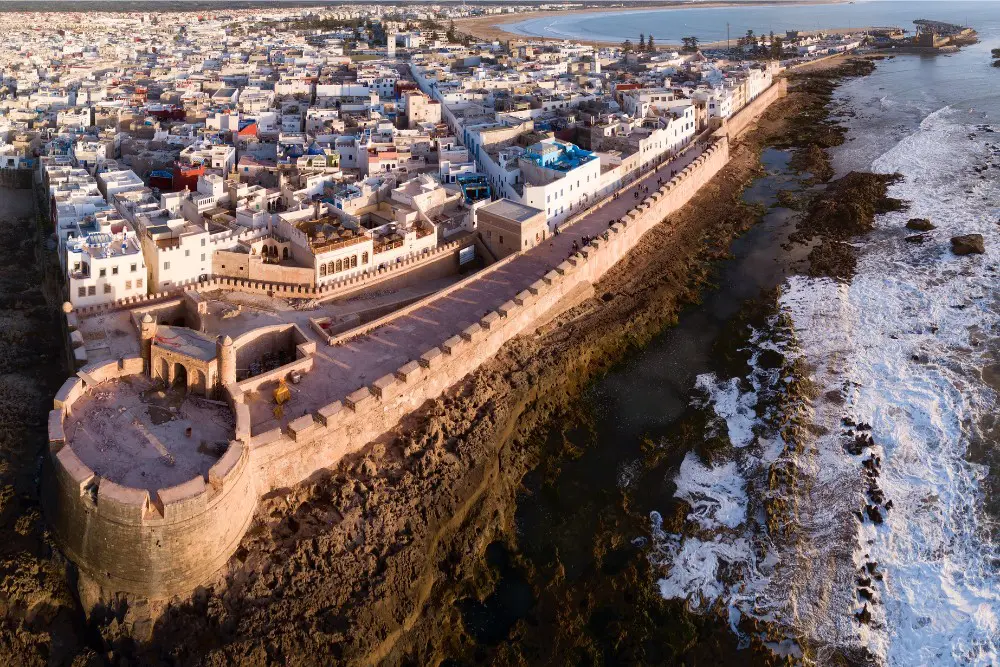
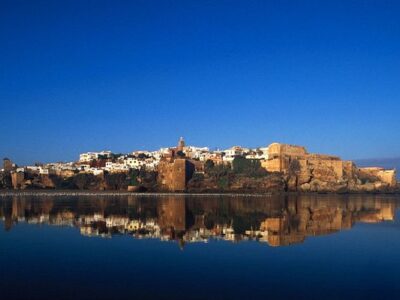
Essaouira’s UNESCO-listed medina is a masterpiece of 18th-century Portuguese-influenced Moroccan architecture — a walled city of blue-and-white buildings, arched gateways, and labyrinthine souks that feel genuinely different from the imperial cities of Fès and Marrakech. The ramparts — the Skala de la Ville and Skala du Port — offer extraordinary views across the Atlantic and are among the finest defensive fortifications on the African coast.
The Port and Fish Market
Essaouira’s working fishing port — one of the busiest on the Moroccan Atlantic coast — is an extraordinary spectacle of commercial maritime activity. The fish market beside the port entrance sells the morning’s catch in an energetic, colorful, and completely authentic environment that sets the culinary tone for the Essaouira to Imsouane journey — from Atlantic seafood at its finest in a famous coastal city to grilled sardines on a harbor wall at a remote bay village.
The Artisan Quarter
Essaouira is famous for its thuya wood artisans — craftsmen who work the aromatic, beautifully grained thuya root into boxes, frames, furniture, and decorative objects of remarkable quality. The artisan quarter near the Skala de la Ville is the finest place in Morocco to purchase thuya woodwork directly from the craftsmen who make it.
For a complete guide to Morocco’s broader travel landscape including Essaouira’s cultural context, read our guide to things to do in Morocco.
Essaouira to Imsouane: What Awaits You at the End
The arrival at Imsouane at the end of the Essaouira to Imsouane coastal journey is one of the finest travel arrivals on Morocco’s Atlantic coast — and understanding what awaits makes the journey feel more purposeful and more anticipated throughout the drive.
The Bay and the Wave
The first full view of Imsouane’s bay — from the viewpoint on the final descent into the village — is one of the most beautiful coastal panoramas in Morocco. The crescent of sheltered Atlantic water, the right-hand wave peeling along the point, the white village buildings cascading down the hillside, and the dark volcanic cliff of the headland framing the whole scene create a composition that justifies every kilometre of the Essaouira to Imsouane drive.
The Harbor Fish Grill
After the journey south, the harbor fish grill at Imsouane provides the perfect arrival meal — grilled sardines, khobz bread, and preserved lemon for 20–30 MAD ($2–$3), eaten on the harbor wall with the bay laid out before you and the smell of charcoal and salt air. No arrival meal anywhere in Morocco costs less or delivers more satisfaction.
The Village and Community
Imsouane’s Berber fishing village — authentic, welcoming, and unhurried — provides a complete contrast to Essaouira’s more developed and more complex urban character. The quiet intimacy of the village, the warmth of the community, and the elemental simplicity of life organized around tides and prayers and fishing creates an atmosphere that immediately rewards the Essaouira to Imsouane traveller who arrives open-minded and curious.
For everything you need to know about experiencing Imsouane to its fullest, read our complete guide to the 15 best things to do in Imsouane and our dedicated article on the culture and hidden gems of Imsouane Morocco.
Essaouira to Imsouane: Where to Stop Overnight
For travellers making the Essaouira to Imsouane journey as a multi-day road trip rather than a single-day drive, the coastal route offers several excellent overnight stop options.
Sidi Kaouki — Best Overnight Stop
Sidi Kaouki is the finest overnight stop on the Essaouira to Imsouane coastal route — a kite-surfing and surf village 25 km south of Essaouira with a small but quality selection of guesthouses and surf lodges ranging from budget rooms (150–250 MAD/$15–$25 per night) to comfortable mid-range surf lodges (400–700 MAD/$40–$70 per night). Spending a night at Sidi Kaouki breaks the journey beautifully and allows a morning session in the Atlantic swell before continuing south toward Imsouane.
Ounagha — Authentic Village Experience
For travellers seeking the most authentic and least touristy overnight experience on the Essaouira to Imsouane route, the village of Ounagha offers simple family guesthouses and a genuine rural Berber community atmosphere that is rarely encountered by travellers rushing between the two main destinations.
Imsouane — The Ultimate Destination
For most travellers, the Essaouira to Imsouane journey is best made as a single day drive with Imsouane as the multi-night destination rather than a single overnight stop. Arriving in Imsouane in the late afternoon, watching the sunset from the headland, eating at the harbor the following morning, and spending several days surfing, hiking, and absorbing the village atmosphere gives the journey the conclusion and the depth it deserves.
For everything you need to know about accommodation options and pricing in Imsouane, read our comprehensive Imsouane budget travel tips guide.
Essaouira to Imsouane overnight stops Sidi Kaouki guesthouse Morocco coastal
Essaouira to Imsouane: Best Time to Make the Journey
The Essaouira to Imsouane coastal road trip is rewarding in every season — but different seasons offer meaningfully different journey experiences.
Autumn — September to November (Best Overall)
Autumn is the finest season for the Essaouira to Imsouane road trip by almost every measure. Temperatures are warm and comfortable (22–27°C), Atlantic light is golden and clear, the argan forest is at its most atmospheric, and the coastal scenery between the two destinations is at its most vivid. Surf conditions at both Sidi Kaouki and Imsouane are building toward their autumn peak, making stops along the coastal route immediately rewarding for surfers.
October is the single finest month for this journey — clear days, warm evenings, good surf at every stop, and the villages along the route at their most authentic and least crowded.
Winter — December to February (Most Dramatic)
Winter brings the most dramatic atmospheric conditions to the Essaouira to Imsouane coastal route. Atlantic storms create powerful surf and dramatic wave energy along the entire coastline. The road itself is safe and well-drained but occasional heavy rain can make coastal sections temporarily slippery. Winter light along the Haha coast is extraordinary — low, clear, and intensely golden on fine days between storms. For photographers and surf enthusiasts, winter is the most visually spectacular season for this journey.
Spring — March to May (Most Beautiful Landscape)
Spring transforms the landscape of the Essaouira to Imsouane route — wildflowers cover the roadside verges, the argan forest puts on new growth, and the coastal hills turn briefly green before the summer sun returns them to their characteristic gold and ochre. The spring Essaouira to Imsouane drive is the most beautiful of any season for land-based scenery and is particularly recommended for photographers and nature-focused travellers.
Summer — June to August (Most Crowded)
Summer brings the most visitors and the warmest temperatures to the Essaouira to Imsouane coastal route. The road through Sidi Kaouki is at its most crowded in July and August. Temperatures are comfortable on the coast (24–30°C) thanks to the Atlantic trade winds that keep the Haha coastline cooler than Morocco’s interior. Surf is at its flattest of the year — not ideal for surfers but pleasant for swimmers and beach lovers.
For a complete seasonal guide to both destinations and the Atlantic coast between them, read our guide to the best time to visit Morocco and our dedicated article on the best time to visit Imsouane.
Essaouira to Imsouane: Practical Travel Tips
What to Bring for the Drive
Pack a light layer for morning and evening temperatures — even in summer, the Atlantic wind on the coastal cliffs can feel sharp. Bring sufficient water for the journey — 2 litres per person minimum — as stops with reliable drinking water are limited on the coastal route. Download offline maps (Google Maps or Maps.me) before departing — mobile data coverage is variable on the more remote coastal sections between Sidi Kaouki and the Imsouane junction.
Photography Stops
The Essaouira to Imsouane coastal route is one of the finest photography drives in Morocco. The best photography light is at sunrise (best from the Sidi Kaouki beach) and in the two hours before sunset (best from the Cap Sim headland and the Haha coast viewpoints). Keep a camera accessible rather than packed — the finest shots on this route appear suddenly and disappear quickly as the road rounds a corner and reveals a new Atlantic panorama.
Respect Local Communities
The villages along the Essaouira to Imsouane coastal route are traditional Berber Muslim communities. Drive carefully and considerately through village centers. Dress modestly when stopping in villages. Ask permission before photographing residents. Purchase food, fuel, and supplies from local shops rather than carrying everything from the city — spending money in these communities supports the local economies that maintain the authentic character that makes the Essaouira to Imsouane route so rewarding.
Cash
Bring sufficient cash for the journey. There are no ATMs between Essaouira and the Agadir area. Budget approximately 500–800 MAD ($50–$80) per person for the day — covering fuel, food stops, a guesthouse night at Sidi Kaouki if desired, and arrival costs at Imsouane.
External resource: Morocco Road Conditions and Travel Safety — UK Foreign Office
External resource: UNESCO Arganeraie Biosphere Reserve
External resource: Morocco Weather Forecasts — Météo Maroc
For complete Morocco trip planning covering the broader Atlantic coast and everything it offers, read our Morocco travel cost and budget guide and our guide to things to do in Morocco.
Essaouira to Imsouane practical travel tips Morocco road trip Atlantic 2026
Essaouira to Imsouane — Drive It Slowly
The Essaouira to Imsouane coastal road trip is one of those journeys that reveals itself most generously to the traveller who refuses to rush. The 80 km between these two extraordinary Atlantic destinations contain more beauty, more cultural depth, more wild ocean scenery, and more genuinely Moroccan experience per kilometre than almost any comparable coastal drive in North Africa.
Leave Essaouira after a slow morning in the medina. Stop at Sidi Kaouki for coffee and a look at the kite surfers. Pull over at Cap Sim for the view. Walk ten minutes into the argan forest near Ounagha and watch for goats in the trees. Stop at the Haha coast viewpoint as the road begins to descend toward Imsouane and take a full minute to absorb the view before continuing down to the bay.
Arrive at the harbor fish grill in time for lunch. Order the sardines. Sit on the harbor wall with the bay in front of you and the smell of charcoal and salt air all around. Let the journey settle.
This is the Essaouira to Imsouane road trip at its finest — and it is available to any traveller who chooses to drive it with attention, curiosity, and the willingness to arrive exactly when the road decides to deliver them.
Have questions about the Essaouira to Imsouane road trip or planning your Morocco coastal journey? Leave a comment below or explore our full collection of guides — including our Imsouane bay guide, best time to visit Imsouane, Imsouane budget travel tips, 15 things to do in Imsouane, culture and hidden gems of Imsouane, Imsouane surfing paradise, Imsouane vs Taghazout, why Imsouane is the best surf town in Morocco, reasons to visit Imsouane, buying land in Imsouane, best time to visit Morocco, and our complete Morocco road trip guide — for everything you need to experience Morocco’s most beautiful coastal journey to its absolute fullest.
Comments