 By
By
Imsouane surfing paradise Morocco hidden bay wave Atlantic coast 2026
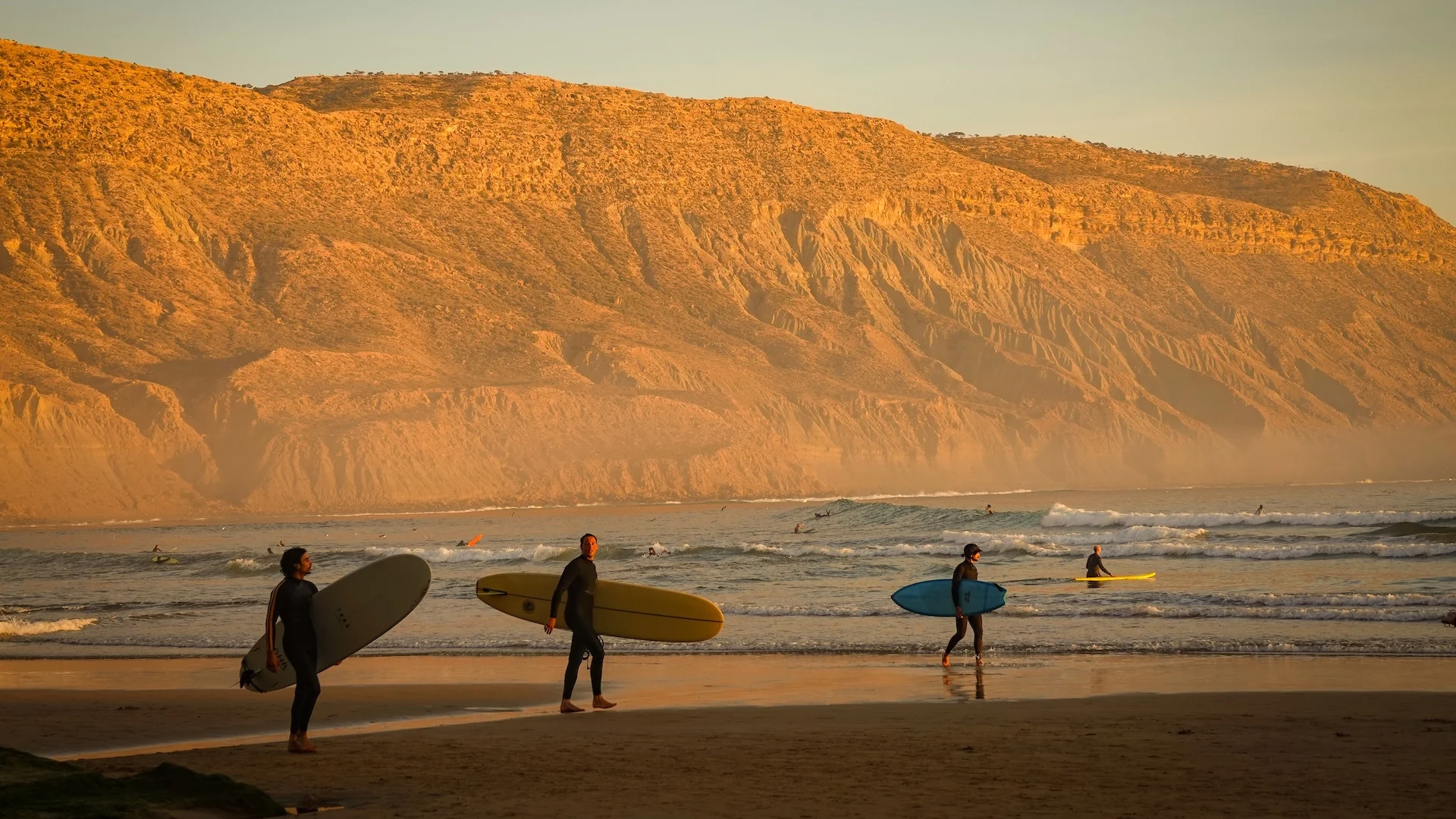
Table of Contents
- Imsouane Surfing Paradise: Why This Bay Is Special
- The Legend of Imsouane’s Surf Wave
- Imsouane Surfing Paradise: The Two Main Breaks
- Who Surfs Imsouane? Every Level Welcome
- Imsouane Surfing Paradise: Best Season for Waves
- Where to Stay in Imsouane
- Where to Eat in Imsouane
- Imsouane Surfing Paradise: Beyond the Waves
- Getting to Imsouane
- Travel Tips for Imsouane Surfing Paradise
Introduction
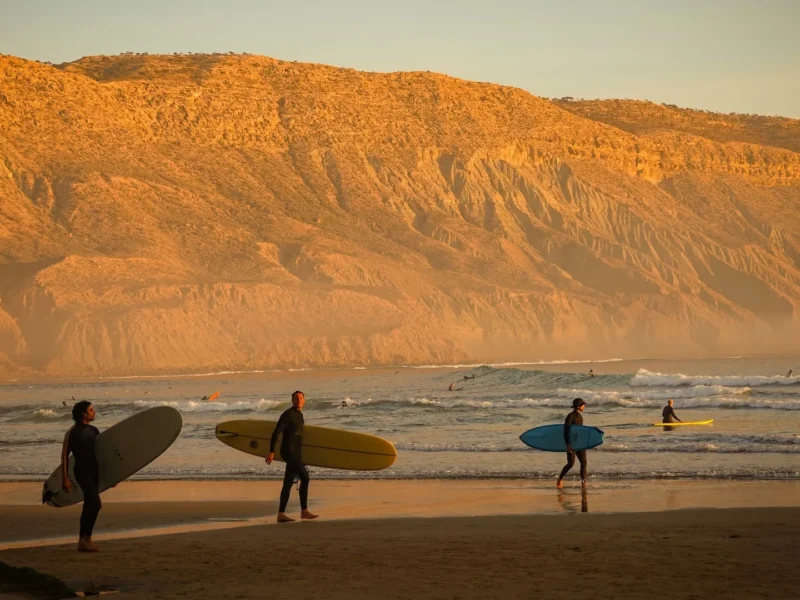
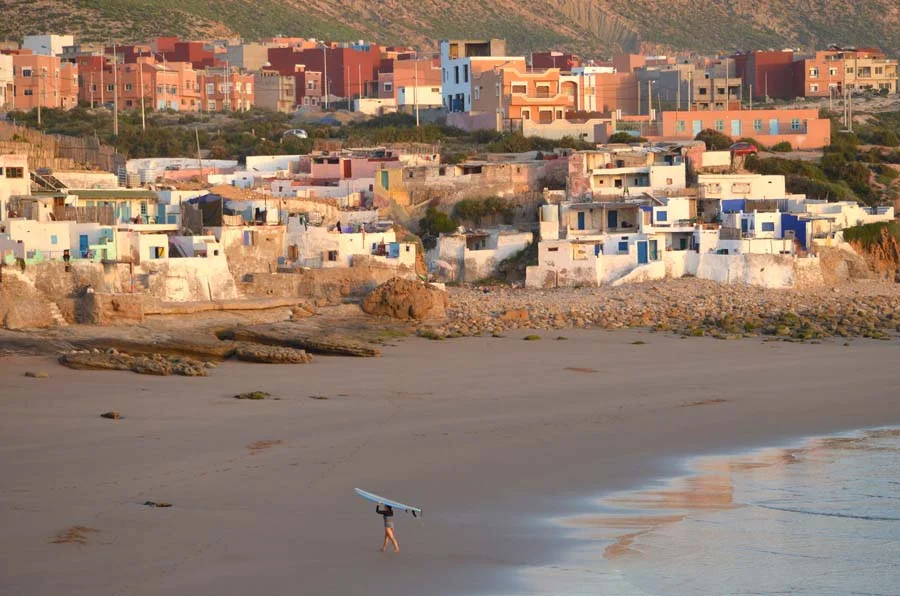
Imsouane surfing paradise is not a marketing slogan — it is a geographical fact backed by one of the most extraordinary natural wave formations on the African continent. Nestled inside a dramatic crescent bay approximately 70 km north of Agadir on Morocco’s southern Atlantic coast, Imsouane has earned its reputation as one of the world’s most beloved and most accessible surf destinations through the simple and irreplaceable virtue of its wave — a long, gently peeling right-hander that wraps around the rocky headland of Cap Imsouane and offers rides of up to 700 metres on the right day.
But Imsouane surfing paradise is about far more than just the wave. The village that has grown up around this extraordinary bay is one of the most authentic and culturally rich communities on Morocco’s Atlantic coast — a living Berber fishing village where the nets are still mended by hand at dawn, where fresh sardines are grilled on the harbor wall for less than $3, and where the rhythm of daily life is shaped by tides, prayers, and the ancient argan trees that cover the surrounding hillsides.
In 2026, Imsouane stands at a fascinating point in its evolution. International recognition is growing rapidly. New accommodation and restaurants are opening. The global surf media has declared Imsouane’s wave one of the finest beginner and intermediate surfing destinations in the world. And yet the village retains a genuine authenticity — a quality of place — that more developed surf destinations like Taghazout and Essaouira have partially traded away in their rise to international fame.
This guide covers everything you need to know about Imsouane surfing paradise — the wave, the village, the culture, the accommodation, the food, and the practical details that make the difference between a good trip and an unforgettable one.
Before exploring Imsouane specifically, get the full picture of Morocco’s extraordinary Atlantic surf coast by reading our complete guide to surfing in Morocco.
Imsouane Surfing Paradise: Why This Bay Is Special {#why-special}
Imsouane surfing paradise stands apart from every other surf destination on Morocco’s Atlantic coast for reasons that are rooted in geography, physics, and something harder to quantify — an atmosphere of place that combines natural grandeur with human warmth in a way that is genuinely irreplaceable.
The Geography of the Bay
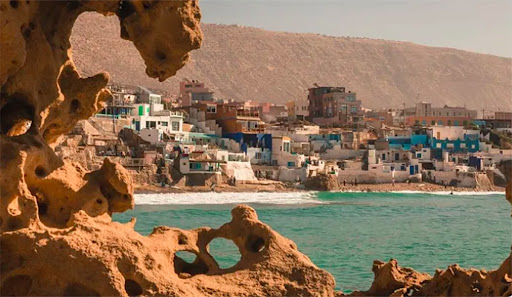
The bay at Imsouane is formed by the rocky promontory of Cap Imsouane — a dramatic headland that juts into the Atlantic and acts as a natural breakwater, sheltering the bay from the full force of open-ocean swell while simultaneously shaping and organizing incoming wave energy into the long, peeling right-hander that has made Imsouane famous.
This geographic accident — the precise angle of the headland relative to the dominant northwest Atlantic swell direction — creates a wave that breaks consistently, predictably, and gently enough for surfers of all levels to enjoy while still offering enough length, pace, and shape to satisfy experienced longboarders and intermediate shortboarders.
No human engineering could have designed a better learning and progression wave. Nature did it perfectly at Imsouane.
The Human Scale of the Village
Imsouane surfing paradise works not just because of the wave but because of the village that surrounds it. Unlike larger surf destinations where tourism infrastructure has overwhelmed the original community, Imsouane remains human-scaled — small enough to feel intimate, large enough to provide everything a traveller needs, and still genuine enough in its community character to feel like a real place rather than a surf resort.
For a complete understanding of what makes Imsouane special as a destination beyond its surf reputation, read our in-depth guide to the culture and hidden gems of Imsouane Morocco.
Imsouane: Morocco’s Hidden Surfing Paradise — Complete Guide 2026
The Legend of Imsouane’s Surf Wavelegend
The legend of Imsouane surfing paradise began in the early 2000s when the first international surfers — primarily French and Spanish travellers making their way down Morocco’s Atlantic coast — arrived at the bay and encountered a wave unlike anything they had expected to find in North Africa.
Word spread slowly at first through surf circles — whispered recommendations passed between traveling surfers, handwritten notes in dog-eared guidebooks, photographs that circulated through early surf forums before the age of Instagram. Each wave rider who discovered Imsouane became an ambassador for the place — sharing coordinates and directions with the specific generosity that the global surf community reserves for waves that genuinely deserve to be found.
What Makes the Wave Legendary
The Imsouane bay wave is legendary in the surfing world for several specific and verifiable reasons that distinguish it from the dozens of other Atlantic breaks along Morocco’s coast.
Length is the primary distinction. On a good swell day with the right tide and wind, the Imsouane right-hander peels continuously for 400–700 metres from the point of the headland down the length of the bay. This is exceptional by any global standard — most surf waves offer rides of 50–150 metres. At Imsouane, a single wave can carry a surfer for several minutes of unbroken riding — enough time to practice every maneuver in the repertoire, find a perfect flow state, or simply stand in cross-step longboard style and let the ocean do the work.
Consistency is the second distinguishing quality. The bay orientation and headland geometry mean that Imsouane’s wave works across a wide range of swell sizes and directions — from the small, gentle rollers of early autumn to the powerful long-period swells of January and February. There are more flat days here than at more exposed beach breaks, but when the swell is running, the wave delivers with extraordinary reliability.
Accessibility completes the legend. Unlike many world-class surf destinations where the best waves are guarded by heavy localism, powerful currents, or challenging paddle-outs, Imsouane’s bay wave is remarkably welcoming to surfers of all levels. The take-off zone is clearly defined, the wave breaks without dangerous sections, and the surfing community in the water is generally generous and patient — particularly with learners who are clearly trying hard and respecting the lineup.
Imsouane Surfing Paradise: The Two Main Breaks breaks
Imsouane surfing paradise actually encompasses two distinct surf breaks that offer very different experiences and suit different skill levels.
The Bay — Imsouane’s Legendary Right-Hander
The bay break is the heart of Imsouane surfing paradise and the wave that has built the village’s global reputation. It is a right-hand point break that fires along the inside of the bay from the rocky headland toward the sandy beach at the bay’s southern end.
Best conditions: Northwest swell at 1–2.5 metres, light offshore or cross-shore wind from the east or northeast, mid to high tide. The wave tends to close out and become less organized on swells above 3 metres.
Best for: Beginners, longboarders, intermediate surfers. The gentle take-off and long peeling sections make it the ideal progression wave for surfers developing their style, timing, and confidence.
Crowd factor: Moderate to high during peak seasons (October, July–August). Early morning sessions before 8am offer the most uncrowded conditions and the cleanest water surface before the sea breeze develops.
Cathedral Beach — The Power Break
On the southern side of Cap Imsouane headland — a ten-minute walk from the main village — Cathedral Beach offers a completely different surf experience. This is an exposed Atlantic beach break that receives the full force of incoming northwest swells without the sheltering effect of the headland.
Best conditions: Northwest swell at 1.5–3 metres, offshore wind, lower tide for the most powerful and hollow sections.
Best for: Intermediate and experienced surfers seeking more power, speed, and challenge than the bay wave provides. Cathedral Beach can produce genuinely excellent shortboard and fish waves when the swell and wind align correctly.
Crowd factor: Much lower than the bay — many visitors to Imsouane never make the short walk to Cathedral Beach, which means experienced surfers often find good waves with minimal competition.
For detailed information about surf conditions at both breaks across all seasons, read our complete guide to surfing Imsouane in winter — which covers swell patterns, tide timing, and what to expect in the water throughout the year.
Who Surfs Imsouane? Every Level Welcome who-surfs
One of the defining qualities of Imsouane surfing paradise is its extraordinary inclusivity across surf skill levels. Few surf destinations in the world can genuinely claim to offer world-class experiences to complete beginners and experienced surfers simultaneously — Imsouane is one of them.
Complete Beginners
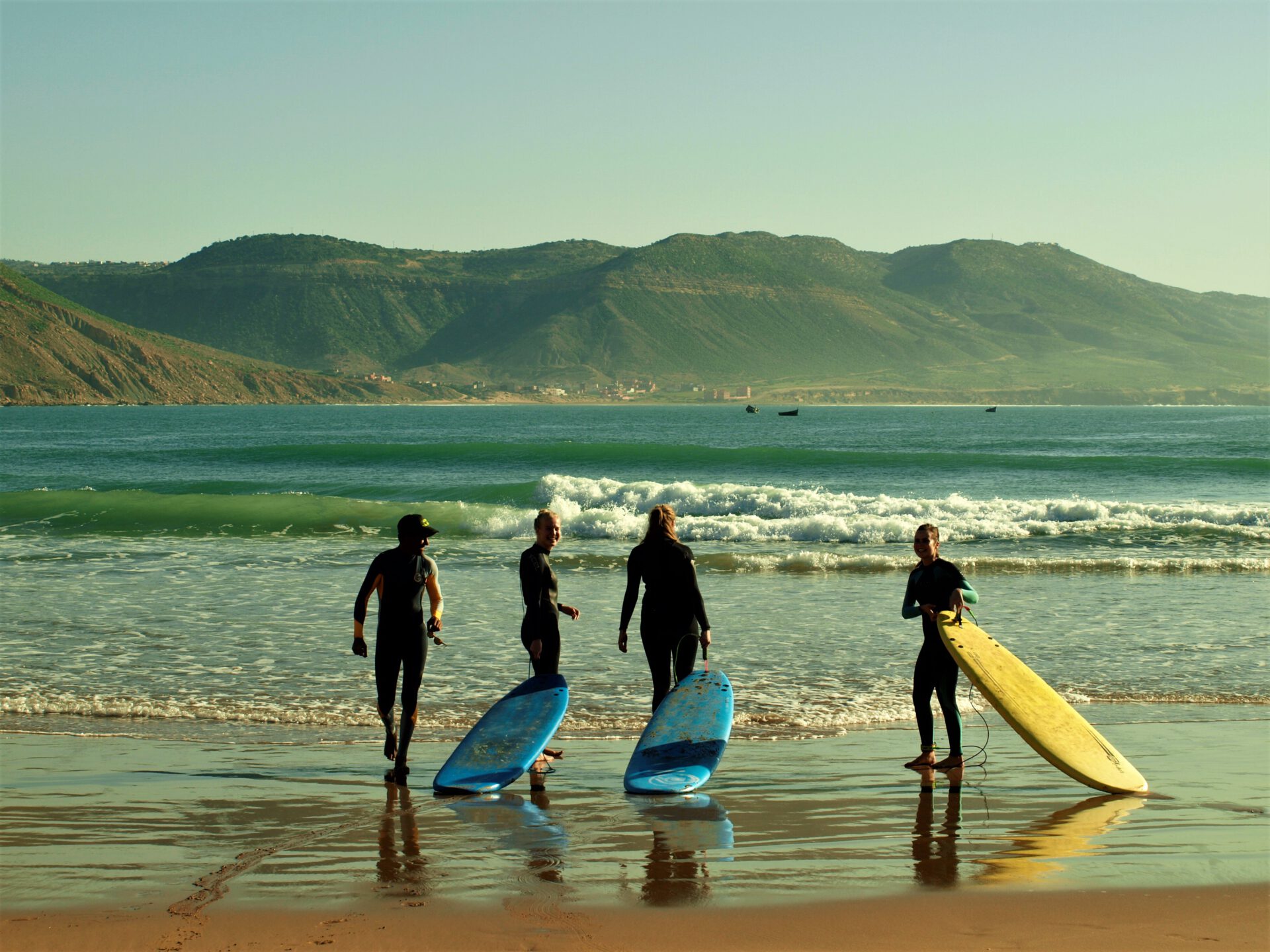
Imsouane is arguably the finest beginner surf destination in Morocco and one of the best in all of Africa. The bay wave’s gentle take-off, forgiving sections, and extraordinary length give beginners more time on their feet per wave than almost any other learning environment on the continent. The sandy bay bottom (in the inner sections) reduces the consequences of wipeouts. And the numerous professional surf schools operating from the beach provide qualified instruction at competitive prices.
Most beginners who arrive in Imsouane with no prior surf experience are standing up on waves within their first lesson. Most leave two weeks later with the surfing bug permanently installed — and a wave they will spend years trying to recreate at home. For advice on learning to surf in Imsouane on a tight budget, read our Imsouane budget travel tips guide.
Intermediate Surfers
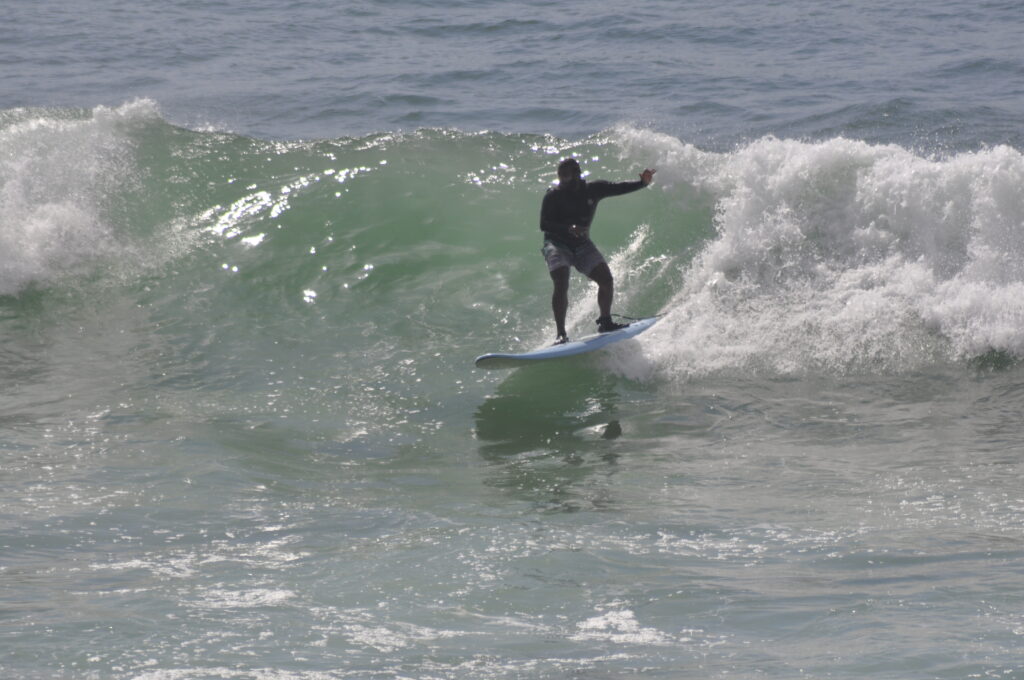
For intermediate surfers — those who can reliably catch unbroken waves and are working on their turns, footwork, and positioning — Imsouane offers one of the finest progression environments anywhere. The wave’s length provides endless opportunity to experiment with cross-stepping, noseriding, and linking turns in a way that short, quickly closing waves simply cannot match.
Intermediate surfers who spend two to four weeks at Imsouane consistently report dramatic improvements in their surfing — the combination of wave quality, wave quantity, and the relaxed, unrushed pace of the village creates an ideal environment for focused skill development.
Experienced Surfers and Longboarders
Experienced surfers — particularly those with a longboard background — find Imsouane surfing paradise lives up to its name completely. The wave’s length, quality, and consistency on the right swell offer the kind of long, flowing rides that longboarding culture was built around. Watching an experienced longboarder cross-step to the nose and hang five on a 400-metre Imsouane wave is one of the most beautiful sights in Moroccan surfing.
For experienced shortboarders seeking more power and punch than the bay wave provides, Cathedral Beach offers an entirely different challenge that rewards skill and experience with excellent, less-crowded surf.
Unsplash.com — search “Morocco surfing lesson beginner longboard wave”
Imsouane Surfing Paradise: Best Season for Waves seasons
Understanding the seasonal surf calendar is essential for timing your visit to Imsouane surfing paradise correctly. Different seasons deliver fundamentally different surf experiences.
https://imsouane.net/
Autumn — September to November
Autumn is the finest all-round season for most visitors to Imsouane surfing paradise. Atlantic swells build steadily from September onward as North Atlantic storm systems begin generating long-period energy. October is the standout month — consistent swells of 1.5–2.5 metres, favorable wind patterns, warm water (20–21°C), and the village at its most balanced between active and authentic.
Autumn suits intermediate surfers best — the wave is at its most enjoyable and progressive without the intimidating power of winter. Beginners can still learn comfortably throughout October on smaller swell days.
Winter — December to February
Winter is peak surf season in Imsouane surfing paradise. Long-period northwest swells generated by North Atlantic depressions deliver powerful, organized surf with impressive consistency. The bay wave stands up taller and peels with more speed and authority. Cathedral Beach fires on heavy swell days. Water temperature drops to 16–17°C — a full wetsuit is essential.
Winter is the best season for experienced surfers and the most atmospheric season in the village — a small, tight-knit community of serious surfers, photographers, and long-stay travellers who share an experience of rare intensity and intimacy.
Spring — March to May
Spring offers excellent beginner and intermediate conditions as winter swell patterns gradually give way to the calmer summer Atlantic. March maintains good swell consistency. April and May deliver smaller, cleaner waves ideal for learning and progression. Water warms quickly through spring — from 17°C in March to 19–20°C by May.
Summer — June to August
Summer brings the flattest surf of the year to Imsouane surfing paradise. Atlantic swell activity drops significantly in June, July, and August. The bay is often calm enough for flat-water paddling and swimming — which is wonderful for families and non-surfers but frustrating for dedicated wave riders. Some summer weeks produce small, playful waves that work well for longboarding and beginners — but the consistency is low compared to all other seasons.
For a complete guide to seasonal timing and what each month delivers in Imsouane, read our dedicated article on the best time to visit Imsouane.
Where to Stay in Imsouane accommodation
Accommodation in Imsouane surfing paradise ranges from simple budget guesthouses to well-designed boutique surf lodges with bay-view terraces and curated surf programs.
Budget Guesthouses
Simple family-run guesthouses (maisons d’hôtes) offer clean, comfortable rooms with shared or private bathrooms from 150–250 MAD ($15–$25) per night including breakfast. These are the most authentic accommodation experiences in Imsouane — staying with a local family gives access to home-cooked Moroccan meals, insider knowledge about daily surf conditions, and a quality of hospitality that no commercial hotel can replicate.
Book directly by WhatsApp — skipping booking platform commissions — and ask about weekly rates, which typically deliver 30–40% savings on the nightly price.
Surf Lodges
Several purpose-built surf lodges operate in Imsouane, offering dormitory beds (80–130 MAD/$8–$13 per night), private rooms, surf equipment storage, board rental, and organized surf guiding programs. Surf lodges are the best accommodation option for solo travellers seeking community, surf information, and a social base in Imsouane surfing paradise.
Boutique Riads and Bay-View Guesthouses
The most desirable accommodation in Imsouane consists of a small number of boutique guesthouses with bay-view terraces and carefully designed interiors that combine Moroccan craftsmanship with surf-influenced aesthetics. Prices for these properties range from 500–1,200 MAD ($50–$120) per night and represent outstanding value relative to comparable boutique accommodation in Marrakech, Essaouira, or Taghazout.
For a full guide to accommodation options and pricing strategies at every budget level, read our comprehensive Imsouane budget travel tips guide.
Where to Eat in Imsouane food
The food scene in Imsouane surfing paradise is one of its greatest underrated pleasures — simple, fresh, and deeply connected to the fishing economy that has sustained the village for generations.
The Harbor Fish Grill
The absolute centerpiece of eating in Imsouane is the harbor fish grill — a collection of small open-air charcoal grills that set up beside the boat landing each morning and lunchtime serving whatever came off the boats at dawn. Grilled sardines, sea bream, and mackerel seasoned with cumin and preserved lemon cost 20–50 MAD ($2–$5) and represent the finest and most authentic eating experience available in Imsouane surfing paradise.
Traditional Moroccan Restaurants
Several family-run restaurants in the village serve traditional Moroccan home cooking — tagines, couscous, harira soup — at prices well below comparable food in Agadir or Essaouira. A full three-course lunch costs 60–100 MAD ($6–$10). Breakfast of mint tea, khobz bread, and amlou (argan oil almond paste) costs 20–35 MAD ($2–$3.50).
Surf Café Culture
A growing number of surf-influenced cafés and small restaurants in Imsouane serve fresh juices, smoothies, avocado toast, and healthy bowls alongside traditional Moroccan food — catering to the international surf community’s appetite for nutrition-conscious eating. These cafés typically charge 80–150 MAD ($8–$15) for a meal — higher than traditional restaurants but still excellent value by any international standard.
For a complete breakdown of food costs and eating strategies in Imsouane, see our Morocco travel cost and budget guide.
Imsouane Surfing Paradise: Beyond the Waves beyond
Imsouane surfing paradise offers a depth of experience that extends far beyond the surf breaks into cultural, natural, and culinary territory that rewards curious and patient travellers.
The Argan Forest and Berber Culture
The hills surrounding Imsouane are covered with ancient argan trees — part of the UNESCO-designated Arganeraie Biosphere Reserve and home to the women’s cooperatives that produce the argan oil prized worldwide in cosmetics and cuisine. Walking through the arganeraie in the early morning — watching goats climb impossibly into the upper branches — is one of the most uniquely Moroccan experiences available within easy reach of the village.
Cathedral Beach and Coastal Hiking
The cliff path from the village to Cathedral Beach and beyond offers some of the most dramatic Atlantic coastal scenery in Morocco. Sea caves accessible at low tide, basalt cliffs sculpted by centuries of ocean energy, and views that stretch from the headland across the open Atlantic create a hiking environment of extraordinary natural beauty.
Day Trips from Imsouane
Imsouane’s position between Agadir and Essaouira makes it an exceptional base for day trips along the Atlantic coast. Essaouira (80 km north) offers a UNESCO medina, world-class windsurfing, and a vibrant arts scene. Taghazout (50 km south) offers the contrast of Morocco’s most developed surf resort destination. Agadir (70 km south) provides city amenities, shopping, and Morocco’s finest sandy bay.
For a complete guide to everything Imsouane offers beyond its famous wave, read our in-depth article on the culture and hidden gems of Imsouane Morocco.
For investment opportunities in this extraordinary destination, read our guide to buying land in Imsouane.
Imsouane surfing paradise beyond waves culture argan forest Cathedral Beach hiking
Getting to Imsouane getting-there
Reaching Imsouane surfing paradise requires a little more effort than arriving at a major Moroccan tourist destination — and that effort is part of what has preserved its authentic character.
By Air
Agadir’s Al Massira Airport is the closest and most convenient entry point. Budget airlines including Ryanair, easyJet, Transavia, and Vueling operate direct flights from major European cities — London, Paris, Amsterdam, Madrid, Brussels — with fares from €30–€80 one way when booked in advance. Agadir is one of the cheapest Moroccan airports to fly into from Europe.
Agadir to Imsouane
From Agadir, the most convenient option is a private grand taxi (200–300 MAD/$20–$30 for the whole vehicle — shared between travel companions this is very affordable) or a rental car for the 75-minute coastal drive north through Taghazout and Tamraght.
Shared grand taxis from Agadir’s Inezgane taxi station head north toward Taghazout for approximately 15–20 MAD ($1.50–$2) per person — connections from there to Imsouane require a further arrangement at the junction or a direct negotiation for a private vehicle.
By Road from Essaouira
From Essaouira, the coastal road south to Imsouane (approximately 80 km, 90 minutes) is one of the most scenic drives in southern Morocco — passing through dramatic cliff scenery, argan forest, and the surf town of Sidi Kaouki. CTM buses on the Essaouira–Agadir route can drop passengers at the Imsouane junction for approximately 50 MAD ($5).
For complete route planning and driving advice along Morocco’s Atlantic coast, read our Morocco road trip guide.
Travel Tips for Imsouane Surfing Paradise travel-tips
Bring Cash
Imsouane has no ATM. Withdraw cash in Agadir or Essaouira before arriving — enough for your planned stay plus a 30–40% buffer.
Get a Local SIM
A Maroc Telecom or Inwi SIM card from Agadir (30–50 MAD/$3–$5) gives affordable data for navigation, surf forecast apps, and guesthouse communication throughout your stay.
Respect the Community
Imsouane is a practicing Berber Muslim village. Dress modestly away from the beach. Ask permission before photographing residents. Learn a few words of Tachelhit Berber — “Azul” (hello) and “Tanmirt” (thank you) — and watch the warmth it generates in every interaction.
Use a Surf Forecast App
Consistent surf forecasting is essential for planning your days in Imsouane surfing paradise. Surf forecast apps — Magicseaweed, Windguru, or Surfline — provide reliable swell and wind predictions for the Imsouane area. Always check both swell size and wind direction before committing to a session at Cathedral Beach.
Book Direct and Negotiate
Always book accommodation directly with guesthouses via WhatsApp rather than through online platforms. Negotiate weekly rates for stays of seven days or more — savings of 30–40% on the nightly price are standard and expected.
External resource: Windguru Surf and Wind Forecast — Imsouane
External resource: Morocco Travel Safety — UK Foreign Office
External resource: Magicseaweed Surf Forecast Morocco
For everything you need to know about visiting Imsouane across different seasons and at every budget level, read our best time to visit Imsouane guide and our complete Imsouane budget travel tips.
Imsouane surfing paradise travel tips Morocco Atlantic coast village 2026 guide
Imsouane Surfing Paradise Awaits
Imsouane surfing paradise in 2026 remains one of the most extraordinary and most accessible surf destinations on the planet — a place where a world-class wave, a genuinely authentic Berber community, extraordinary food, dramatic coastal scenery, and some of the finest Atlantic light in North Africa combine into an experience that surfers and travellers return to year after year with undiminished enthusiasm.
Come for the wave. Stay for the sardines, the sunsets, the argan forest, the mint tea, and the slow revelation of a village that has been shaped by the Atlantic for centuries and has more to offer than any single visit can fully absorb.
Imsouane surfing paradise is not a destination you check off a list. It is a place you come back to — and each time, it gives you something new.
Have questions about Imsouane surfing paradise? Leave a comment below or explore our full collection of Imsouane and Morocco guides — including our Imsouane bay guide, surfing Imsouane in winter, best time to visit Imsouane, Imsouane budget travel tips, culture and hidden gems of Imsouane, buying land in Imsouane, things to do in Morocco, best time to visit Morocco, and our Morocco road trip guide — for everything you need to experience one of Africa’s greatest surf destinations to its absolute fullest.
Comments