 By
By Morocco Culture Travel 2026: Customs, Traditions & Must-See Experiences
Morocco culture travel 2026 is one of the richest and most rewarding experiences available to any traveller today.
Few countries pack as much living history, sensory depth, and human warmth into one destination.
From the ancient medinas of Fez to the Saharan festivals of the south, Morocco’s cultural fabric is unlike anything else on earth.
This guide walks you through every custom, tradition, and must-see cultural experience — so you arrive informed, respectful, and ready to go deeper.
Table of Contents
- Understanding Morocco’s Cultural Identity
- Religion & Daily Life
- Customs & Etiquette Every Visitor Must Know
- Language & Communication
- Moroccan Food as Cultural Experience
- Music, Art & Festivals
- The Hammam Tradition
- Shopping the Souks Respectfully
- Must-See Cultural Experiences in 2026
- Final Tips for Respectful Cultural Travel
1. Understanding Morocco’s Cultural Identity
Morocco is not one culture — it is several, woven together over centuries.
Amazigh (Berber) civilisation predates everything else by thousands of years.
Arab culture arrived with Islam in the 7th century and shaped language, architecture, and daily rhythm.
Andalusian refugees from 15th-century Spain brought music, ceramics, and garden design.
French and Spanish colonial influence left behind language, administration, and café culture.
All of these layers coexist — sometimes in tension, always in conversation.
Morocco culture travel 2026 rewards travellers who approach this complexity with curiosity rather than expecting a single, simplified story.
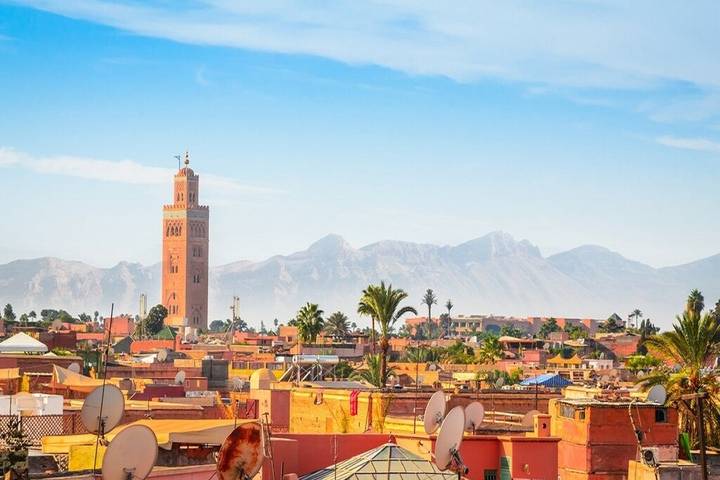
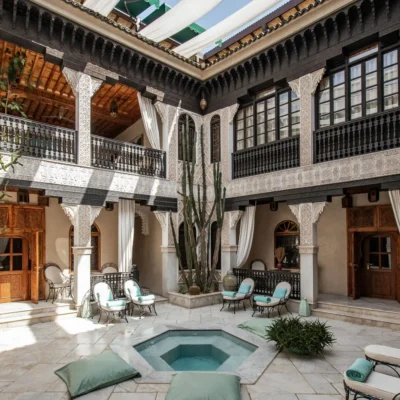
Morocco culture travel 2026 — the ornate interior courtyard of a traditional Moroccan riad in Fez, showcasing Islamic geometric tilework and carved cedarwood
Morocco culture travel 2026 — the ornate interior courtyard of a traditional Moroccan riad in Fez, showcasing Islamic geometric tilework and carved cedarwood
2. Religion & Daily Life
Islam shapes the rhythm of life in Morocco more than any other single force.
The call to prayer sounds five times daily from minarets across every city and village.
Friday is the holy day — many shops close at midday and families gather for couscous lunch.
Ramadan, the month of fasting, transforms the country entirely.
Restaurants close during daylight hours. Streets are quiet by day and electric by night.
Breaking the fast at sunset (iftar) is a communal, generous, joyful event — and if you are ever invited to share it with a Moroccan family, say yes immediately.
Non-Muslims are welcome to observe but should be discreet during prayer times.
Entering mosques is generally not permitted for non-Muslims — with the notable exception of the Hassan II Mosque in Casablanca, one of the world’s largest and most spectacular.
Dress conservatively near mosques and in medina areas at all times.
3. Customs & Etiquette Every Visitor Must Know
Getting etiquette right transforms how Moroccans receive you.
These are the non-negotiables for Morocco culture travel 2026.
Greetings matter deeply. Always greet before asking anything. “As-salamu alaykum” (peace be upon you) is met with instant warmth. A handshake between men is standard. Between genders, wait for the other person to initiate.
Dress modestly in public spaces. Shoulders and knees covered in medinas, rural areas, and religious sites — for all genders.
Accept mint tea when offered. Refusing tea in a Moroccan home or shop is considered rude. You are never obligated to buy anything afterward — but you are obligated to drink the tea.
Use your right hand. Eating, passing items, and greeting are all done with the right hand in Moroccan custom.
Ask before photographing people. Always ask permission. Many Moroccans — particularly older women and rural communities — prefer not to be photographed. Respect this without question.
Do not eat, drink, or smoke publicly during Ramadan daylight hours. This applies to non-Muslims too. It is a matter of basic respect.
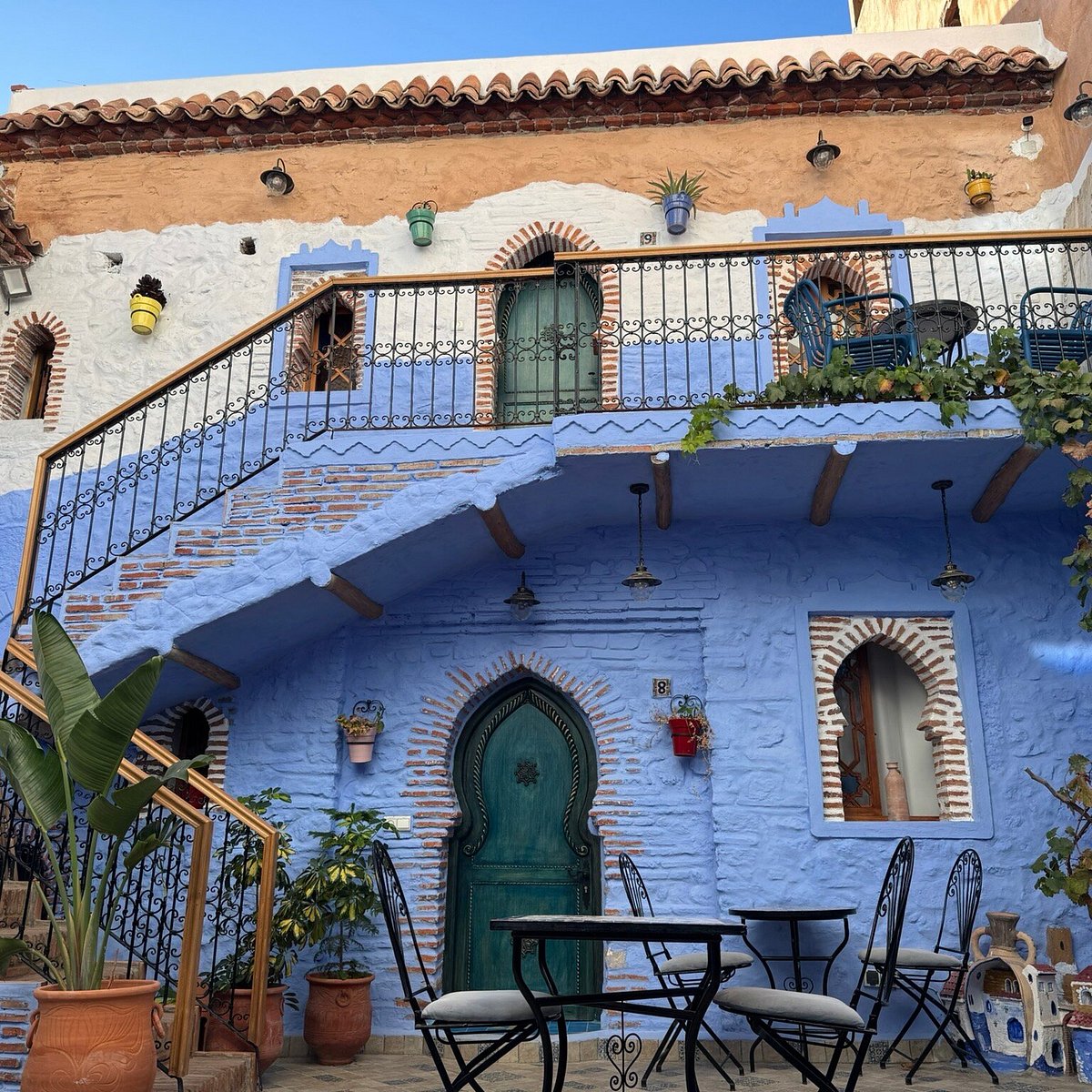
Morocco culture travel 2026 — a traditional Moroccan mint tea ceremony being served in a blue-tiled riad courtyard in Chefchaouen
Morocco culture travel 2026 — a traditional Moroccan mint tea ceremony being served in a blue-tiled riad courtyard in Chefchaouen
4. Language & Communication
Morocco is genuinely multilingual — and navigating that is part of the cultural experience.
Darija (Moroccan Arabic) is the mother tongue of most urban Moroccans.
Tamazight (Amazigh/Berber) is spoken widely across the Atlas Mountains and Sahara regions.
French is the language of business, education, and most tourist-facing communication in cities.
Spanish is useful in Tangier, Tetouan, and the northern regions.
English is growing fast but is not yet universal outside tourist areas.
Learning even five words of Darija changes everything.
“Shukran” (thank you), “Labas?” (how are you?), “Bsaha” (to your health, said after a meal) — these small efforts earn enormous goodwill.
Do not assume everyone speaks French. In Amazigh communities, Tamazight is the first language and French may be limited.
5. Moroccan Food as Cultural Experience
Food in Morocco is not just sustenance — it is ceremony, hospitality, and identity combined.
Understanding food culture is essential to understanding Morocco culture travel 2026.
Tagine is the national dish — slow-cooked in a conical clay pot with meat, preserved lemons, olives, dried fruit, and warming spices.
Every region has its own variation. The lamb tagine with prunes in the Middle Atlas is different from the fish tagine of Essaouira.
Couscous is Friday’s dish. Served at family gatherings with seven vegetables and meat, it is communal and deeply meaningful.
Pastilla is Morocco’s great surprise — a flaky pastry filled with pigeon, almonds, and cinnamon, dusted with powdered sugar. Sweet and savoury at once.
Harira soup is comfort food and cultural institution — tomato, lentil, and herb, served to break the Ramadan fast and available year-round.
Mint tea is a ritual, not a drink. It is poured three times from height, creating foam. The first pour is mild, the second stronger, the third most intense.
Eat at local neighbourhood restaurants — not tourist-facing establishments on main squares.
Ask your riad host where local families eat. That table will cost half the price and deliver twice the authenticity.
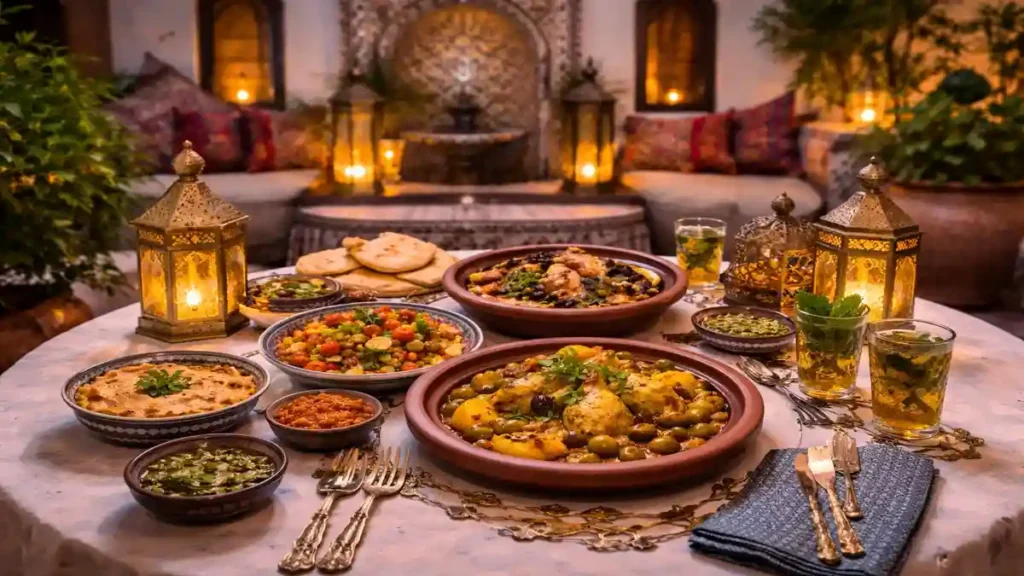
Morocco culture travel 2026 — a spread of traditional Moroccan dishes including tagine, couscous, and pastilla served on hand-painted ceramic plates in a Fez medina restaurant
Morocco culture travel 2026 — a spread of traditional Moroccan dishes including tagine, couscous, and pastilla served on hand-painted ceramic plates in a Fez medina restaurant
6. Music, Art & Festivals
Morocco’s cultural calendar is rich and genuinely accessible to visitors in 2026.
Gnawa music is one of Morocco’s most distinctive and powerful traditions.
Originating with sub-Saharan African enslaved people brought to Morocco centuries ago, Gnawa combines trance music, spiritual healing ceremonies, and hypnotic rhythms.
The Gnawa World Music Festival in Essaouira — held every June — is one of Africa’s greatest musical events and draws hundreds of thousands of visitors.
Andalusian classical music (Al-Ala) is preserved in the northern cities of Fez, Tetouan, and Chaouen — a direct inheritance from Muslim Spain.
The Fez Festival of World Sacred Music brings together spiritual music traditions from across the globe every June in the world’s oldest living medieval city.
Fantasia — the traditional equestrian display where riders charge at full gallop and fire rifles simultaneously — is one of Morocco’s most spectacular cultural performances, seen at festivals and regional celebrations throughout the year.
Amazigh New Year (Yennayer) is celebrated on January 13th and is now an official public holiday — a significant cultural recognition for Morocco’s indigenous Berber communities.
7. The Hammam Tradition
No Morocco culture travel 2026 experience is complete without a traditional hammam.
A hammam is a communal steam bath — and it is as much a social institution as a hygiene practice.
Moroccan families visit the neighbourhood hammam weekly. It is where news is shared, relationships are built, and the week’s tensions are released.
As a visitor, you have two options: a tourist hammam (comfortable, English-speaking, priced for visitors) or a neighbourhood hammam (cheaper, authentic, requires basic French or Darija).
The process involves a steam room, a vigorous exfoliation scrub with a kessa glove and black beldi soap, and a rinse.
The black soap is made from olive oil and is one of Morocco’s great artisanal products — buy a block to take home.
Hammams are gender-segregated. Always check the timetable before arriving — men and women use the same space at different hours.
📸 [ADD IMAGE HERE] Alt text: Morocco culture travel 2026 — the entrance to a traditional neighbourhood hammam in the Fez medina, decorated with hand-painted zellige tilework
8. Shopping the Souks Respectfully
The medina souk is one of Morocco’s most iconic cultural environments.
But shopping in it well requires understanding and respect — not just a budget.
Bargaining is cultural, not aggressive. Opening prices in the souk are typically 2–4 times the final price. Start at 30–40% of the asking price and negotiate warmly.
Bargaining is a social exchange. Smile. Take your time. Enjoy the conversation.
Walking away is your most powerful tool. If the price is too high, thank the seller and begin to leave. A genuine final price often arrives at the door.
Never agree on a price you will not pay. Once a price is agreed, honour it. Backing out after negotiation is considered disrespectful.
What to buy: Handwoven Berber carpets, leather goods from the Fez tanneries, argan oil products, hand-painted ceramics, silver jewellery, and woven basket ware are all genuine Moroccan crafts worth bringing home.
Where to buy honestly: Fixed-price cooperatives — particularly women’s argan oil cooperatives — offer fair prices and guarantee authenticity.
The Ensemble Artisanal government craft shops in major cities have fixed prices and are useful benchmarks for souk negotiations.
9. Must-See Cultural Experiences in 2026
These are the cultural encounters that define Morocco culture travel 2026.
The Fez Medina — Fez el-Bali The world’s largest car-free urban area and most intact medieval city.
9,000 streets, 600 years of living history, madrasas with the finest Islamic architecture on earth.
Hire a certified guide — navigating alone is genuinely challenging and a guide unlocks stories and access that no map provides.
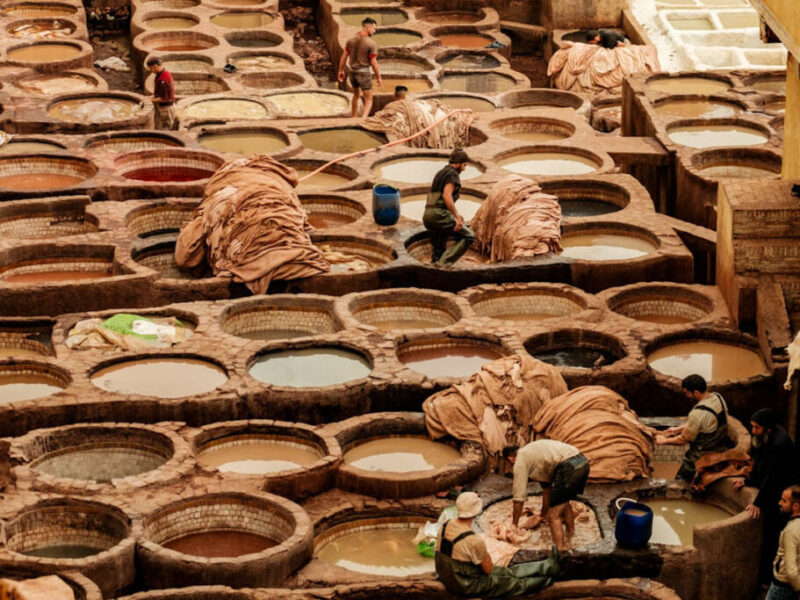
The Chouwara Tanneries in Fez The leather tanneries of Fez have operated since the 11th century.
Seen from the balconies of surrounding leather shops, the circular stone vats of colour are one of the most photographed sights in all of Africa.
Visit in the morning when dyes are freshest. Accept the sprig of mint offered at the entrance — the smell is intense.
Djemaa el-Fna Square — Marrakech A UNESCO Intangible Cultural Heritage site and the greatest open-air theatre on earth.
By day: snake charmers, storytellers, henna artists, and orange juice stalls.
By night: food stalls, Gnawa musicians, acrobats, and the collective energy of thousands of people sharing the same ancient space.
The Hassan II Mosque — Casablanca One of the largest mosques in the world and one of the few open to non-Muslim visitors.
The craftsmanship — hand-carved plaster, hand-laid zellige tilework, and a retractable roof — represents the apex of Moroccan artisanal tradition.
Guided tours run daily and are genuinely outstanding.
Book tickets via the official Hassan II Mosque website.
A Village Homestay in the High Atlas No tourist infrastructure replicates the experience of staying with an Amazigh family in a mountain village.
Meals cooked over a wood fire. Roof terrace views of snow-capped peaks. Conversations that require patience and gesture and laughter.
Several community tourism operators organise responsible homestays — our Morocco travel tips 2026 guide lists vetted options.
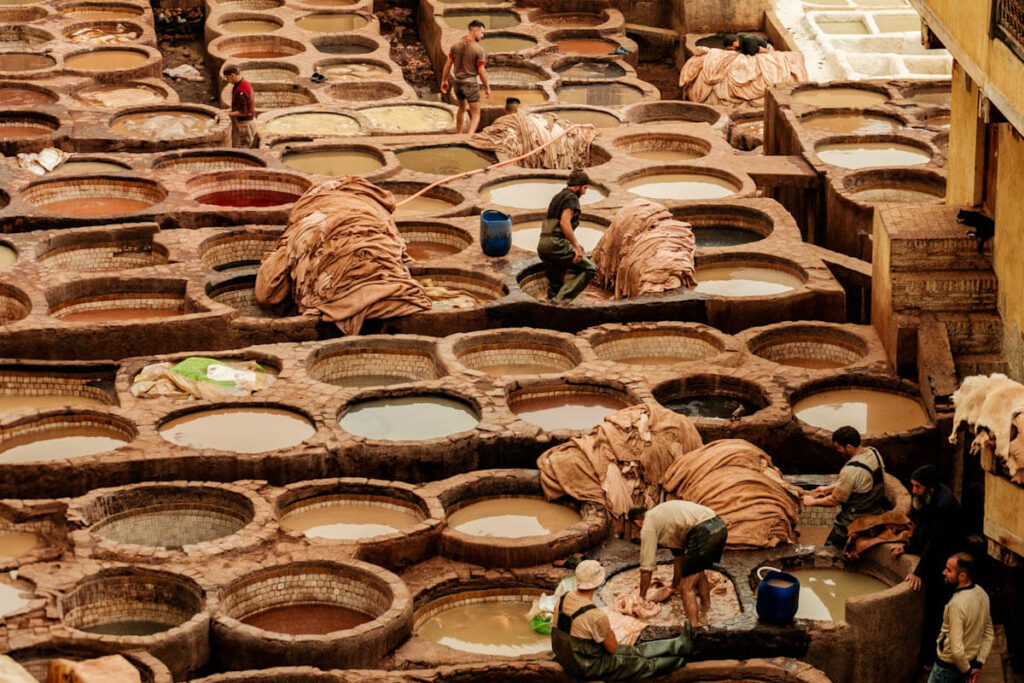
Morocco culture travel 2026 — the famous Chouwara leather tanneries of Fez viewed from above, with circular stone vats of saffron, poppy, and indigo dyes
Morocco culture travel 2026 — the famous Chouwara leather tanneries of Fez viewed from above, with circular stone vats of saffron, poppy, and indigo dyes
10. Final Tips for Respectful Cultural Travel in Morocco
Go slow. Morocco is not a country to rush. The best cultural encounters happen when you sit in one place long enough for the place to come to you.
Follow your host’s lead. If invited to a home, remove your shoes at the door. Eat when invited. Compliment the food. Express gratitude directly and warmly.
Spend locally. Choose locally owned riads over international hotel chains. Eat at family restaurants. Hire local guides. Buy from artisan cooperatives.
Respect the Ramadan calendar. If your visit overlaps with Ramadan, adjust your behaviour during daylight hours. Witness iftar at sunset if you can — it is one of the most communal and generous moments in Moroccan life.
Research your visit. The Moroccan National Tourism Office maintains excellent cultural guides updated regularly.
For practical logistics alongside cultural planning, read our Morocco travel tips 2026 guide and our Morocco trekking tours 2026 guide.
Morocco culture travel 2026 rewards the traveller who comes not to consume a country — but to encounter it.
Arrive with respect, leave with perspective, and carry the hospitality of this place with you long after you return home.
For current entry requirements and travel advisories, check the Moroccan Ministry of Foreign Affairs before departure.
Comments