 By
By
must-visit cities in Morocco top 10 travel guide 2026 Marrakech Fes Chefchaouen
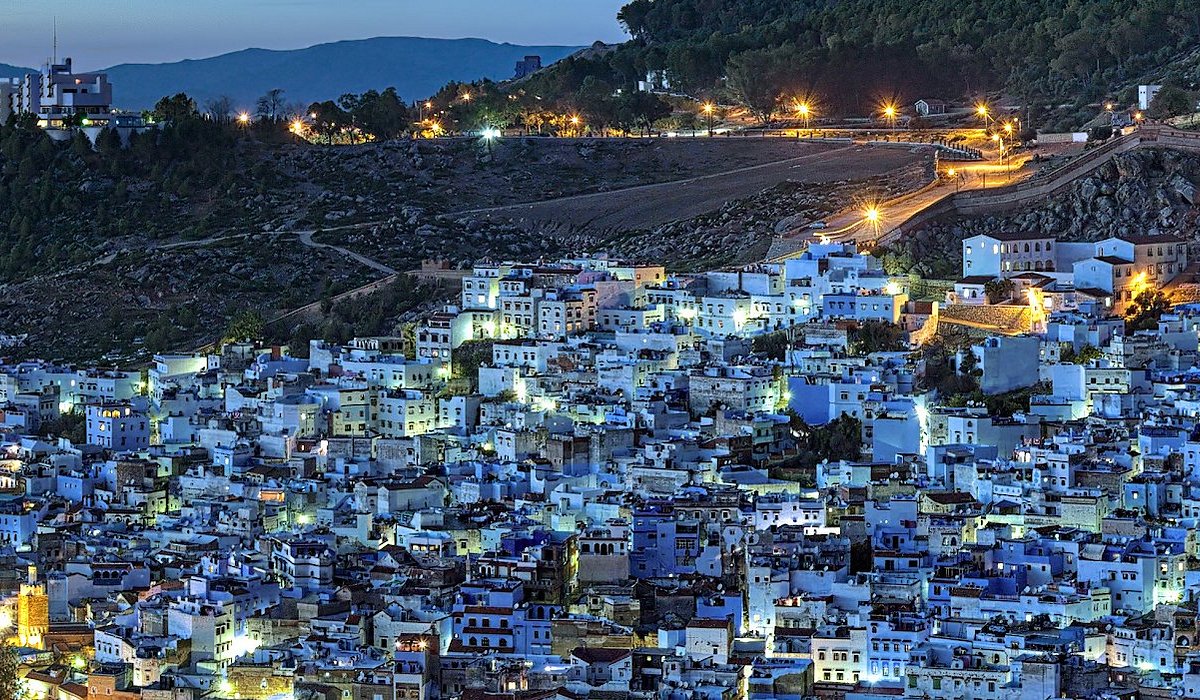
Table of Contents
- Must-Visit Cities in Morocco: Introduction
- 1. Marrakech — The Red City
- 2. Fès — Morocco’s Spiritual Capital
- 3. Chefchaouen — The Blue Pearl
- 4. Essaouira — The Wind City of Africa
- 5. Rabat — Morocco’s Elegant Capital
- 6. Casablanca — Morocco’s Modern Metropolis
- 7. Meknès — The Forgotten Imperial City
- 8. Tangier — Where Africa Meets Europe
- 9. Agadir — Morocco’s Atlantic Resort
- 10. Ouarzazate — Gateway to the Sahara
- Must-Visit Cities in Morocco: Beyond the Cities
- Must-Visit Cities in Morocco: Travel Tips
Must-Visit Cities in Morocco: Introduction {#intro}
Must-visit cities in Morocco represent one of the most diverse and most rewarding urban travel collections available anywhere in the world. From the medieval labyrinth of Fès el-Bali — the largest car-free urban area on the planet — to the blue-washed alleyways of Chefchaouen, the Art Deco boulevards of Casablanca, and the wind-battered Atlantic ramparts of Essaouira, Morocco’s cities are not merely destinations but complete sensory worlds that each deliver a fundamentally different version of this extraordinary country.
Morocco is a nation of dramatic contrasts — Arab and Berber, ancient and modern, Atlantic and Mediterranean, Saharan and alpine — and its cities are the places where those contrasts are most concentrated, most vivid, and most immediately accessible to visitors. Each of Morocco’s great cities has a distinct character, a distinct history, and a distinct reason to be included on any serious Morocco travel itinerary.
In 2026, Morocco’s cities are more accessible and more visitor-ready than ever. The country’s preparation for the 2030 FIFA World Cup has driven infrastructure investment across every major urban center — new transport links, improved accommodation, restored heritage sites, and expanded cultural facilities that make the must-visit cities in Morocco more rewarding to explore than at any previous point in their history.
This guide covers the top 10 must-visit cities in Morocco in 2026 — presenting each city honestly, covering its greatest assets, key attractions, best neighborhoods, and practical visitor information, with honest guidance on how much time each deserves and how to experience it at its best.
Before exploring Morocco’s great cities, get the full picture of what the country offers beyond its urban centers by reading our complete guide to things to do in Morocco — the most comprehensive resource available for planning any Morocco itinerary in 2026.
1. Marrakech — The Red City
Marrakech is the undisputed centerpiece of any list of must-visit cities in Morocco — a city of such concentrated sensory intensity, historical depth, and visual magnificence that it consistently ranks among the world’s greatest travel destinations by every major publication and travel platform.
Why Marrakech Is a Must-Visit City in Morocco
The medina of Marrakech is a UNESCO World Heritage Site of extraordinary scale and complexity — a walled medieval city of souks, palaces, mosques, and riads that has been continuously inhabited for over a thousand years and continues to pulse with the same chaotic, colorful, irresistible energy that has attracted travellers, traders, and artists from across the world throughout its history.
Djemaa el-Fna — the great square at the medina’s heart — is unlike any other public space on earth. By day it fills with orange juice vendors, henna artists, and snake charmers. By evening it transforms into an open-air theatre of food stalls, musicians, storytellers, and acrobats that has been declared a UNESCO Intangible Cultural Heritage. Watching the square fill at dusk from a rooftop terrace is one of the quintessential must-have experiences in all of Morocco’s must-visit cities.
Key Attractions in Marrakech
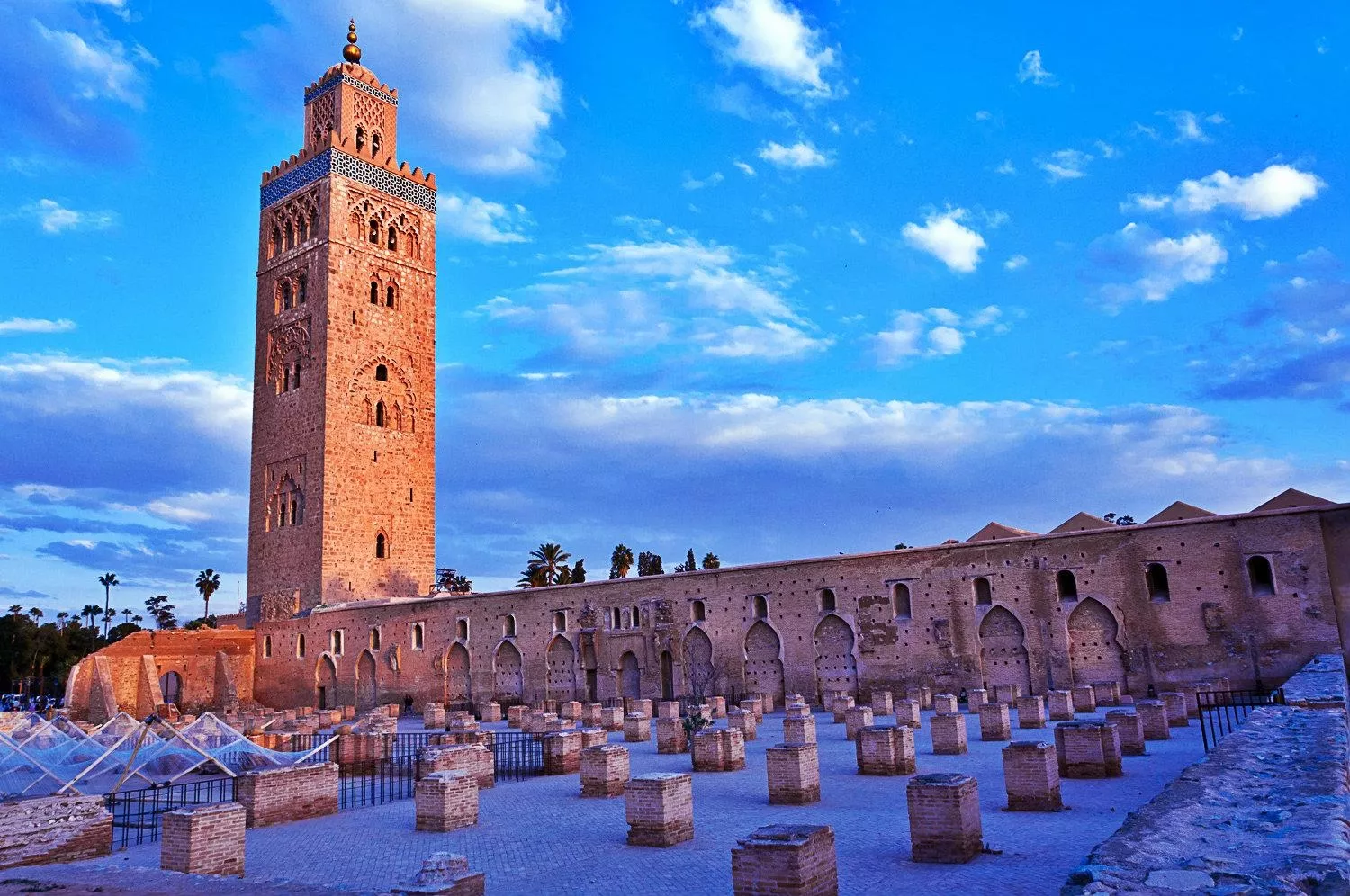
The Bahia Palace — a late 19th-century masterpiece of Moroccan palatial architecture. The Saadian Tombs — a 16th-century royal necropolis rediscovered in 1917 and beautifully preserved. The Koutoubia Mosque — the 12th-century minaret that dominates the Marrakech skyline. The Majorelle Garden — the cobalt-blue botanical paradise created by French artist Jacques Majorelle and later owned by Yves Saint Laurent. The Ben Youssef Madrasa — a 16th-century Islamic college of breathtaking tilework and carved plaster.
How Much Time to Allow
Allow a minimum of three full days for Marrakech — two days in the medina and one day for the Majorelle Garden and the Hivernage district. Five days allows a more relaxed exploration and time for a day trip to the Atlas Mountains.
Best for: First-time Morocco visitors, culture and history lovers, food and souq enthusiasts, photographers.
must-visit cities in Morocco Marrakech Djemaa el-Fna medina Koutoubia mosque
2. Fès — Morocco’s Spiritual Capital
Fès is the most profound and most overwhelming of all the must-visit cities in Morocco — a city that operates on a completely different temporal register from the modern world and rewards visitors with a depth of historical and cultural immersion that is genuinely unmatched anywhere else in North Africa.
Why Fès Is a Must-Visit City in Morocco
Founded in the 9th century, Fès el-Bali is the world’s largest and best-preserved medieval city — a UNESCO World Heritage Site of approximately 9,000 streets and alleyways that forms the most complex and most fascinating urban labyrinth in the Islamic world. Cars cannot enter the medina — the city functions today largely as it has functioned for a thousand years, with donkeys and handcarts as the primary transport and craftsmen working in the same guild quarters they have occupied for generations.
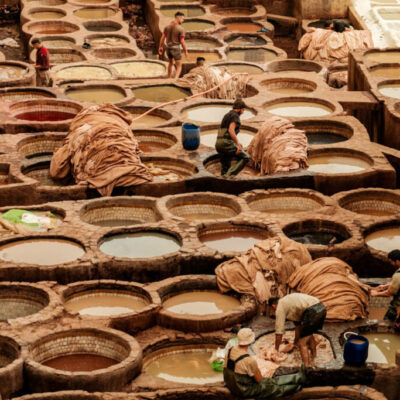
The Al-Qarawiyyin Mosque and University — founded in 859 AD — is widely recognized as the oldest continuously operating university in the world. The Chouara Tannery — a working leather dyeing operation whose circular vats of natural dye have been photographed by virtually every visitor to Fès — is one of the most visually extraordinary industrial sites surviving from the medieval world. The Bou Inania Madrasa — a 14th-century Islamic college of tilework, carved cedarwood, and stucco of breathtaking intricacy — is among the finest examples of Moroccan architectural craftsmanship in existence.
Key Attractions in Fès
The Chouara Tannery viewed from rooftop leather shops. The Al-Qarawiyyin Mosque courtyard (non-Muslims may not enter the mosque itself). The Bou Inania Madrasa. The Nejjarine Museum of Wooden Arts and Crafts. The Andalusian Quarter. The mellah (Jewish quarter) and its remarkable synagogues. The weekly pottery market at the Potiers district on the city’s periphery.
How Much Time to Allow
Allow a minimum of two full days for Fès — and three is strongly preferable. The medina cannot be meaningfully explored in a single day. Hire a licensed local guide for your first morning — the investment unlocks the city’s secrets in a way that independent exploration cannot match.
Best for: History and architecture lovers, serious cultural travellers, photographers, anyone seeking the most authentic and challenging urban Morocco experience.
3. Chefchaouen — The Blue Pearl
Chefchaouen is the most visually distinctive of all the must-visit cities in Morocco — a mountain town in the Rif Mountains whose medina of blue-washed buildings, cascading flowerpots, and dramatic mountain backdrop has made it one of the most photographed destinations in all of Africa.
Why Chefchaouen Is a Must-Visit City in Morocco
The blue medina of Chefchaouen is not a tourist contrivance — the tradition of painting the town’s buildings in shades of blue and white has deep historical and cultural roots, variously attributed to the town’s significant Jewish population in the 16th century and to later Islamic traditions associating the color blue with heaven and spirituality. Whatever its origins, the result is a medina of extraordinary visual harmony — every alleyway, every doorway, every staircase bathed in a palette of indigo, cobalt, and sky blue that creates an atmosphere unlike any other city in Morocco.
Beyond its famous aesthetics, Chefchaouen offers excellent hiking in the Rif Mountains, a relaxed and artistic community atmosphere, some of the finest kif (cannabis) culture in Morocco — for which the Rif region is internationally known — and a genuinely welcoming character that reflects the town’s position as a historic refuge and sanctuary.
Key Attractions in Chefchaouen
The blue medina — every street is a photograph waiting to happen. The Place Uta el-Hammam — the main square, lined with cafés and the imposing 15th-century Grand Mosque. The Kasbah museum at the heart of the medina. The Spanish Mosque on the hill above the town — a 20-minute hike rewarded with panoramic views across the medina and the Rif Mountains. The Ras el-Maa waterfall at the medina’s eastern edge.
How Much Time to Allow
Allow one to two days for Chefchaouen. The medina is compact and walkable but invites lingering — the best way to experience Chefchaouen is slowly, sitting at café tables, walking the same streets at different times of day as the light changes the blue in completely different ways.
Best for: Photographers, Instagram-focused travellers, hikers, anyone seeking a relaxed mountain escape from the intensity of Marrakech or Fès.
4. Essaouira — The Wind City of Africa
Essaouira is the most atmospherically distinctive of all the must-visit cities in Morocco’s Atlantic coast — a UNESCO-listed walled city where Portuguese colonial architecture, Moroccan medina culture, Atlantic Ocean energy, and a centuries-old tradition of artistic and musical creativity combine into a destination of unique and compelling character.
Why Essaouira Is a Must-Visit City in Morocco
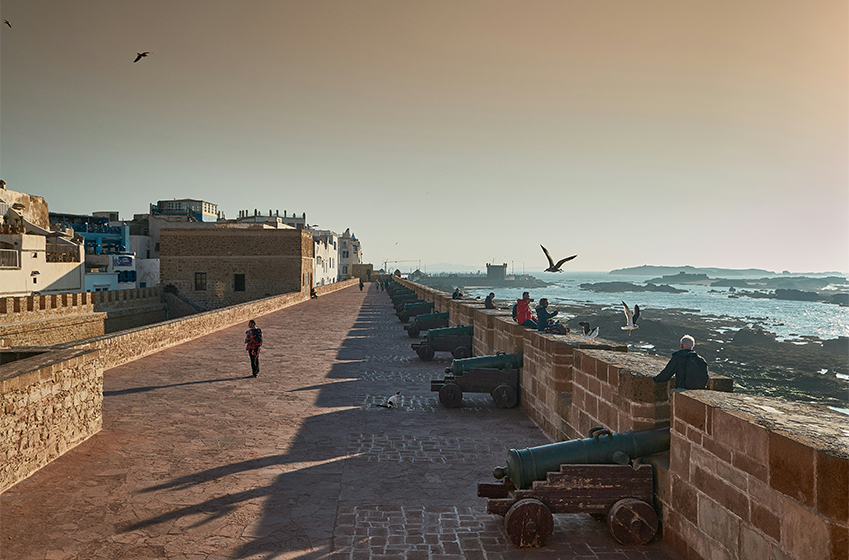
Essaouira’s character is shaped by wind — the consistent Alisé trade winds that make it a world-class windsurfing and kite-surfing destination also give the city its particular atmosphere of salt-bleached, wind-battered, wonderfully weathered beauty. The ramparts above the Atlantic — the Skala de la Ville and Skala du Port — are among the finest defensive fortifications on the African coast and offer views across the crashing Atlantic that have inspired painters, musicians, and writers from Orson Welles to Jimi Hendrix.
The medina is a UNESCO World Heritage Site of elegant proportions — less claustrophobic than Fès or Marrakech, more accessible and more relaxed, with a thriving arts and craft scene centered on the thuya woodworkers whose aromatic workshops line the rampart areas. The port and fish market provide one of the finest fresh seafood experiences in Morocco.
Key Attractions in Essaouira
The Skala de la Ville ramparts and sea cannon battery. The Skala du Port and fishing harbor. The thuya wood artisan quarter. The fish market and port-side seafood restaurants. The Sidi Mohammed ben Abdallah Museum. The medina souks for silver jewelry, spices, and argan products. The beach south of the medina — long, wild, and consistently windy.
How Much Time to Allow
Allow two full days for Essaouira — one day for the medina, ramparts, and artisan quarter, and one day for the port, fish market, and beach.
For travellers combining Essaouira with the Atlantic surf coast south toward Imsouane, read our dedicated Essaouira to Imsouane road trip guide — the most comprehensive resource available for planning this extraordinary coastal journey.
Best for: Art and culture lovers, seafood enthusiasts, windsurfers and kite surfers, photographers, travellers seeking a relaxed alternative to Marrakech.
must-visit cities in Morocco Essaouira medina ramparts Atlantic wind city
5. Rabat — Morocco’s Elegant Capital
Rabat is the most underrated of all the must-visit cities in Morocco — a capital city of genuine elegance, historical depth, and modern sophistication that receives a fraction of the international tourist attention directed at Marrakech and Fès, creating an experience that is more relaxed, more authentically Moroccan, and in many respects more rewarding.
Why Rabat Is a Must-Visit City in Morocco
Rabat is a city of remarkable contrasts — an ancient medina and a 12th-century kasbah overlooking the Atlantic, a colonial-era new city of tree-lined boulevards and Art Deco architecture, a modern capital district of government ministries and cultural institutions, and a UNESCO World Heritage Site designation that covers both the historic medina and the planned French colonial city. The combination of all these layers in a single, manageable, pleasantly uncrowded city makes Rabat one of the finest urban experiences in Morocco for travellers who have already seen Marrakech and Fès and are seeking something less overwhelmingly touristic.
Key Attractions in Rabat
The Kasbah of the Udayas — a 12th-century hilltop fortress overlooking the Atlantic and the Bou Regreg river estuary, with an Andalusian garden of extraordinary tranquility at its heart. The Hassan Tower — the unfinished minaret of a 12th-century mosque that would have been the largest in the world, surrounded by the forest of broken columns of the ruined prayer hall. The Mausoleum of Mohammed V — a masterpiece of modern Moroccan architecture housing the tombs of King Mohammed V and King Hassan II. The Chellah — a Roman and medieval Islamic necropolis outside the city walls, overgrown with vegetation and inhabited by nesting storks.
How Much Time to Allow
Allow one to two days for Rabat — long enough to cover the main sites without feeling rushed, and short enough to leave time for the other must-visit cities in Morocco on your itinerary.
Best for: History and architecture lovers, travellers seeking a less crowded alternative to Morocco’s more heavily touristed imperial cities, those interested in modern Moroccan political and cultural life.
6. Casablanca — Morocco’s Modern Metropolis
Casablanca is the most misunderstood of all the must-visit cities in Morocco — a city that most travellers pass through on their way to Marrakech or Fès without stopping, and that consistently surprises those who do stop with a depth and vitality that the city’s reputation as a merely commercial center entirely fails to convey.
Why Casablanca Is a Must-Visit City in Morocco
Casablanca is Morocco’s largest city and its economic engine — a metropolis of over 4 million people that drives the country’s finance, trade, and industry. It is also a city of extraordinary architectural ambition — home to one of the largest and most beautiful mosques in the world, a remarkable collection of Art Deco buildings from the French colonial period, a vibrant contemporary art scene, and some of the finest restaurants and nightlife in Morocco.
The Hassan II Mosque — built on a platform extending over the Atlantic Ocean and accommodating 105,000 worshippers — is one of the most technically and aesthetically remarkable buildings in the world. Its minaret, at 210 metres, is the tallest in the world. The guided tours available to non-Muslim visitors provide access to a building of breathtaking scale and craftsmanship that is genuinely one of the finest architectural achievements in contemporary Islamic civilization.
Key Attractions in Casablanca
The Hassan II Mosque — non-negotiable, regardless of how little time you have. The Art Deco architecture of the city center — the Central Market, the Wilaya building, and the streets of the Quartier Habous. The Corniche seafront promenade and its oceanfront cafés and restaurants. The Old Medina — smaller and more accessible than Fès or Marrakech but authentic and interesting. The Villa des Arts contemporary art gallery. Rick’s Café — a reconstruction of the fictional bar from the 1942 film, improbably enjoyable.
How Much Time to Allow
Allow one full day for Casablanca — enough for the Hassan II Mosque, a walk through the Art Deco district, lunch at the Central Market, and a Corniche sunset.
Best for: Architecture lovers, business travellers with free time, travellers who want to understand Morocco’s modern economic and cultural reality alongside its historical heritage.
7. Meknès — The Forgotten Imperial City
Meknès is the most undervisited of Morocco’s four imperial cities and one of the most rewarding surprises available to any traveller exploring the must-visit cities in Morocco beyond the obvious headline destinations.
Why Meknès Is a Must-Visit City in Morocco
Meknès was the capital of Morocco under Sultan Moulay Ismail in the 17th and 18th centuries — a period during which the sultan attempted to build a city to rival Versailles, constructing monumental walls, granaries, stables, and gateways on a scale that still impresses three centuries later. The Bab Mansour gate — the most ornate and most magnificent monumental gateway in North Africa — is the centrepiece of a city that rewards exploration with far fewer crowds and far more authentic medina atmosphere than either Marrakech or Fès.
The proximity of Meknès to the Roman ruins of Volubilis — a UNESCO World Heritage Site just 33 km away whose well-preserved mosaics, triumphal arch, and basilica are among the finest Roman remains in Africa — makes it an essential stop on any imperial cities itinerary.
Key Attractions in Meknès
Bab Mansour — the finest gate in Morocco. The Heri es-Souani granaries and royal stables. The Mausoleum of Moulay Ismail. The Place el-Hedim — Meknès’ answer to Djemaa el-Fna, smaller and less touristy. The medina souks — less commercialized than Fès or Marrakech and excellent for authentic craft purchases. Day trip to Volubilis Roman ruins.
How Much Time to Allow
Allow one full day for Meknès and a half day for Volubilis — making a total of one and a half to two days for this entry in the must-visit cities in Morocco itinerary.
Best for: History lovers, Roman archaeology enthusiasts, travellers seeking authentic medina atmosphere without tourist crowds, anyone on the imperial cities circuit.
8. Tangier — Where Africa Meets Europe
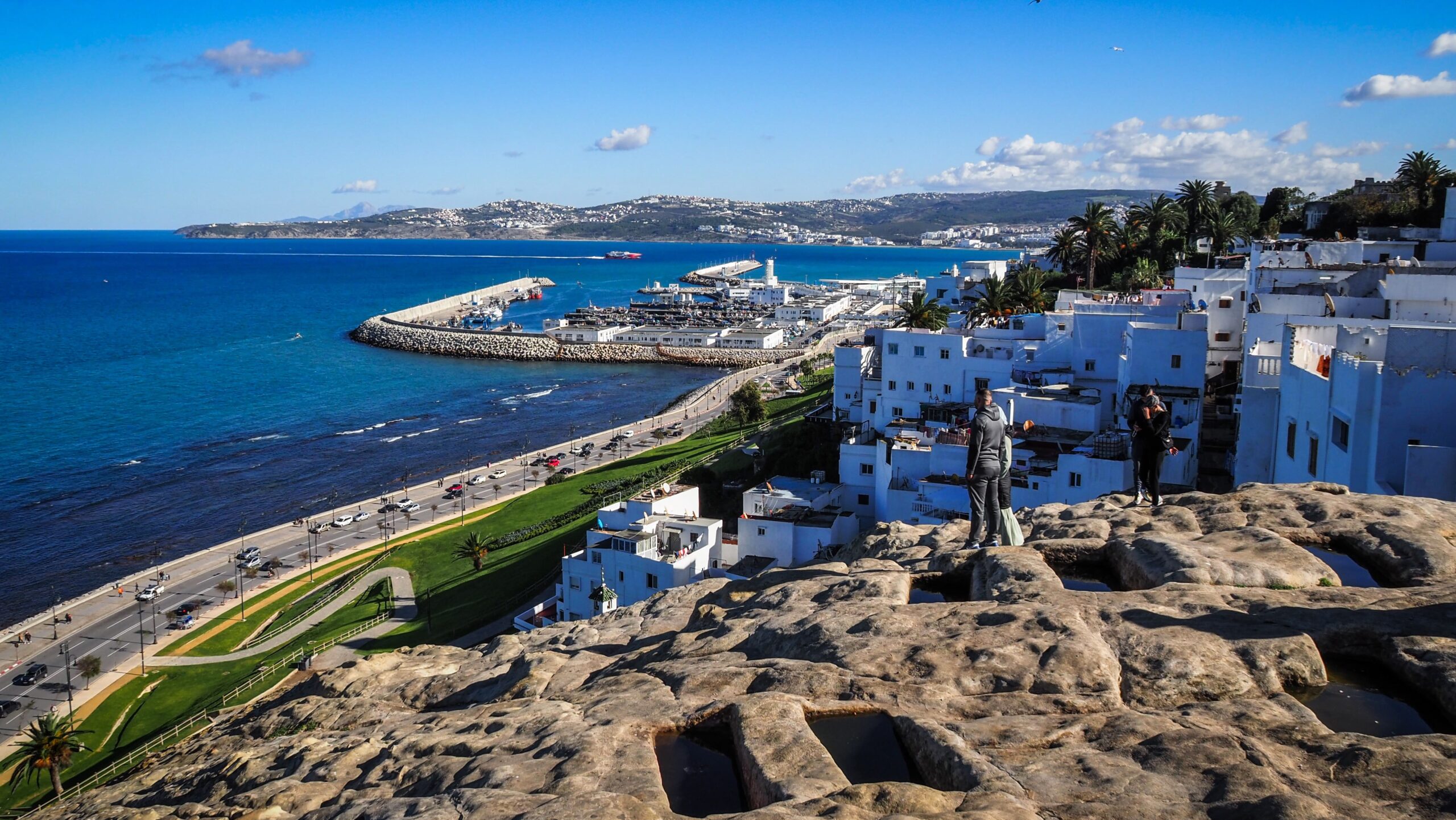
Tangier is the most dramatically positioned of all the must-visit cities in Morocco — a city at the literal crossroads of continents, where the Atlantic and Mediterranean meet, Africa and Europe face each other across 14 km of water, and a unique history of international intrigue, artistic bohemianism, and cultural collision has created one of the most intellectually stimulating destinations in North Africa.
Why Tangier Is a Must-Visit City in Morocco
Tangier occupies a position of extraordinary geographic and cultural significance. The city has been a free international zone, a diplomatic battleground, a literary haven, and a smugglers’ paradise in different periods of its turbulent 20th-century history — attracting William Burroughs, Paul Bowles, Tennessee Williams, Henri Matisse, and generations of writers and artists who found in Tangier’s ambiguity and intensity a creative environment unlike anywhere else in the world.
The restored medina, the Grand Socco market square, the American Legation Museum (the oldest American diplomatic property in continuous use anywhere in the world), Cape Spartel lighthouse where the Atlantic and Mediterranean visibly meet, and the dramatic clifftop views from the kasbah across the Strait of Gibraltar to the Spanish coast — all contribute to an experience that is uniquely Tangier and unavailable at any other of the must-visit cities in Morocco.
Key Attractions in Tangier
The Kasbah and its museum of Moroccan arts. The Grand Socco and Petit Socco market squares. The American Legation Museum. The medina and its literary cafés. Cape Spartel lighthouse and the Caves of Hercules. The cliff-top Café Hafa — where Paul Bowles spent decades and the view of the Strait of Gibraltar is unforgettable. The ferry crossing to Tarifa, Spain — one of the world’s most dramatic short sea crossings.
How Much Time to Allow
Allow one to two days for Tangier — enough for the medina, the kasbah, Cape Spartel, and at least one long afternoon sitting at Café Hafa watching the ferries cross the strait.
Best for: Literary travellers, history enthusiasts, travellers entering Morocco from Spain, those interested in the intersection of European and African culture and history.
must-visit cities in Morocco Tangier kasbah Strait of Gibraltar Africa Europe
9. Agadir — Morocco’s Atlantic Resort
Agadir is the most resort-oriented of all the must-visit cities in Morocco — a modern beach city of 600,000 people that offers Morocco’s finest sandy bay, excellent infrastructure, warm Atlantic sunshine virtually year-round, and a relaxed, accessible character that makes it particularly welcoming to families, beach lovers, and travellers seeking a gentler introduction to Morocco than the imperial cities provide.
Why Agadir Is a Must-Visit City in Morocco
Agadir was almost entirely destroyed by a catastrophic earthquake in 1960 and rebuilt from scratch in the decades that followed — which means the city has none of the medieval medina architecture of Fès or Marrakech but offers instead a modern, well-planned urban environment with excellent roads, good healthcare, quality hotels across all price points, and the most accessible and comfortable visitor infrastructure of any city on Morocco’s Atlantic coast.
The 9 km beach — a sweeping arc of golden sand backed by the Corniche promenade — is Morocco’s finest urban beach and one of the finest in Africa. The Souk El Had market — one of the largest traditional markets in Morocco despite the city’s modern character — provides an authentic commercial and cultural experience within easy reach of the beach resort atmosphere.
Key Attractions in Agadir
The Agadir beach and Corniche promenade. Souk El Had — the vast traditional market. The Agadir Oufella ruins on the hilltop above the city — offering panoramic coastal views. The Valley of the Birds — a small but pleasant urban park. The Agadir Museum of Amazigh Culture — an excellent introduction to the Berber cultural heritage of the Souss-Massa region. Day trips to Taghazout surf village and Imsouane bay along the Atlantic coast to the north.
Agadir serves as the ideal gateway for exploring the extraordinary Atlantic surf coast from Taghazout to Imsouane. For everything you need to know about this stretch of coastline, read our Imsouane bay guide and our complete guide to surfing in Morocco.
How Much Time to Allow
Allow one to two days for Agadir itself — more if combining with surf coast day trips north to Taghazout and Imsouane, which add two to three days of outstanding Atlantic coast exploration to any Agadir-based stay.
Best for: Families, beach lovers, travellers seeking relaxed resort atmosphere, surfers using Agadir as a base for the Atlantic surf coast, first-time Morocco visitors seeking a gentle introduction.
10. Ouarzazate — Gateway to the Sahara
Ouarzazate is the most dramatically positioned of all the must-visit cities in Morocco south of the Atlas Mountains — a desert city at the gateway to the Draa Valley, the kasbah route, and the Sahara beyond that serves as the essential staging point for any exploration of southern Morocco’s extraordinary landscapes.
Why Ouarzazate Is a Must-Visit City in Morocco
Ouarzazate is known internationally as the Hollywood of Africa — a city whose extraordinary desert light, dramatic kasbah architecture, and diverse landscape have made it the filming location for epics including Lawrence of Arabia, Gladiator, Game of Thrones, and The Mummy. The Atlas Film Studios — the largest film studios in Africa — offer guided tours that provide a fascinating behind-the-scenes perspective on the productions that have used the city’s unique geography as their backdrop.
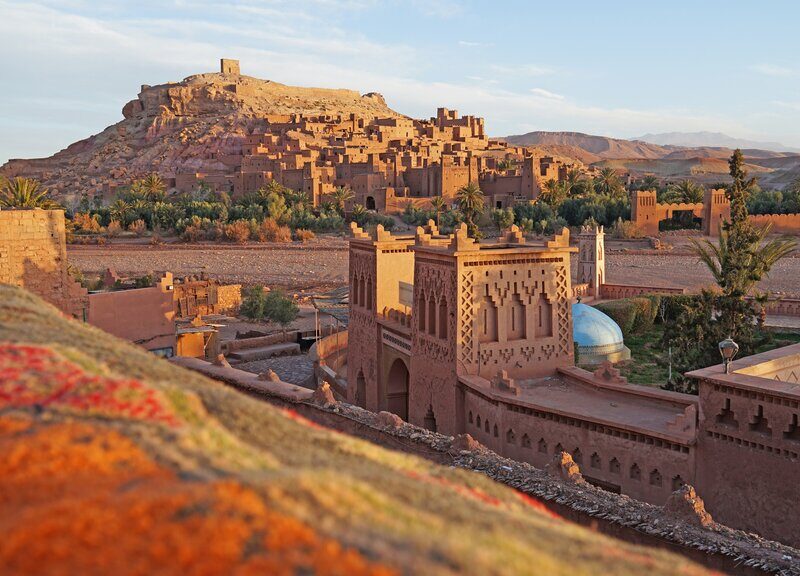
But Ouarzazate’s deeper appeal lies in its position as the gateway to some of Morocco’s most dramatic and most un-touristed landscapes. The UNESCO-listed Aït Benhaddou kasbah — 30 km west of the city — is one of the finest examples of southern Moroccan earthen architecture in existence and a filming location of legendary status. The Draa Valley, extending south from Ouarzazate through 200 km of date palm oases and Berber villages toward the Sahara, is one of the most beautiful drives in Africa.
Key Attractions in Ouarzazate
The Taourirt Kasbah in the city center. The Atlas Film Studios guided tour. Day trip to Aït Benhaddou UNESCO site. The Draa Valley road south toward Zagora. The Fint Oasis — a hidden green valley just outside the city. The route east through the Dades Valley and Todra Gorge toward Merzouga and the Sahara.
How Much Time to Allow
Allow two to three days for Ouarzazate and its surrounding area — one day for the city and Aït Benhaddou, one day for the Dades Valley, and one day for continuing south toward the Sahara or east toward Merzouga.
Best for: Desert lovers, film enthusiasts, architecture lovers, travellers on the imperial cities to Sahara circuit, anyone seeking southern Morocco’s extraordinary kasbah and oasis landscapes.
Must-Visit Cities in Morocco: Beyond the Cities
Morocco’s must-visit cities are only part of the story of this extraordinary country. Between and beyond the cities lie some of Morocco’s greatest experiences — the Sahara desert near Merzouga, the High Atlas trekking routes around Jebel Toubkal, the Atlantic surf coast from Taghazout to Imsouane, and the ancient argan forest of the Arganeraie Biosphere Reserve.
The Atlantic Surf Coast
The stretch of Atlantic coastline from Agadir north through Taghazout, Tamraght, and Imsouane to Essaouira is one of the most rewarding and most distinctive travel corridors in Morocco — combining world-class surf, authentic Berber coastal communities, dramatic cliff and headland scenery, and extraordinary food into an experience that the must-visit cities in Morocco list cannot fully capture.
Imsouane specifically — with its legendary long right-hand bay wave, authentic Berber fishing village character, and extraordinary natural setting — represents the Atlantic coast at its most pure and its most rewarding. For everything you need to plan a coastal Morocco itinerary combining the must-visit cities with the Atlantic surf coast, read our Morocco road trip guide.
For a full seasonal guide to planning your visit to Morocco’s cities and coast, read our best time to visit Morocco guide.
Must-Visit Cities in Morocco: Travel Tips
How to Connect the Must-Visit Cities
Morocco’s must-visit cities are connected by an excellent and improving transport network. The ONCF national railway links Casablanca, Rabat, Meknès, Fès, and Marrakech with comfortable and affordable train services. The Al Boraq high-speed train connects Casablanca to Tangier in just over two hours. CTM long-distance buses serve destinations not covered by rail — including Agadir, Essaouira, Ouarzazate, and Chefchaouen.
For the most flexibility — particularly for connecting the must-visit cities in Morocco with the Atlantic surf coast, mountain regions, and Sahara — hiring a car remains the most rewarding option.
How Much Time to Allow
A comprehensive itinerary covering all 10 must-visit cities in Morocco requires a minimum of three weeks. A focused itinerary covering the imperial cities (Marrakech, Fès, Meknès, Rabat) plus Chefchaouen and Essaouira is achievable in 10–14 days. Adding the Atlantic surf coast from Agadir to Imsouane and south to Ouarzazate extends the ideal itinerary to three to four weeks.
Budget Planning
Morocco’s must-visit cities vary significantly in cost. Marrakech and Fès are the most expensive for accommodation and tourist-facing experiences. Meknès, Rabat, and Tangier offer significantly better value for comparable quality. Agadir is competitively priced at the hotel level but premium at resort properties. For a complete cost breakdown across all of Morocco’s regions, read our Morocco travel cost and budget guide.
Respect and Etiquette
All of Morocco’s must-visit cities are predominantly Muslim communities. Dress modestly when visiting medinas, mosques, and traditional neighborhoods — shoulders and knees covered for both men and women. Ask permission before photographing residents in traditional dress. Observe prayer times respectfully. Learn basic greetings in Arabic (Salam alaikum) and Darija (La bas) — the warmth generated by these small gestures of cultural respect is one of the most consistently rewarding aspects of travel in Morocco’s cities.
External resource: Morocco Travel Safety and Entry Requirements — UK Foreign Office
External resource: UNESCO World Heritage Sites in Morocco
External resource: Official Morocco Tourism — City Guides
must-visit cities in Morocco travel tips transport budget respect culture 2026
The Must-Visit Cities in Morocco Await
The must-visit cities in Morocco in 2026 constitute one of the finest urban travel collections available anywhere in the world — ten cities of extraordinary diversity, historical depth, cultural richness, and natural beauty that together tell the full story of a country at the crossroads of continents, cultures, and centuries.
From the overwhelming sensory intensity of Marrakech to the medieval labyrinth of Fès, from the blue-washed tranquility of Chefchaouen to the wind-battered Atlantic character of Essaouira, from the literary intrigue of Tangier to the desert gateway drama of Ouarzazate — each of the must-visit cities in Morocco delivers a fundamentally different and fundamentally unrepeatable version of what Morocco is and what it offers the curious and open-minded traveller.
Visit them with time, with attention, and with the willingness to be surprised. Morocco’s cities reward slow travel and punish rushing. The medina that overwhelms on day one reveals its logic and its beauty on day three. The city that seems too busy at noon is magical at dawn. The street that looks like every other street in Fès opens suddenly onto a courtyard of breathtaking architectural splendor.
The must-visit cities in Morocco are not destinations to check off a list. They are worlds to inhabit — briefly, attentively, and with gratitude for the extraordinary privilege of being there.
Have questions about planning your Morocco city itinerary? Leave a comment below or explore our full collection of Morocco travel guides — including our things to do in Morocco guide, Morocco road trip guide, best time to visit Morocco, Morocco travel cost guide, Essaouira to Imsouane road trip, Imsouane bay guide, best surf town in Morocco, reasons to visit Imsouane, and our 15 things to do in Imsouane — for everything you need to plan an extraordinary Morocco journey in 2026.
Comments