 By
By
Imsouane Morocco village culture hidden gems beyond surfing Atlantic coast
Source: Unsplash.com — search “Imsouane Morocco village bay fishermen”
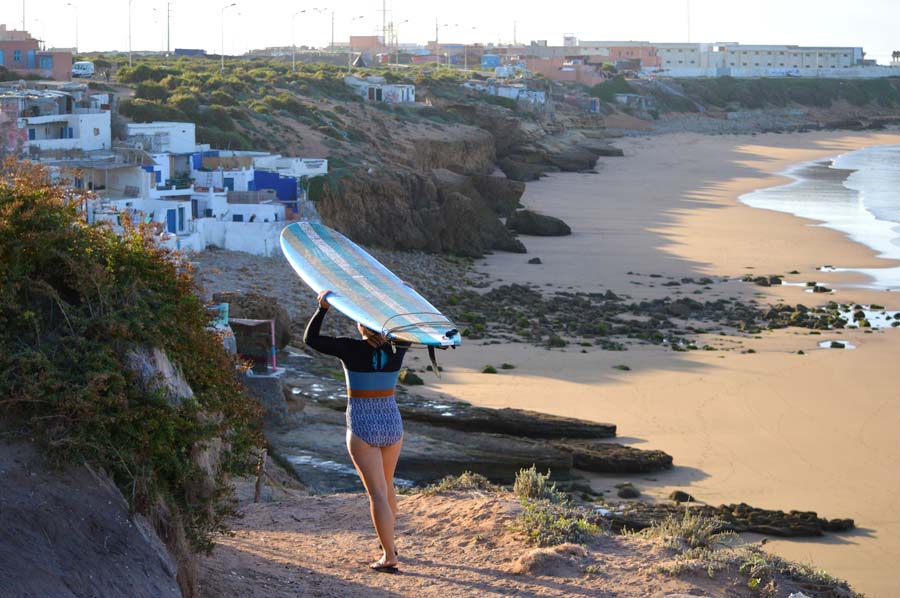
Table of Contents
- Imsouane Morocco: More Than a Surf Destination
- The History and Soul of Imsouane Morocco
- Local Culture and Berber Traditions in Imsouane
- The Food Scene: What to Eat in Imsouane Morocco
- Hidden Gems Around Imsouane Morocco
- Day Trips from Imsouane Morocco
- Art, Music and Community Life in Imsouane
- Sustainable Travel and Responsible Tourism in Imsouane Morocco
- When to Visit Imsouane Morocco
- Travel Tips for Imsouane Morocco
Imsouane Morocco is known around the world for one thing above all others — the long, peeling right-hand wave that wraps around its bay and offers surfers one of the most magical rides on the African continent. But to reduce Imsouane to a surf spot alone is to miss the deeper and richer story of a place that has been shaped by centuries of Berber coastal culture, Atlantic fishing traditions, and the kind of authentic community spirit that most Moroccan tourist destinations lost decades ago.
Beyond the surf breaks and the board racks, Imsouane Morocco reveals itself slowly and generously to travellers who choose to look a little deeper. The harbor where fishermen mend nets at dawn. The women baking msemen flatbread on open griddles in the village square. The elderly men playing cards outside the café while Atlantic swells roll endlessly in below. The call to prayer drifting over the headland at dusk. These are the experiences that visitors remember longest — and that bring them back year after year.
In 2026, Imsouane Morocco stands at a fascinating crossroads. International recognition is growing fast, new accommodation and restaurants are opening, and a new generation of visitors is arriving who want more than just waves. This guide is written for those visitors — and for anyone who wants to understand what makes Imsouane Morocco genuinely extraordinary beyond its famous surf.
Before exploring everything Imsouane has to offer, get the full picture of Morocco’s Atlantic coast by reading our complete guide to things to do in Morocco.
Imsouane Morocco: More Than a Surf Destination more-than-surf
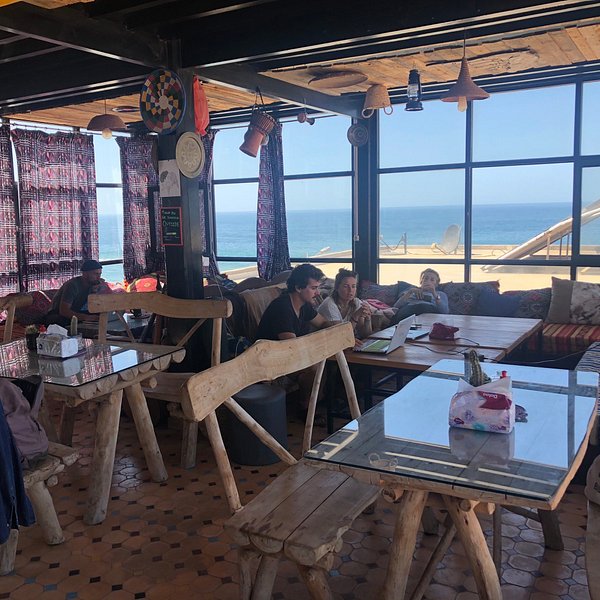
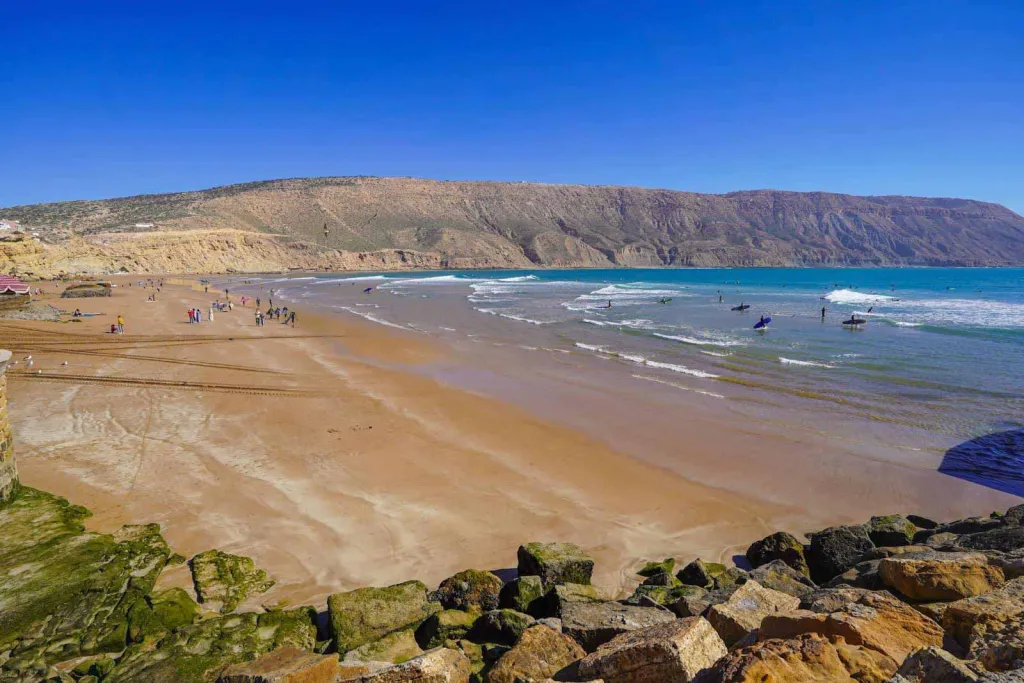
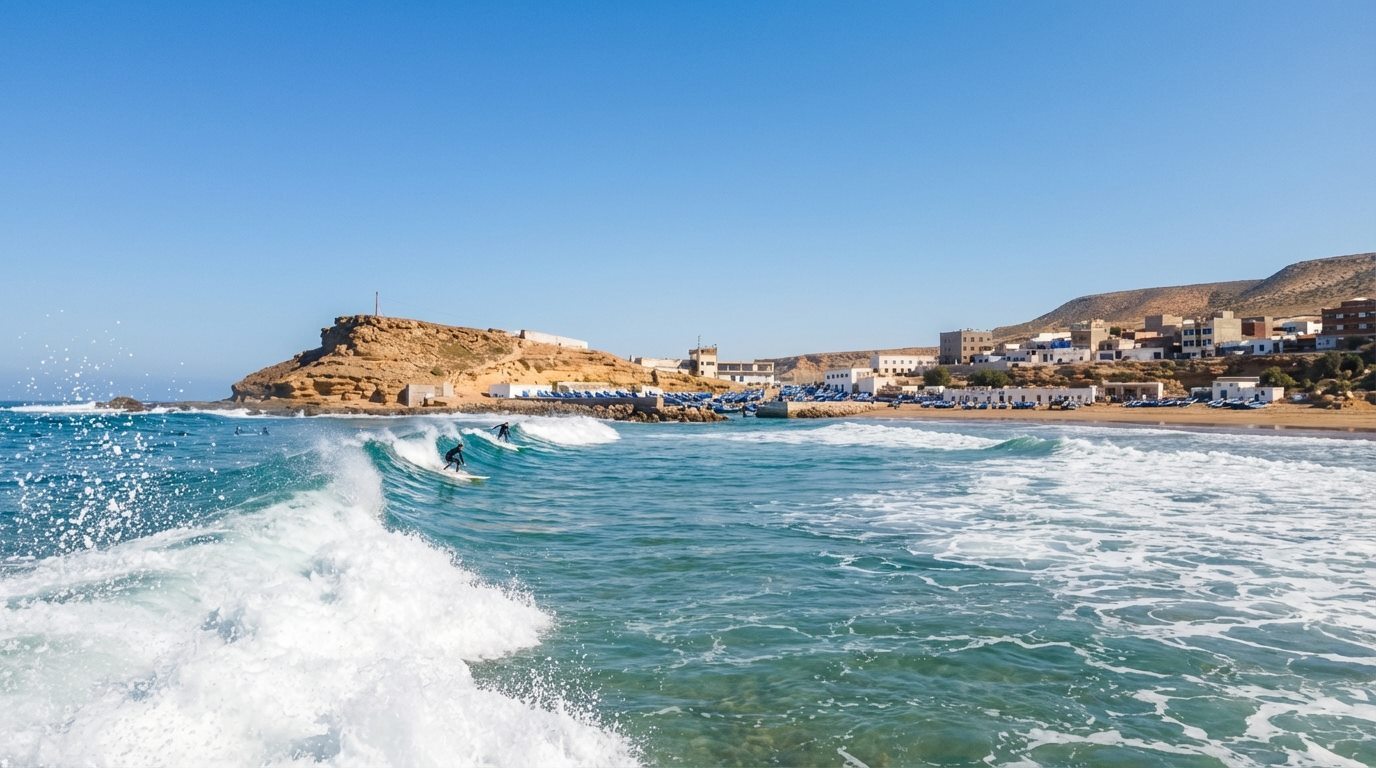
Imsouane Morocco occupies a stretch of Atlantic coastline approximately 70 km north of Agadir and 80 km south of Essaouira — a geographic position that places it squarely between two of Morocco’s most beloved destinations while maintaining a character entirely its own. The bay is shaped by a natural rocky headland that creates both the famous right-hand surf wave and the sheltered harbor where the village’s fishing fleet has operated for generations.
What distinguishes Imsouane Morocco from other surf villages along this coast is the survival of its authentic community fabric. Unlike Taghazout, which has been significantly transformed by the luxury Taghazout Bay resort development, or Essaouira, which has been a major tourist destination for over three decades, Imsouane has grown more gradually. The result is a village where tourism and local life genuinely coexist — where the surf school shares the harbor wall with the fishing boat repair yard, and where the restaurant serving tagine to international visitors is run by the same family that has been cooking for the village for two generations.
This authentic coexistence is Imsouane Morocco’s greatest cultural asset — and the quality that makes it genuinely irreplaceable among Morocco’s coastal destinations. For a broader understanding of how Imsouane compares to other Atlantic coast destinations, read our comprehensive Imsouane bay guide.
Imsouane Morocco village bay fishermen
Source: Unsplash.com — search “Morocco fishing village harbor boats Atlantic”
The History and Soul of Imsouane Morocco history
The history of Imsouane Morocco is the history of the Berber communities of the Haha region — the stretch of Atlantic coast between Agadir and Essaouira that has been home to Amazigh (Berber) peoples for millennia. The Haha Berbers have always been a maritime as well as a mountain people — fishing the Atlantic, trading along the coast, and maintaining a cultural identity that is distinct from both the Arab urban culture of Morocco’s imperial cities and the nomadic Berber traditions of the Saharan south.
The Berber Maritime Heritage
Long before international surfers discovered Imsouane’s wave, the bay served as a natural harbor for the fishing communities of the Haha coast. The geography that creates the surf break also creates a sheltered anchorage — and it is this dual function, recreational and commercial, that has defined the bay’s character throughout its history.
The fishing traditions of Imsouane Morocco are ancient and ongoing. Sardines, sea bass, bream, and octopus are the primary catch, landed each morning by boats that have barely changed in their essential design over centuries. The fish market that operates on the harbor wall — where the morning’s catch is sold directly from boat to buyer in a rapid, informal auction — is one of the most authentic and least-visited cultural experiences available to visitors in Imsouane Morocco.
The Haha Region’s Argan Oil Tradition
Imsouane Morocco sits within the UNESCO-designated Arganeraie Biosphere Reserve — the only place on earth where argan trees grow naturally. The argan tree (Argania spinosa) produces a nut from which is extracted argan oil — one of the world’s most prized culinary and cosmetic oils, and a product of deep cultural significance to the Berber women of the region who have controlled its production for centuries.
The cooperatives of Berber women who crack argan nuts by hand and press the oil using traditional stone mills represent one of the most important living cultural traditions of the Haha region. Visiting an argan cooperative near Imsouane Morocco — watching the process, learning the history, and purchasing directly from the producers — is one of the most meaningful cultural experiences available in this part of Morocco.
Local Culture and Berber Traditions in Imsouane Morocco culture
Understanding the local culture is central to truly experiencing Imsouane Morocco beyond its surf reputation. The community is predominantly Amazigh (Berber) and maintains cultural traditions — in language, music, architecture, dress, and daily rhythm — that differ meaningfully from the Arab-influenced culture of Morocco’s imperial cities.
Language and Communication
The first language of most Imsouane residents is Tachelhit — the southern Berber dialect spoken across the Souss-Massa region and the Haha coast. Darija (Moroccan Arabic) is widely understood and spoken, and French is used in commercial contexts. Very little English is spoken in the village outside the surf and tourism businesses. Learning even a handful of Tachelhit greetings — “Azul” (hello), “Tanmirt” (thank you) — is received with warmth and genuine appreciation by local residents and transforms interactions from transactional to personal.
Religious and Community Life
Imsouane Morocco is a practicing Muslim community and the rhythms of daily life are shaped by the five daily prayers, the weekly Friday Jumu’ah prayer, and the annual cycle of Islamic festivals. The small mosque at the heart of the village is the community’s spiritual center, and the call to prayer that echoes across the bay five times daily is one of the most distinctive and moving sounds of the Imsouane experience.
Visitors to Imsouane Morocco are welcomed warmly but should observe basic cultural courtesies — modest dress when moving through the village away from the beach, respectful behaviour during prayer times, and sensitivity around photographing local residents, particularly women, without explicit permission.
Traditional Crafts and Artisan Culture
The Haha region around Imsouane Morocco is home to a rich tradition of artisan craft production. Woven baskets and mats made from doum palm fiber, carved wooden objects from argan and thuya wood, hand-thrown pottery, and silver Berber jewelry are all produced in communities within easy reach of Imsouane. The weekly souks in nearby towns — particularly the Thursday market in Aït Baha and the Sunday market in Ounagha — offer direct access to authentic craft production at prices that reflect local rather than tourist economics.
The Food Scene: What to Eat in Imsouane Morocco food
The food in Imsouane Morocco is among the simplest, freshest, and most satisfying on the entire Moroccan Atlantic coast. The village’s fishing heritage means that seafood dominates the menu — and the quality of what ends up on your plate is directly connected to what came off the boats that morning.
Fresh Fish on the Harbor Wall
The most iconic eating experience in Imsouane Morocco is the simplest — grilled fresh fish on the harbor wall, bought directly from one of the small open-air grills that set up beside the boat landing each morning and lunchtime. Sardines, mackerel, and sea bream are cleaned, seasoned with cumin and preserved lemon, and grilled over charcoal for a few minutes before being served with khobz bread and a simple tomato and onion salad. The entire meal costs 30–60 MAD ($3–$6) and is one of the finest things you will eat in Morocco.
Traditional Moroccan Home Cooking
Several small family-run restaurants in Imsouane Morocco serve traditional Moroccan home cooking that reflects the Haha Berber culinary tradition rather than the tourist-adapted menus of Marrakech or Essaouira. Tagines slow-cooked with preserved lemons and olives, couscous topped with seven vegetables and caramelized onions, harira soup enriched with fresh herbs from the village garden — these are dishes prepared with genuine craft and served with genuine hospitality.
Argan Oil in the Kitchen
One of the distinctive culinary pleasures of eating in Imsouane Morocco and the surrounding Haha region is the presence of argan oil in the kitchen. Amlou — a rich paste of toasted almonds, argan oil, and honey — is served at breakfast with msemen flatbread and is one of the great taste experiences of southern Morocco. Culinary argan oil also appears in tagines and salad dressings, giving the food of this region a flavor profile unlike anywhere else in the country.
Where to Eat in Imsouane Morocco
The restaurant scene in Imsouane Morocco is small, informal, and refreshingly authentic. A handful of terrace restaurants above the bay offer panoramic views of the surf alongside straightforward menus of fish, tagine, and salads. Prices are significantly lower than comparable restaurants in Agadir or Essaouira — a full meal with freshly squeezed orange juice rarely exceeds 80–120 MAD ($8–$12) per person.
For context on how food costs in Imsouane compare to the rest of Morocco, see our Morocco travel cost and budget guide.
Imsouane Morocco food fresh fish grilled harbor tagine local restaurant
Source: Unsplash.com — search “Morocco grilled fish harbor seafood Atlantic coast”
Hidden Gems Around Imsouane Morocco hidden-gems
Beyond the main bay and the surf breaks, Imsouane Morocco and its surrounding area contain a remarkable collection of hidden gems that reward curious travellers willing to explore beyond the obvious.
Cathedral Beach — Imsouane’s Secret South Shore
On the southern side of Cap Imsouane headland — just a ten-minute walk from the main village — lies Cathedral Beach, a dramatically different Atlantic environment from the sheltered bay. Cathedral Beach is a long, exposed stretch of sand backed by towering basalt cliffs that have been sculpted by Atlantic waves into cathedral-like arches and sea caves. The surf here is powerful and raw compared to the gentle bay wave — experienced surfers rate Cathedral Beach’s beach break among the most challenging and rewarding on the Haha coast.
Even for non-surfers, Cathedral Beach is a place of extraordinary natural drama. Walking the cliff path above the beach at sunset — watching Atlantic swells explode against the dark basalt with the last light turning the sea copper and gold — is one of the most memorable experiences available in Imsouane Morocco.
The Argan Forest Walks
The hills immediately inland from Imsouane Morocco are covered with ancient argan trees — gnarled, drought-resistant, and deeply atmospheric. Walking through the argan forest in the early morning, when the light filters through the silver-green canopy and goats perch impossibly in the upper branches eating argan fruit (a sight unique to this part of Morocco), is a genuinely extraordinary experience that very few Imsouane visitors take the time to seek out.
Ask at your guesthouse about guided argan forest walks led by local Berber guides — a morning in the arganeraie with someone who grew up among these trees is worth a hundred surf sessions for cultural depth and natural wonder.
The Village Cemetery and Marabout Shrines
On the hillside above the village, the whitewashed tombs of Imsouane’s cemetery and the domed shrines of local marabouts (Islamic holy men) offer both a contemplative vantage point and a window into the spiritual landscape of Haha Berber Islam. The synthesis of Islamic practice and pre-Islamic Berber spiritual tradition that characterizes this region — expressed in the decoration of shrines, the annual festivals at marabout tombs, and the role of baraka (divine blessing) in everyday life — is a fascinating cultural dimension of Imsouane Morocco that most visitors never encounter.
The Thursday Souk of Aït Baha
Just 35 km inland from Imsouane Morocco, the Thursday weekly market of Aït Baha is one of the most authentic rural souks in the Souss-Massa region. Unlike the tourist-oriented souks of Marrakech and Fès, the Aït Baha market serves the genuine commercial needs of the surrounding Berber farming communities — livestock, agricultural produce, hardware, fabric, and spices are traded in a loud, colorful, entirely authentic environment. Visiting the Aït Baha souk on a Thursday morning is one of the most culturally immersive experiences available in the wider Imsouane Morocco area.
Day Trips from Imsouane Morocco day-trips
Imsouane Morocco’s location — midway between Agadir and Essaouira along one of Morocco’s most scenic coastal roads — makes it an exceptional base for day trips to some of the region’s finest destinations.
Essaouira — The Wind City
Essaouira, located approximately 80 km north of Imsouane Morocco along the coastal road, is one of Morocco’s most beloved and atmospheric towns. Its UNESCO-listed medina of blue-and-white buildings, its wind-battered ramparts, its thriving art scene, and its extraordinary seafood market make it a compelling day trip destination from Imsouane. The coastal drive north — through argan forest, dramatic cliff scenery, and the surf town of Sidi Kaouki — is itself one of the most beautiful road journeys in southern Morocco.
For more on what makes Essaouira exceptional, read our complete Morocco road trip guide covering the Atlantic coast route in detail.
Agadir — City, Beach, and Shopping
Agadir, 70 km south of Imsouane Morocco, provides everything a small village cannot — large supermarkets, international restaurants, a modern hospital, a long sandy beach, and the animated commercial life of Morocco’s premier resort city. A day trip to Agadir from Imsouane combines practical errands with genuinely enjoyable urban exploration. The Souk El Had market in Agadir — one of the largest traditional markets in Morocco — is worth several hours of exploration.
Taghazout and the Surf Coast
The surf villages of Taghazout and Tamraght, 45–50 km south of Imsouane Morocco along the coast, offer a fascinating contrast to Imsouane’s more intimate atmosphere. The Taghazout Bay luxury resort development, the concentration of surf schools and yoga studios, and the international café and restaurant scene make for a stimulating day out from the quieter pace of Imsouane. For everything you need to know about this stretch of coast, read our guide to buying land in Taghazout which covers the area’s geography and attractions in depth.
Tiznit — Silver City of the South
Located approximately 120 km south of Imsouane Morocco, Tiznit is one of the least-touristed and most rewarding walled cities in Morocco. Famous for its silver jewelry workshops — Tiznit silversmiths produce the finest Berber jewelry in the country — its impressive 19th-century ramparts, and its authentic medina, Tiznit rewards the longer day trip with a depth of cultural experience that is entirely uncrowded and unhurried.
Art, Music and Community Life in Imsouane Morocco art
The cultural life of Imsouane Morocco extends beyond its Berber heritage into a contemporary creative scene that is small but genuinely vibrant and growing.
Gnawa Music and Atlantic Blues
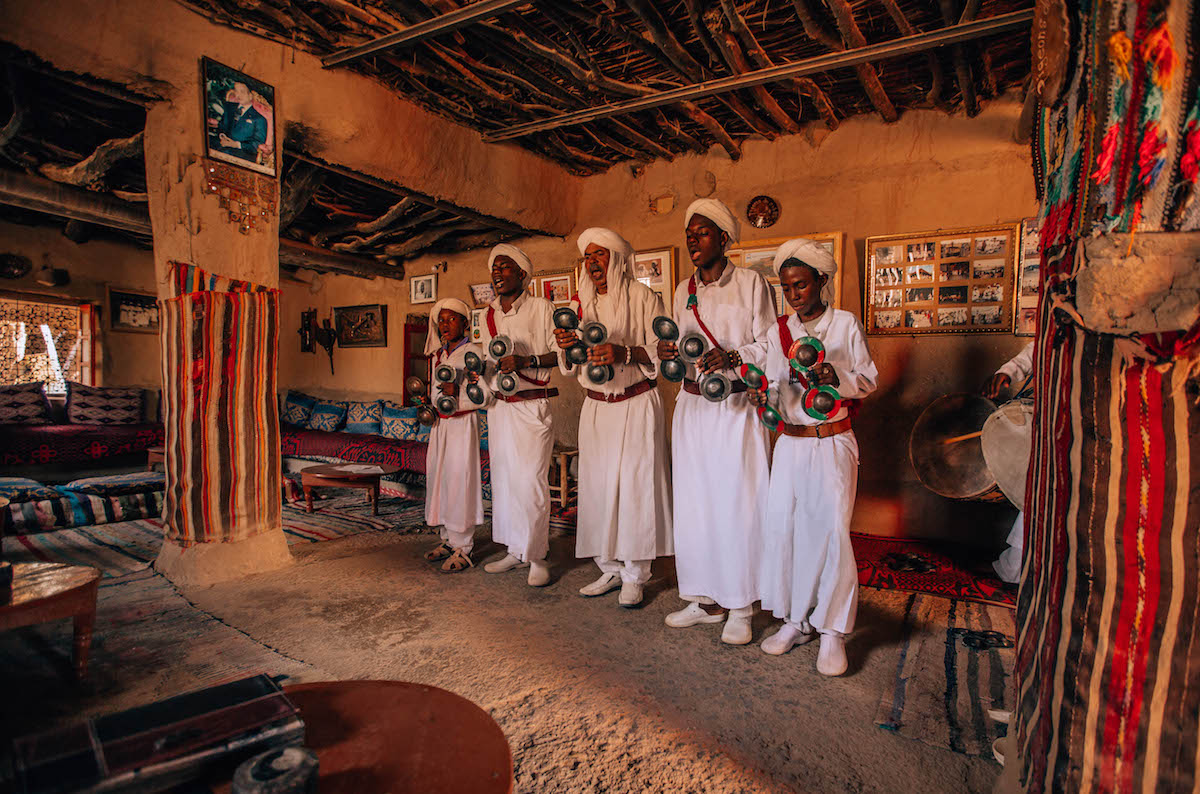
The Gnawa musical tradition — a form of trance music with deep roots in sub-Saharan African spiritual practice that was brought to Morocco by enslaved people centuries ago — is present along the entire Atlantic coast from Essaouira to Agadir, and Imsouane Morocco is no exception. Occasional Gnawa performances in the village — impromptu rather than ticketed — offer one of the most powerful musical experiences in Morocco to visitors who encounter them. The driving rhythm of the sintir bass lute and the metallic percussion of the krakeb castanets create a hypnotic, physically compelling sound that is unlike anything else in world music.
Surf Art and the Creative Community
The growing international surf community in Imsouane Morocco has generated a small but energetic creative scene — surf photographers, muralists, craft jewelry makers, and textile artists have established a quiet presence in the village that adds a contemporary creative layer to the traditional cultural fabric. Small galleries and artisan shops have begun to appear in the village, offering work that reflects the intersection of Berber tradition and Atlantic surf culture that is uniquely Imsouane’s own.
Community Festivals and Seasonal Celebrations
The annual rhythm of community life in Imsouane Morocco is punctuated by festivals that blend Islamic religious observance with older Berber seasonal traditions. The Mouloud (Prophet’s birthday celebration), Aid el-Kebir (the festival of sacrifice), and local moussems (saints’ day festivals) at nearby marabout shrines all create occasions for communal gathering, music, and collective identity that are deeply moving to witness as an outside visitor.
Imsouane Morocco culture music Gnawa art community village life celebration
Source: Unsplash.com — search “Morocco Gnawa music culture village festival”
Sustainable Travel and Responsible Tourism in Imsouane Morocco sustainable
As Imsouane Morocco’s international profile grows, the question of how tourism develops here — and whether it preserves or erodes what makes the village extraordinary — becomes increasingly important. Responsible and sustainable travel choices by visitors make a genuine difference to the community’s future.
Support Local Businesses Directly
Eat at family-run restaurants rather than internationally owned establishments. Buy argan oil and craft goods directly from local women’s cooperatives rather than through intermediaries. Book accommodation in locally owned guesthouses rather than international platforms where revenue flows out of the village. These choices keep tourism money circulating within the Imsouane Morocco community and strengthen the local economy that sustains the authentic culture visitors come to experience.
Respect the Ocean and the Coast
The Atlantic coastline around Imsouane Morocco is one of the most pristine and beautiful stretches of coast in Africa. Keep it that way — carry out everything you carry in, never leave rubbish on the beach, and support the local beach clean-up initiatives that several surf schools and guesthouses in the village organize regularly.
Learn Before You Visit
Understanding the cultural context of Imsouane Morocco before you arrive makes you a more respectful and more rewarding visitor. Read about Berber culture, learn a few words of Tachelhit, understand the significance of Ramadan and Islamic prayer times, and approach local interactions with genuine curiosity rather than transactional efficiency. The rewards — in terms of authentic connection and memorable experience — are immeasurable.
For practical sustainable travel planning, our best time to visit Morocco guide covers shoulder season timing strategies that spread tourism more evenly through the year and reduce pressure on the village during peak months.
When to Visit Imsouane Morocco when-to-visit
Imsouane Morocco is genuinely a year-round destination, but different seasons offer very different experiences.
Autumn (September–November) is the finest overall season for visiting Imsouane Morocco. Surf swells build from the north, temperatures are warm but not oppressive (24–28°C), crowds are lower than summer, and the village has a relaxed, authentic energy that feels closest to its true character.
Winter (December–February) brings the biggest Atlantic swells of the year to Imsouane Morocco — a paradise for experienced surfers and photographers seeking dramatic wave imagery. Days are warm and sunny (18–22°C) while nights are cool. The village is quieter than any other season, prices are at their lowest, and the combination of powerful surf and star-filled Atlantic skies creates an atmosphere of raw natural beauty.
Our dedicated guide to surfing Imsouane in winter covers the winter season in complete detail — from swell patterns and tide timing to accommodation recommendations and what to pack for cold-season coastal living.
Spring (March–May) brings warming temperatures, returning bird migrations along the Atlantic flyway, argan blossom in the hills, and a gradual build in visitor numbers. Spring is the best season for argan forest walks, inland day trips, and combining cultural exploration with gentle surf sessions.
Summer (June–August) is peak season in Imsouane Morocco — the village is at its busiest, accommodation is most expensive and requires advance booking, and the surf wave is at its smallest due to reduced Atlantic swell activity. The bay is beautiful for swimming, and the atmosphere is festive and social, but it is the least representative season for experiencing the authentic daily life of the village.
Travel Tips for Imsouane Morocco travel-tips
Getting to Imsouane Morocco
Imsouane Morocco is accessible by car from Agadir (approximately 75 minutes) via the coastal road north through Taghazout and Tamraght, or from Essaouira (approximately 90 minutes) south along the same coastal route. There is no train service to Imsouane — the nearest rail connection is Agadir. Shared grand taxis from Agadir’s main taxi station connect to nearby towns, from which local transport reaches the village. Renting a car in Agadir is the most convenient option for most visitors.
Accommodation in Imsouane Morocco
Accommodation in Imsouane Morocco ranges from simple rooms in family guesthouses (150–300 MAD/$15–$30 per night) to well-designed surf lodges and boutique riads with bay views (500–1,500 MAD/$50–$150 per night). Book in advance for winter surf season (December–February) and summer peak (July–August) — the village’s accommodation capacity is limited and fills quickly in both windows.
Money and Connectivity
Imsouane Morocco has no ATM within the village — bring sufficient cash from Agadir or Essaouira before arriving. Mobile data coverage has improved significantly but remains patchy in some parts of the bay and headland. A local Moroccan SIM card (Maroc Telecom or Inwi) provides the best available connectivity. Wi-Fi is available in most guesthouses and surf lodges.
Respect and Etiquette
Imsouane Morocco is a conservative Berber Muslim community. Dress modestly when moving through the village — swimwear is appropriate on the beach and in the surf zone only. Always ask permission before photographing local residents. Engage with the community respectfully and curiously — the warmth and generosity you will receive in return is one of the defining experiences of visiting Imsouane Morocco.
For a full budget and practical planning guide covering the entire Moroccan Atlantic coast, see our complete Morocco travel cost and budget guide.
Imsouane Morocco travel tips sunset bay village Atlantic coast authentic experience
Source: Unsplash.com — search “Imsouane Morocco sunset bay village cliffs”
Imsouane Morocco Beyond the Wave
Imsouane Morocco is a place that rewards patience, curiosity, and a willingness to look beyond the obvious. The wave is extraordinary — but the culture is richer, the food is fresher, the history is deeper, and the community is warmer than any surf report or travel blog has fully conveyed.
Come for the surf if you like — but stay for the grilled sardines at dawn, the argan forest walks, the sound of Gnawa rhythms drifting across the bay at night, the Thursday market at Aït Baha, and the conversations that happen when you sit long enough in one place for the village to invite you in.
Imsouane Morocco in 2026 is still close enough to its authentic self that those experiences are genuinely available to any traveller who approaches with respect and genuine curiosity. That window will not remain open forever — which is all the more reason to come now, come prepared, and come with your eyes open to everything this extraordinary place has to offer beyond the wave.
Have questions about visiting or investing in Imsouane Morocco? Leave a comment below or explore our full collection of guides — including our Imsouane bay guide, surfing Imsouane in winter, buying land in Imsouane, things to do in Morocco, Morocco road trip guide, and best time to visit Morocco — for everything you need to experience this remarkable destination to its fullest.
Comments