 By
By
Imsouane vs Taghazout Morocco surf town comparison Atlantic coast 2026
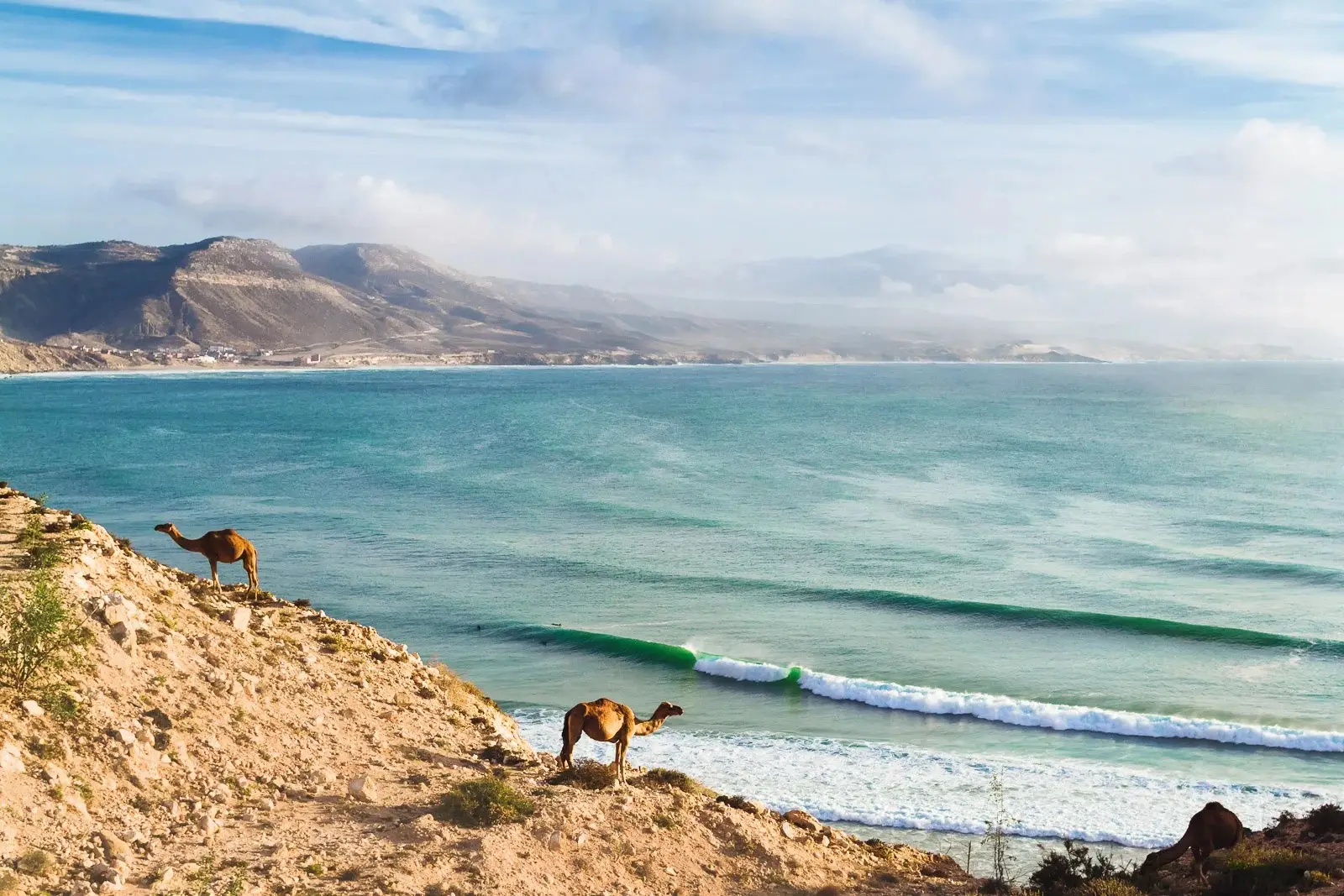
Table of Contents
- Imsouane vs Taghazout: Introduction
- Imsouane vs Taghazout: The Waves
- Imsouane vs Taghazout: Surf Levels and Accessibility
- Imsouane vs Taghazout: Authentic Character
- Imsouane vs Taghazout: Accommodation
- Imsouane vs Taghazout: Food and Restaurants
- Imsouane vs Taghazout: Value and Budget
- Imsouane vs Taghazout: Things to Do Beyond Surfing
- Imsouane vs Taghazout: Best Season to Visit
- Imsouane vs Taghazout: Final Verdict
Imsouane vs Taghazout:
Imsouane vs Taghazout is the debate at the heart of Morocco surf travel planning in 2026 — and it is a debate that generates strong opinions on both sides from the global surfing community. Both destinations sit on Morocco’s southern Atlantic coast, both offer world-class waves, both attract international surfers from across Europe and beyond, and both have built passionate communities of returning visitors who argue their chosen village is the finest surf destination on the Moroccan Atlantic seaboard.
But Imsouane vs Taghazout is not a debate between two versions of the same thing. These are two fundamentally different surf travel experiences — different in wave character, different in village atmosphere, different in price point, different in cultural depth, and different in the kind of traveller each destination serves best. Understanding those differences is the most important thing any surfer or traveller planning a Morocco surf trip in 2026 can do before choosing where to go.
This guide compares Imsouane vs Taghazout honestly and in full detail — covering waves, surf levels, authentic character, accommodation, food, value, activities beyond surfing, seasonal timing, and a final verdict that gives a clear recommendation for different types of travellers and surfers.
Before diving into the Imsouane vs Taghazout comparison, get the full picture of Morocco’s Atlantic surf coast by reading our complete guide to surfing in Morocco — the most comprehensive breakdown of every major surf destination from Tangier to Dakhla.
Imsouane vs Taghazout: The Waves
In any Imsouane vs Taghazout comparison, the waves must come first — because surf quality is the primary reason most visitors choose either destination, and the wave profiles of the two villages are genuinely and significantly different.
Imsouane’s Wave — Length and Accessibility
Imsouane’s defining surf asset is the right-hand bay wave — a point break of extraordinary length formed by the unique geometry of Cap Imsouane headland and the dominant northwest Atlantic swell direction. On the right swell day, this wave peels continuously for 400–700 metres — long enough for a surfer to ride from deep in the bay to the sandy shore in what feels like several minutes of unbroken flow.
The Imsouane bay wave is a wave of elegant and democratic character. It builds gradually, offers a clear and unhurried take-off zone, and peels in a consistent and predictable direction that allows surfers of all levels to read and anticipate it. It does not close out suddenly. It does not throw heavy lips at unprepared learners. It welcomes and rewards time in the water rather than punishing inexperience.
Cathedral Beach — on the southern side of Cap Imsouane headland — adds a second, more powerful break to Imsouane’s surf portfolio. This exposed Atlantic beach break receives the full force of northwest swell without the sheltering effect of the headland, producing powerful, challenging conditions that suit intermediate and experienced surfers seeking more intensity than the bay wave delivers.
Taghazout’s Waves — Power and Variety
Taghazout’s surf credentials are built on a different foundation — power, variety, and the kind of world-class reef and point break conditions that attract the global high-performance surfing community every winter.
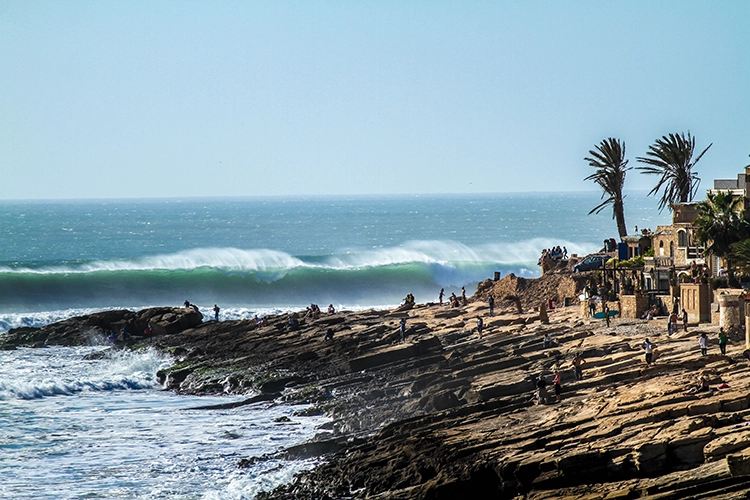
Anchor Point — the most famous break in the Taghazout area and one of the most celebrated right-hand point breaks in the world — is a powerful, long-period reef wave that delivers fast, hollow, and demanding conditions for experienced surfers. On a solid northwest swell, Anchor Point produces rides of 200–400 metres with significant power and speed — a wave that rewards skill and punishes complacency.
Hash Point, Killer Point, Mysteries, and Panoramas add further variety to the Taghazout surf portfolio — a collection of reef and point breaks that offers something different in character and difficulty for every level of the experienced surfing spectrum.
The Wave Verdict
In the Imsouane vs Taghazout wave comparison, the honest verdict depends entirely on what you value. For sheer length of ride and genuine accessibility to surfers of all levels, Imsouane wins decisively. For raw power, variety of breaks, and high-performance conditions, Taghazout wins equally decisively. For the beginner or intermediate surfer, Imsouane’s wave is the clear choice. For the experienced surfer seeking the most challenging and varied Morocco surf experience, Taghazout’s break portfolio makes a strong argument.
For a complete guide to Imsouane’s wave and what it delivers across all seasons and skill levels, read our dedicated article on Imsouane surfing paradise.
Imsouane vs Taghazout waves comparison Morocco surf Atlantic point break bay
Imsouane vs Taghazout: Surf Levels and Accessibility
The Imsouane vs Taghazout comparison becomes most decisive when examined through the lens of surf skill level — because the two destinations serve different points on the surfer development spectrum more effectively than any other variable in the comparison.
Beginners — Imsouane Wins Clearly
For complete beginners and early-stage learners, Imsouane wins the Imsouane vs Taghazout comparison without serious contest. The bay wave’s gentle character, forgiving sections, clear take-off zone, and extraordinary length create the finest learning environment available at any Moroccan surf destination.
Most beginners who arrive in Imsouane with no prior surf experience are standing up on waves within their first lesson. The wave’s length means beginners get dramatically more time on their feet per wave than at any comparable learning break in Morocco — and more time on feet is the single most important variable in surf progression for learners.
Taghazout’s beginner surf options are more limited. The village’s most famous breaks — Anchor Point, Hash Point, Killer Point — are simply not appropriate for beginners. Beginner lessons in Taghazout typically use secondary beach breaks south of the village that are adequate for initial learning but cannot match the Imsouane bay wave for quality, length, or the sheer joy of the first real ride.
Intermediate Surfers — Imsouane Edges Ahead
For intermediate surfers developing their style, timing, and maneuver repertoire, both destinations offer quality experiences — but Imsouane’s wave provides a specifically superior progression environment. The bay wave’s length gives intermediate surfers time to complete multiple turns, experiment with cross-stepping and noseriding on a longboard, and link wave sections in a way that the shorter, punchier waves of Taghazout’s secondary breaks cannot match.
Intermediate surfers who want to advance to more powerful, faster wave conditions as their skills develop will find Taghazout’s range of breaks provides exactly the right next step after Imsouane — making the two destinations genuinely complementary for a traveller spending two to three weeks on the Moroccan Atlantic coast.
Experienced Surfers — Taghazout Edges Ahead
For experienced surfers seeking powerful, challenging, high-performance conditions, Taghazout wins the Imsouane vs Taghazout comparison. Anchor Point on a solid northwest swell is a world-class wave that Imsouane’s bay break — for all its qualities — cannot match in terms of power, speed, and the level of skill it demands and rewards.
However, experienced surfers who also appreciate the meditative quality of long, flowing rides — particularly longboarders — will find Imsouane’s bay wave genuinely rewarding alongside Taghazout’s power breaks. Many experienced surfers base themselves at Imsouane specifically for the longboarding conditions and make day trips to Taghazout when larger, more powerful swell arrives.
Imsouane vs Taghazout: Authentic Character
In the Imsouane vs Taghazout comparison of authentic village character — the quality of place that distinguishes a genuine destination from a manufactured surf resort — the verdict is unambiguous and decisive.
Imsouane’s Authentic Berber Soul
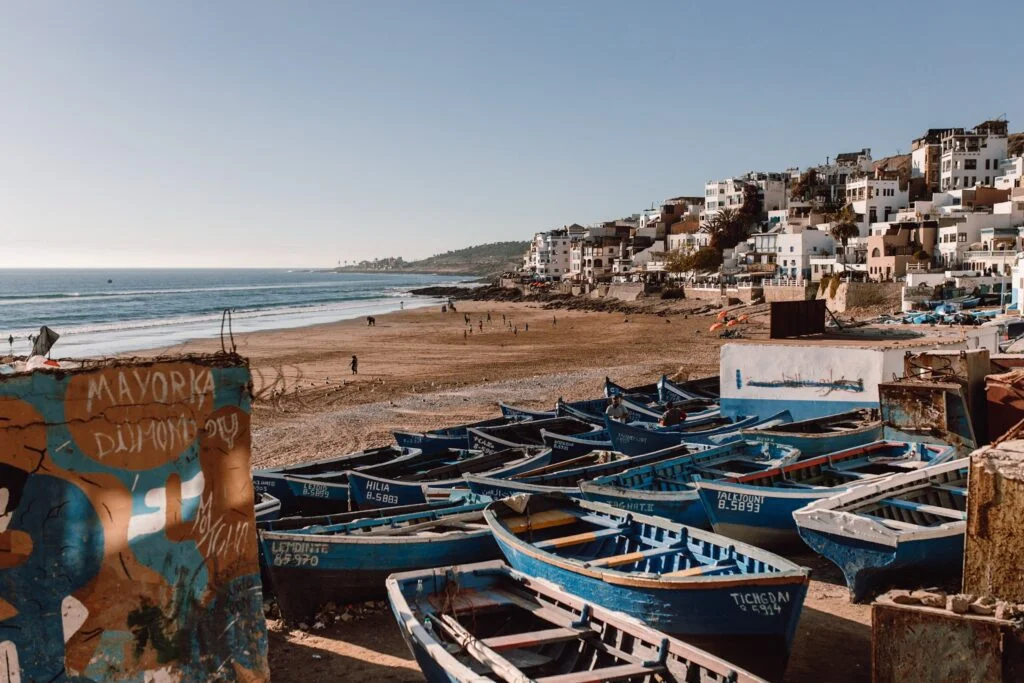
Imsouane remains a genuinely functioning Berber fishing village where tourism and local life coexist without one having overwhelmed the other. The fishing fleet still operates from the harbor every night. The fish market still opens at dawn on the harbor wall. The mosque still calls the community to prayer five times daily. The argan cooperative in the hills above the village still cracks nuts by hand. The Thursday souk at Aït Baha still serves the genuine commercial needs of surrounding farming communities.
None of this is performed for visitors. It simply continues — as it has continued for generations — and the quality of authentic engagement it offers to curious and respectful travellers is one of the most powerful and most irreplaceable qualities of any destination that can claim genuine distinction in the Imsouane vs Taghazout comparison.
Taghazout’s Transformed Character
Taghazout was, twenty years ago, a village of similar character to Imsouane today — a quiet Berber fishing community where surfers had discovered a remarkable wave and integrated gradually into the fabric of local life. That character has been substantially transformed by the Taghazout Bay resort development — a Fairmont Hotel, golf course, beach club, marina, and planned residential villas that have repositioned the area as Morocco’s most internationally profiled luxury surf resort destination.
The development has brought genuine benefits — improved infrastructure, wider accommodation options, better restaurants, and international brand recognition that drives consistent visitor numbers. But it has also created a destination that feels increasingly like an international surf resort that happens to be in Morocco rather than a Moroccan village that happens to have world-class surf.
The concentration of surf school banners, yoga retreat signs, avocado toast menus, and resort amenity signage that characterizes the Taghazout village center in 2026 is a world away from the harbor fish grill, argan cooperative, and dawn fish market that define Imsouane’s daily rhythm.
Character Verdict
In the Imsouane vs Taghazout comparison of authentic character, Imsouane wins decisively and without qualification. For travellers who value genuine cultural immersion, authentic community connection, and the irreplaceable quality of place that comes from a living Berber village rather than a surf resort — Imsouane is the clear choice. This is the most significant differentiator in the entire Imsouane vs Taghazout comparison.
For a complete guide to Imsouane’s authentic cultural life, read our in-depth article on the culture and hidden gems of Imsouane Morocco.
Imsouane vs Taghazout: Accommodation
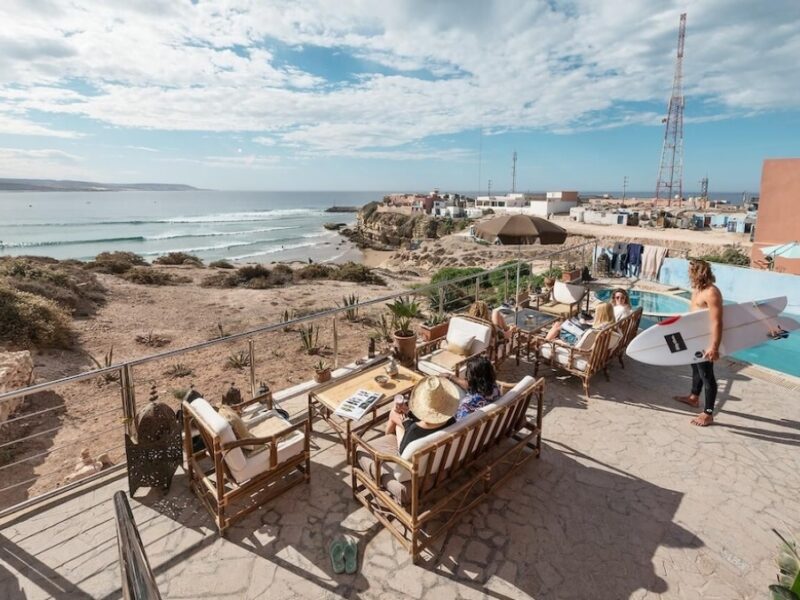
The Imsouane vs Taghazout accommodation comparison reflects the broader character difference between the two destinations — with Imsouane offering more authentic and more affordable options and Taghazout providing a wider range of international-standard and luxury choices.
Accommodation in Imsouane
Imsouane’s accommodation market is small, intimate, and predominantly locally owned. Options range from simple family guesthouse rooms with shared bathrooms (150–200 MAD/$15–$20 per night including breakfast) to well-designed boutique surf lodges with bay-view terraces and curated surf programs (400–800 MAD/$40–$80 per night). Dormitory beds in surf lodges cost 80–130 MAD ($8–$13) per night.
The standout quality of Imsouane accommodation is the personal relationship it creates between guest and host. Staying in a family guesthouse in Imsouane means breakfast prepared by the same hands every morning, surf condition updates from someone who has been watching this bay for twenty years, and the kind of genuine hospitality that no internationally managed property can replicate.
Weekly rates negotiated directly by WhatsApp — always bypassing booking platforms — typically deliver 30–40% savings on nightly prices. Monthly rates for long-stay surfers and digital nomads reach their lowest point in January and February — 2,000–3,500 MAD ($200–$350) per month including breakfast represents outstanding value by any international standard.
Accommodation in Taghazout
Taghazout’s accommodation market is significantly more developed and significantly more varied than Imsouane’s. Options range from budget surf hostel dormitories (80–120 MAD/$8–$12 per night) to luxury villas within the Taghazout Bay resort complex (from 2,000 MAD/$200 per night). The mid-range market — boutique riads, surf lodges with pools, and well-designed guesthouses — is more developed in Taghazout than in Imsouane, offering more choice for travellers who want quality above the basic level without luxury pricing.
The Fairmont Taghazout Bay hotel — the resort’s five-star anchor property — provides an international luxury experience completely unlike anything available in Imsouane, with rates from 2,500 MAD ($250) per night.
Accommodation Verdict
In the Imsouane vs Taghazout accommodation comparison, the choice depends on priorities. For authentic, intimate, and genuinely affordable accommodation — Imsouane wins. For wider choice across mid-range and luxury categories — Taghazout wins. For budget surf travel — both destinations are comparable at the hostel level.
For everything you need to know about accommodation options and pricing strategies in Imsouane, read our comprehensive Imsouane budget travel tips guide.
Imsouane vs Taghazout accommodation comparison Morocco surf guesthouse lodge
Imsouane vs Taghazout: Food and Restaurants
The Imsouane vs Taghazout food comparison is one of the most decisive categories in the entire analysis — and the verdict strongly favors Imsouane for authenticity, freshness, and value, with Taghazout winning on variety and international cuisine options.
Food in Imsouane
Imsouane’s food scene is built on two extraordinary foundations — the fishing economy that puts fresh Atlantic seafood on every table at prices that defy international comparison, and the Berber home cooking tradition that produces tagines, couscous, harira, and amlou of a quality and authenticity that no tourist-adapted restaurant menu can replicate.
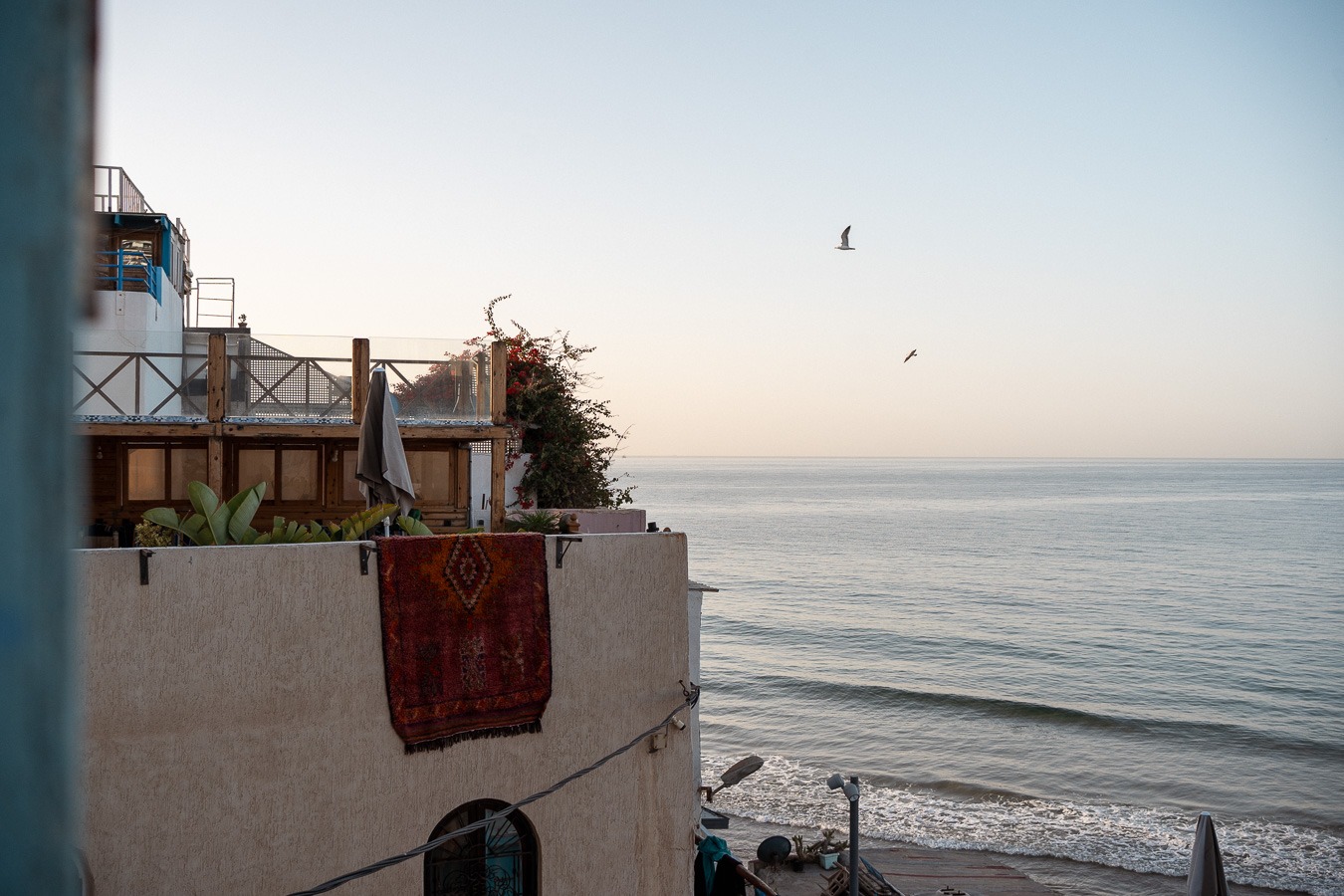
The harbor fish grill — the collection of open-air charcoal grills beside the boat landing — is the undisputed centerpiece of eating in Imsouane. Grilled sardines with khobz bread cost 20–30 MAD ($2–$3). Sea bream costs 40–55 MAD ($4–$5.50). This food — prepared from fish caught that morning, seasoned with cumin and preserved lemon, grilled over hot charcoal — is among the finest and most authentic eating experiences available anywhere on the Moroccan Atlantic coast.
Family-run local restaurants serve traditional Moroccan home cooking — tagines, couscous, harira — at prices well below their Taghazout equivalents. A full sit-down lunch costs 60–100 MAD ($6–$10). Breakfast of mint tea, khobz, and amlou costs 20–35 MAD ($2–$3.50).
Food in Taghazout
Taghazout’s restaurant scene is significantly more diverse than Imsouane’s and reflects the international surf community that has made its home in the village. Alongside traditional Moroccan restaurants, Taghazout offers a growing range of health-focused surf cafés serving smoothie bowls, avocado toast, grain bowls, and fresh juices that cater to the nutrition-conscious international surf traveller. Several mid-range restaurants offer good-quality Moroccan food with sea views at prices that reflect the village’s more developed tourism economy.
The trade-off is straightforward — Taghazout offers more variety and more international food options at higher prices. Imsouane offers less variety at dramatically lower prices with a level of freshness and authenticity that Taghazout’s more developed restaurant market struggles to match.
Food Verdict
In the Imsouane vs Taghazout food comparison, Imsouane wins on authenticity, freshness, and value. Taghazout wins on variety and international cuisine options. For travellers who prioritize the most genuinely Moroccan food experience — Imsouane is the clear choice. For travellers who want dietary flexibility and international food options alongside Moroccan cuisine — Taghazout serves them better.
Imsouane vs Taghazout: Value and Budget
The Imsouane vs Taghazout value comparison is one of the clearest and most consistent verdicts in the entire analysis — Imsouane is meaningfully more affordable than Taghazout across every cost category, and that affordability advantage compounds significantly over longer stays.
Daily Cost Comparison
A comfortable daily budget in Imsouane — private guesthouse room with breakfast, harbor fish grill lunch, local restaurant dinner, board rental for a surf session, and a sunset walk — costs approximately 350–500 MAD ($35–$50) per person.
An equivalent comfortable daily budget in Taghazout — mid-range surf lodge room, café lunch, restaurant dinner, board rental — costs approximately 500–800 MAD ($50–$80) per person. The Taghazout Bay resort area pushes this higher still for guests staying within the resort complex.
Over a two-week stay, this daily cost difference accumulates to a meaningful saving of $200–$400 per person in favor of Imsouane — enough to fund several additional days of travel, a significant portion of the flight cost, or a comfortable inland day trip circuit through the Atlas Mountains and Sahara.
Why Imsouane Is Cheaper
The price difference between Imsouane and Taghazout is not accidental — it reflects the structural difference between an earlier-stage destination with predominantly locally owned small businesses and a more developed destination where resort investment and international brand positioning have driven costs upward. Taghazout’s development has raised the quality floor of the accommodation and restaurant market — but it has also raised the price floor, removing some of the exceptional value that made Taghazout itself such a compelling destination in its early years.
Imsouane is currently at the stage Taghazout occupied fifteen years ago — genuinely exceptional quality at genuinely accessible prices. This window will not remain open indefinitely.
Value Verdict
In the Imsouane vs Taghazout value comparison, Imsouane wins decisively across every cost category. For budget-conscious travellers, long-stay surfers, and anyone who wants to maximize time in Morocco without maximizing expenditure — Imsouane is the clear and compelling choice.
For a complete guide to managing costs across every category of Imsouane travel, read our comprehensive Imsouane budget travel tips guide. For a broader Morocco cost context, read our Morocco travel cost and budget guide.
Imsouane vs Taghazout: Things to Do Beyond Surfing
The Imsouane vs Taghazout comparison of non-surf experiences reveals two destinations with genuinely different strengths — Imsouane winning on natural and cultural depth, Taghazout winning on organized activity variety and resort amenities.
Beyond Surfing in Imsouane
Imsouane’s non-surf experience is rooted in natural beauty, cultural authenticity, and the slow pleasures of genuine village life. The hike to Cathedral Beach and the coastal cliff path. Walking through the ancient argan forest at dawn. Visiting a women’s argan oil cooperative. Watching the harbor fish market at sunrise. Taking a Moroccan cooking class with a local family. Spending a morning at the Thursday souk in Aït Baha. Watching the sunset from Cap Imsouane. Taking a boat trip with fishermen. All of these experiences are free or nearly free, deeply authentic, and genuinely unavailable at any more developed surf resort destination.
For a complete guide to all 15 best things to do in Imsouane beyond surfing, read our dedicated article on the 15 best things to do in Imsouane.
Beyond Surfing in Taghazout
Taghazout’s non-surf experience is broader in the organized activity sense — yoga retreats, wellness centers, golf at the Taghazout Bay course, beach club facilities, spa treatments at the Fairmont, and a developed café and restaurant scene that creates more options for social evenings and varied dining. The resort infrastructure provides a level of organized leisure that Imsouane’s smaller and simpler village cannot match.
Day trips from Taghazout to Agadir (20 km south), Essaouira (120 km north), and inland to the Atlas Mountains are well-organized and easy to arrange through the village’s developed tourism infrastructure.
Beyond Surfing Verdict
In the Imsouane vs Taghazout beyond-surfing comparison, the verdict depends on preference. For authentic cultural immersion, natural beauty, and free or low-cost experiences rooted in genuine Berber village life — Imsouane wins. For organized leisure activities, resort amenities, and a wider social scene — Taghazout wins.
Imsouane vs Taghazout: Best Season to Visit
In the Imsouane vs Taghazout seasonal comparison, the two destinations share broadly similar Atlantic coast conditions — but with some meaningful differences in how each village performs in different windows.
Autumn — October to November
Autumn is the finest overall season at both destinations in the Imsouane vs Taghazout comparison. Atlantic swells build consistently from October, winds are generally favorable, temperatures are warm (22–27°C), and village atmospheres at both locations are at their most balanced and most authentic. October is widely considered the single best month to visit either destination.
Imsouane has a slight advantage in autumn — lower crowd levels and more competitive accommodation prices relative to comparable quality make the value proposition stronger than Taghazout’s during this peak window.
Winter — December to February
Winter is peak surf season at both destinations. Taghazout’s power breaks — particularly Anchor Point — fire most consistently and most impressively during the winter swell season, giving it an edge for experienced surfers during this period. Imsouane’s bay wave also performs at its most powerful and most rewarding in winter — and the village atmosphere in January and February has an intimate, authentic quality that Taghazout’s more developed infrastructure cannot replicate.
For a complete guide to winter surf conditions at Imsouane, read our dedicated article on surfing Imsouane in winter.
Spring — March to May
Spring is excellent at both destinations for beginner and intermediate surfing, warming temperatures, and cultural exploration. Imsouane’s argan forest is at its most beautiful in spring — wildflowers, new growth, and the extraordinary sight of goats in the trees create a landscape experience unavailable at Taghazout.
Summer — June to August
Summer brings flat surf and peak crowds to both destinations. Taghazout’s resort infrastructure handles summer crowds better than Imsouane’s smaller village scale. Imsouane’s Atlantic bay is beautiful for swimming in summer — but the wave is at its least consistent.
For a complete seasonal guide to both destinations, read our best time to visit Imsouane and our best time to visit Morocco guides.
Imsouane vs Taghazout best season to visit Morocco surf autumn winter spring
Imsouane vs Taghazout: Final Verdict
The Imsouane vs Taghazout final verdict is not a single answer — it is a set of answers that depend on who you are as a surfer and traveller, what you value most in a surf destination, and what kind of experience you want Morocco’s Atlantic coast to deliver.
Choose Imsouane If You Are
A beginner or intermediate surfer who wants the finest learning and progression wave in Morocco in a supportive and encouraging lineup environment. Imsouane’s bay wave is incomparably better for your development than anything Taghazout offers at the same skill level.
A longboarder or surf-style focused rider who prioritizes length of ride, wave elegance, and the meditative quality of long, flowing Atlantic waves over raw power and technical challenge. Imsouane’s wave was made for you.
A traveller who values authentic cultural experience over resort amenities — who wants to eat grilled sardines on a harbor wall rather than a smoothie bowl at a surf café, sleep in a family guesthouse rather than a boutique hotel, and experience a living Berber community rather than an international surf resort.
A budget traveller who wants to maximize time in Morocco on a limited budget. Imsouane’s affordability advantage over Taghazout is meaningful and consistent across every cost category.
A traveller seeking genuine solitude and authentic atmosphere — particularly in winter and shoulder seasons when Imsouane’s quiet intimacy creates an experience of rare quality.
Choose Taghazout If You Are
An experienced surfer seeking the most powerful, varied, and technically demanding surf breaks in Morocco. Anchor Point and the surrounding reef and point breaks deliver a wave quality that Imsouane’s bay simply cannot match for high-performance surfing.
A traveller who wants resort amenities and international food options alongside world-class surf — yoga retreats, wellness centers, beach club facilities, and a varied restaurant scene that goes well beyond traditional Moroccan home cooking.
A traveller who prioritizes convenience and infrastructure — better transport connections, more accommodation options across all quality levels, and the logistical ease of a more developed tourism destination.
The Honest Combined Answer
The most honest answer in the Imsouane vs Taghazout debate for a traveller spending two or more weeks on Morocco’s Atlantic coast is this — visit both. They are 50 km apart. They complement each other perfectly. Spend the majority of your time in Imsouane — for the wave, the value, the food, and the authentic Berber village experience — and make Taghazout a day trip or two-day excursion for the power breaks, the resort experience, and the contrast that makes each destination’s qualities more vivid when seen alongside the other.
Together, Imsouane and Taghazout constitute the finest two-destination surf itinerary available anywhere on the African Atlantic coast. Experienced separately, each is world-class in its own right. Experienced together — with Imsouane as your base and Taghazout as your contrast — they deliver a Morocco surf travel experience that is genuinely difficult to improve upon.
For investment opportunities in both destinations, read our guides to buying land in Imsouane and buying land in Taghazout.
Travel Tips for Both Destinations
Getting There
Fly into Agadir Al Massira Airport — served by Ryanair, easyJet, and Transavia from major European cities. Taghazout is 25 km north of Agadir — a 30-minute taxi ride. Imsouane is 70 km north — a 75-minute drive. A rental car from Agadir (from 250 MAD/$25 per day) gives maximum flexibility for exploring both destinations and the coastline between them.
Combining Both Destinations
For a two-week Morocco surf trip combining both destinations in the Imsouane vs Taghazout itinerary, consider basing yourself in Imsouane for 10 days and spending 3–4 days in Taghazout. This ratio reflects the value advantage of Imsouane for longer stays while allowing enough time in Taghazout to experience its distinctive surf and resort character properly.
Alternatively, base in Taghazout and make Imsouane a two-day overnight excursion — the coastal drive north through Tamraght, Aourir, and along the cliff road to Imsouane takes approximately 60–75 minutes and is one of the most beautiful coastal drives in Morocco.
Money
Imsouane has no ATM — withdraw cash in Agadir before arriving. Taghazout has better ATM access. A local Moroccan SIM card (Maroc Telecom or Inwi — 30–50 MAD/$3–$5 from Agadir) provides affordable data for navigation and communication at both destinations.
External resource: Windguru Surf Forecast — Morocco Atlantic Coast
External resource: Magicseaweed Morocco Surf Guide
External resource: Morocco Travel Safety — UK Foreign Office
For complete Morocco trip planning covering both Atlantic coast destinations and beyond, read our Morocco road trip guide, Morocco travel cost guide, and our guide to things to do in Morocco.
Imsouane vs Taghazout travel tips Morocco surf Atlantic coast combined itinerary 2026
Imsouane vs Taghazout — Two Great Destinations, One Clear Leader
The Imsouane vs Taghazout debate ultimately resolves not into a binary winner and loser but into a clear understanding of what each destination does best — and for most travellers visiting Morocco’s Atlantic coast in 2026, that understanding points toward Imsouane as the more complete, more authentic, more affordable, and more genuinely distinctive surf travel experience.
Taghazout has the most powerful waves in Morocco. Its resort infrastructure is world-class. Its surf break portfolio is unmatched in variety and challenge. For the experienced high-performance surfer, it makes a formidable argument.
But Imsouane has something that no resort development can manufacture and no amount of infrastructure investment can replicate — a genuine place, a real community, a wave of extraordinary democratic beauty, and a quality of authentic Moroccan Atlantic coast life that the world’s most celebrated surf destinations spend millions trying to simulate and never quite achieve.
In the Imsouane vs Taghazout comparison, Imsouane wins on authenticity, value, wave accessibility, cultural depth, food quality, and the complete travel experience. Taghazout wins on wave power, accommodation variety, and resort amenities. Both are extraordinary. But if you can only choose one — choose Imsouane. And then visit Taghazout on the way home.
Have questions about the Imsouane vs Taghazout decision or planning your Morocco surf trip? Leave a comment below or explore our complete collection of guides — including our Imsouane bay guide, surfing Imsouane in winter, best time to visit Imsouane, Imsouane budget travel tips, 15 things to do in Imsouane, culture and hidden gems of Imsouane, Imsouane surfing paradise, why Imsouane is the best surf town in Morocco, top 10 reasons to visit Imsouane, buying land in Imsouane, buying land in Taghazout, and our Morocco road trip guide — for everything you need to plan the perfect Morocco surf trip in 2026.
Comments