 By
By
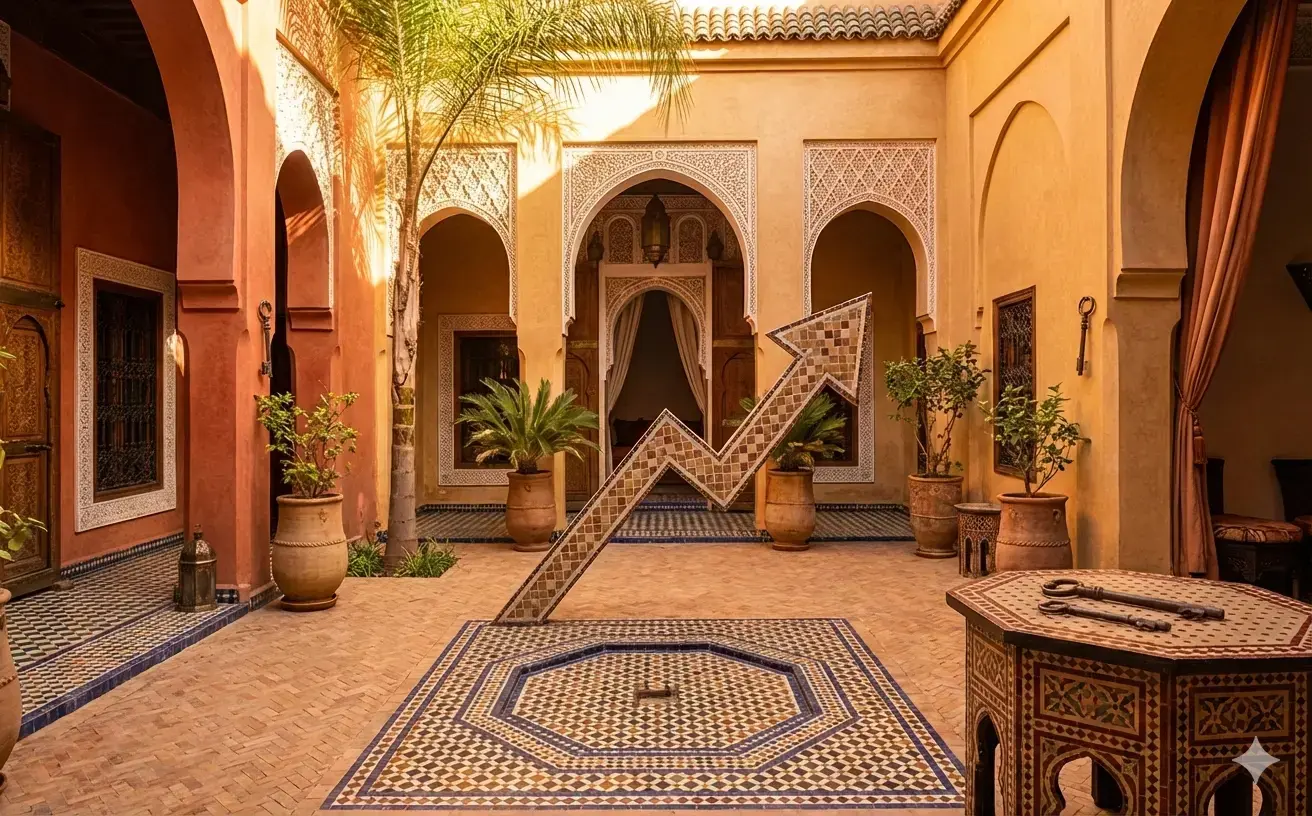
buying property in Marrakech riad investment guide 2026
Unsplash.com — search “Marrakech riad courtyard luxury”
Table of Contents
- Why Buying Property in Marrakech Makes Sense in 2026
- Best Neighborhoods for Buying Property in Marrakech
- Types of Property Available in Marrakech
- Property Prices in Marrakech 2026
- Legal Process for Buying Property in Marrakech
- Buying Property in Marrakech as a Foreigner
- Financing Your Marrakech Property Investment
- Rental Yields and Return on Investment
- Common Mistakes to Avoid
- Useful Resources
Introduction
Buying property in Marrakech has become one of the most compelling real estate opportunities in the entire Mediterranean and North African region. The Red City draws millions of visitors every year, offers a warm climate, a rich cultural environment, and a property market that continues to deliver strong returns for both domestic and international investors.
In 2026, the Marrakech property market is energized by Morocco’s preparations for the 2030 FIFA World Cup, ongoing infrastructure investment, and a sustained boom in high-end tourism that shows no sign of slowing. Whether you are looking for a traditional riad to restore and rent, a modern villa for personal use, or a commercial property in one of the city’s fastest-growing districts, this guide covers everything you need to know about buying property in Marrakech with confidence.
Morocco is also one of the few countries in the Arab world that actively welcomes foreign property ownership, making the process more straightforward than many first-time investors expect. Before beginning your property search, it is worth understanding the broader Moroccan travel and tourism context that drives rental demand — read our complete guide to things to do in Morocco to understand why visitors keep returning and what drives occupancy rates for investment properties.
Why Buying Property in Marrakech Makes Sense in 2026 #why
Buying property in Marrakech in 2026 is backed by some of the strongest fundamentals the market has seen in a decade. Here is why serious investors and lifestyle buyers are paying close attention:
Tourism growth is structural, not cyclical. Morocco welcomed over 17 million international visitors in 2024, a record figure, and projections for 2026 and beyond are even more optimistic given World Cup preparation. More tourists means more demand for short-term rental accommodation — directly benefiting property investors.
The Moroccan Dirham is stable. Morocco’s currency has remained one of the most stable in Africa and the Middle East for over a decade, reducing exchange rate risk for foreign investors converting from euros, dollars, or sterling.
Property prices remain accessible. Compared to comparable lifestyle destinations — Lisbon, Bali, the South of France — Marrakech property prices are still remarkably affordable, particularly in the medina and emerging outer districts.
Infrastructure investment is transforming the city. New tram lines, road upgrades, airport expansion, and luxury hotel development are all raising property values in districts that were considered secondary just five years ago.
Lifestyle demand from European buyers is growing. Marrakech is now firmly established as a lifestyle destination for French, Spanish, British, and Belgian buyers seeking sun, culture, and value within three hours of major European airports.
For context on how Morocco’s tourism infrastructure affects property investment potential, see our Morocco Travel Cost and Budget Guide — understanding what visitors spend helps investors gauge rental pricing and occupancy expectations.
buying property in Marrakech investment neighborhood medina riad rooftop view
Unsplash.com — search “Marrakech rooftop view medina skyline”
Best Neighborhoods for Buying Property in Marrakech {#neighborhoods}
One of the most important decisions when buying property in Marrakech is choosing the right neighborhood. Each district offers a completely different price point, lifestyle, and investment profile.
The Medina — Historic Heart and Riad Country
The Medina is the most iconic and most sought-after location for buying property in Marrakech, particularly for those seeking traditional riads. A riad is a traditional Moroccan townhouse built around a central courtyard, typically featuring ornate tilework, plasterwork, and fountains. Restored riads in the Medina command the highest per-square-metre prices in the city and generate the strongest short-term rental yields thanks to their proximity to Djemaa el-Fna, the souks, and the city’s major cultural sites.
The Medina is divided into several distinct sub-neighborhoods. The area around Bab Doukkala and the northern Medina tends to offer better value than the tourist-heavy southern districts near Djemaa el-Fna. Properties here require more renovation but deliver stronger returns once restored.
Average riad price: 1,500,000–6,000,000 MAD ($150,000–$600,000) depending on size, condition, and location within the Medina.
Palmeraie — Luxury Villas and Resort Living
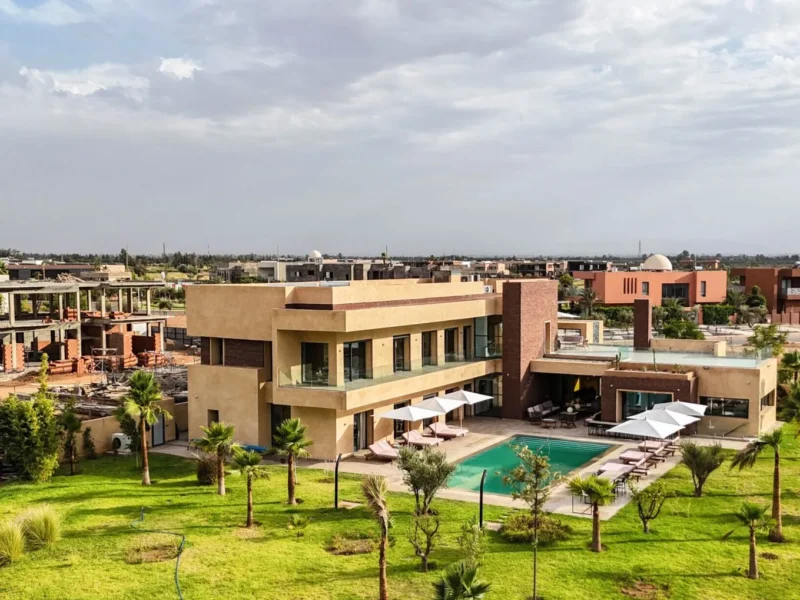
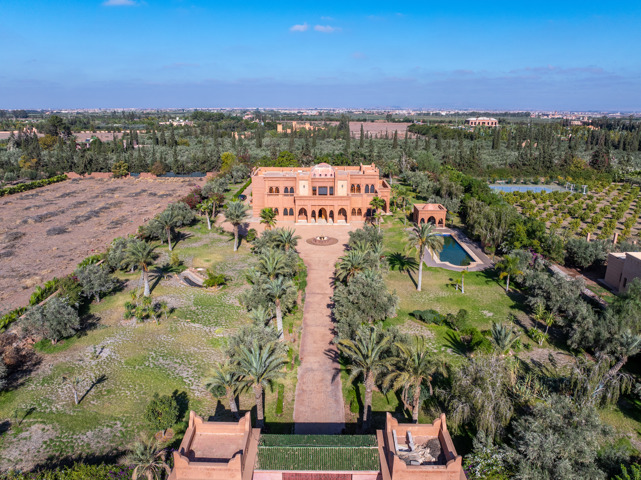
The Palmeraie is Marrakech’s premier luxury district, a vast palm grove to the northeast of the city that has been developed over the past three decades into Morocco’s most exclusive residential address. Buying property in Marrakech’s Palmeraie means large private villas, gated communities, golf courses, and five-star resort amenities. This is where international celebrities, wealthy Moroccan families, and high-net-worth European buyers invest.
Properties in the Palmeraie are not accessible on a budget — entry-level villas start from 5,000,000 MAD ($500,000) and premium properties exceed 30,000,000 MAD ($3,000,000). However, rental yields from luxury villa lettings are strong, particularly during peak tourist seasons.
Average villa price: 5,000,000–30,000,000+ MAD ($500,000–$3,000,000+)
Hivernage — Modern Apartments and City Convenience
Hivernage is Marrakech’s smartest modern district, located immediately west of the Medina walls. Tree-lined boulevards, five-star international hotels, upscale restaurants, and a relaxed residential atmosphere make Hivernage popular with both lifestyle buyers and investors seeking modern apartment properties.
Buying property in Marrakech’s Hivernage district offers the best of both worlds — walking distance to the Medina and all its cultural attractions, combined with modern building standards, secure parking, and contemporary amenities. Apartments here range from 800,000–3,000,000 MAD ($80,000–$300,000) and are particularly popular with French and Belgian buyers.
Guéliz — The New City
Guéliz is Marrakech’s French-built new city, home to the city’s best restaurants, international schools, modern supermarkets, and professional services. Property prices in Guéliz are lower than Hivernage or the Medina, making it attractive for buyers prioritizing budget. Modern apartments cost 600,000–2,000,000 MAD ($60,000–$200,000). Guéliz is the neighborhood of choice for long-term residential buyers and expat families rather than short-term rental investors.
Agdal and Semlalia — Emerging Value Districts
Agdal and Semlalia are rapidly developing southern districts offering the best value per square metre of any area currently worth considering when buying property in Marrakech. New apartment complexes, improving infrastructure, and proximity to the railway station make these neighborhoods increasingly attractive for buy-to-let investors targeting the long-term residential market.
Types of Property Available in Marrakech #types
Understanding the property types available is essential when buying property in Marrakech. The market offers several distinct categories:
Riads are traditional courtyard houses found exclusively within the Medina. They range from small two-bedroom properties to sprawling multi-suite guesthouses. Most available riads require restoration work, which adds cost but also creative opportunity.
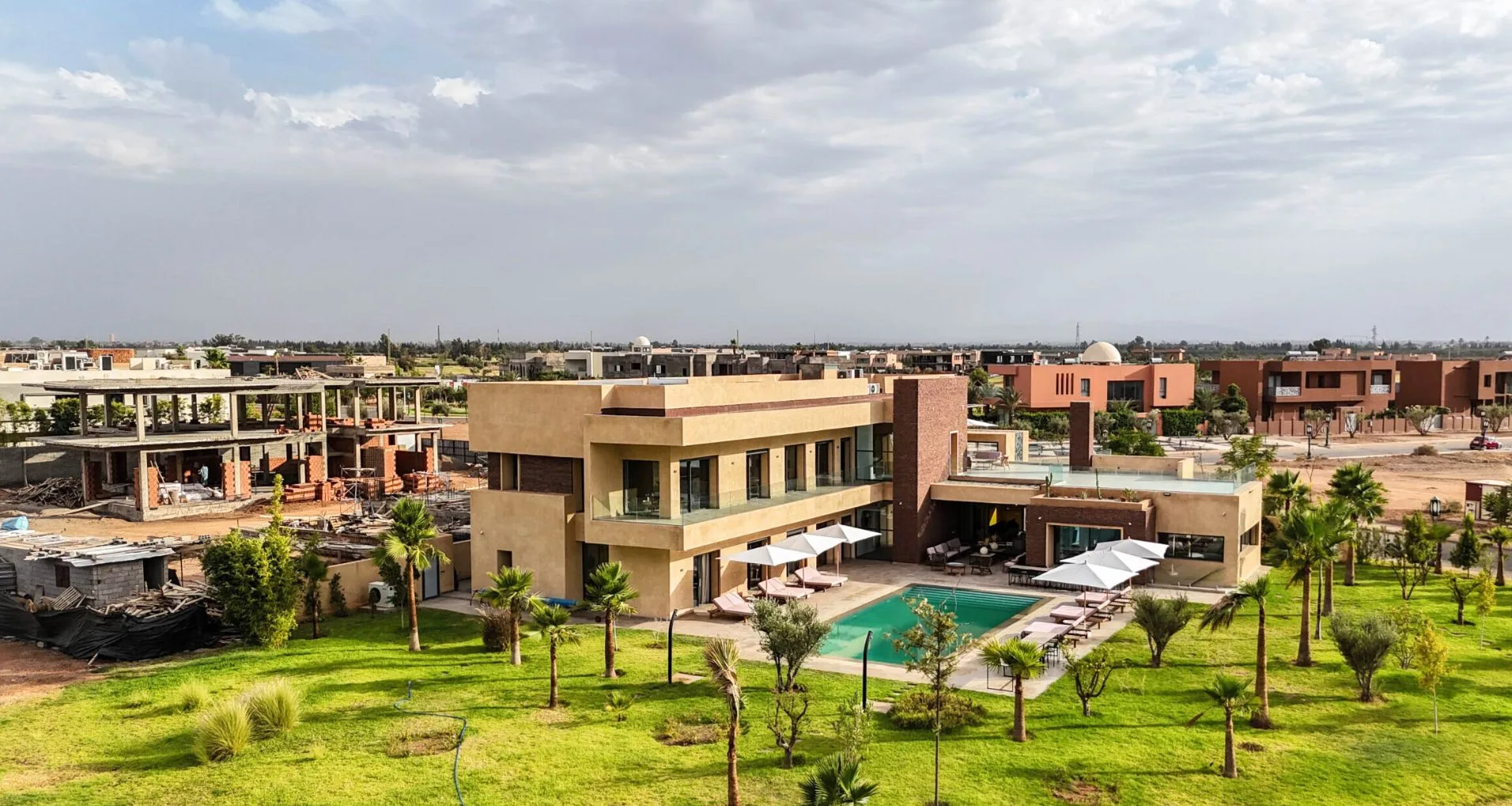
Villas are large detached properties found primarily in the Palmeraie, Route de Fès, and Route d’Ourika. They typically feature private pools, gardens, and staff quarters. Villas dominate the luxury and ultra-luxury segments of the market.
Apartments are modern units found in Guéliz, Hivernage, Agdal, and new development zones on the city’s periphery. They represent the most accessible entry point for buying property in Marrakech and offer the simplest purchase and management process.
Commercial Properties — including guesthouses (maisons d’hôtes), restaurants, and retail units — are available throughout the city and offer higher potential returns alongside greater operational complexity.
buying property in Marrakech types riad villa apartment Palmeraie Medina
Source: Unsplash.com — search “Marrakech villa pool luxury Morocco”
Property Prices in Marrakech 2026 {#prices}
Property prices in Marrakech vary dramatically by neighborhood, property type, and condition. Here is a realistic 2026 price guide for buyers researching buying property in Marrakech:
Medina Riads (unrenovated): 500,000–1,500,000 MAD ($50,000–$150,000) Medina Riads (fully restored): 1,500,000–6,000,000 MAD ($150,000–$600,000) Palmeraie Villas: 5,000,000–30,000,000+ MAD ($500,000–$3,000,000+) Hivernage Apartments: 800,000–3,000,000 MAD ($80,000–$300,000) Guéliz Apartments: 600,000–2,000,000 MAD ($60,000–$200,000) Agdal/Semlalia Apartments: 400,000–1,200,000 MAD ($40,000–$120,000)
Renovation costs for a Medina riad typically add 500,000–2,000,000 MAD ($50,000–$200,000) depending on scope and quality of finish. Always factor renovation budgets into your total investment calculation when buying property in Marrakech’s Medina.
Property prices in Marrakech have appreciated at an average of 5–8% per year over the past five years in prime locations. The World Cup effect is expected to push this higher in 2026–2030, particularly in the Medina and Palmeraie.
Legal Process for Buying Property in Marrakech #legal
Understanding the legal process is one of the most critical aspects of buying property in Marrakech safely and successfully. Morocco has a well-established property law framework that protects both domestic and foreign buyers, but navigating it correctly requires professional guidance.
Step 1 — Find a Licensed Real Estate Agent
Always work with a licensed Moroccan real estate agent (agent immobilier agréé). Reputable agencies operating in Marrakech include Savills Morocco, Engel & Völkers Marrakech, and numerous established local agencies. Be cautious of unlicensed intermediaries who approach tourists or foreign buyers with off-market deals.
Step 2 — Conduct Due Diligence
Before signing anything, your notary (notaire) must verify the property’s title deed (titre foncier) at the Conservation Foncière (land registry). This confirms the seller has clean legal title, no outstanding debts are secured against the property, and there are no planning or legal disputes attached to it. This step is non-negotiable.
Step 3 — Sign the Compromis de Vente
The compromis de vente is a preliminary sales agreement that commits both buyer and seller to the transaction. A deposit of 10–20% of the purchase price is typically paid at this stage. The compromis is legally binding — withdrawing after signing has financial consequences for both parties.
Step 4 — Transfer Funds via a Moroccan Bank Account
Foreign buyers must transfer purchase funds through a Moroccan bank account opened in their name. This creates the legal paper trail required to repatriate rental income and eventual sale proceeds out of Morocco — a critical step that many first-time foreign buyers overlook when buying property in Marrakech.
Step 5 — Sign the Acte de Vente
The final purchase deed (acte de vente) is signed before a notary, who registers the transfer of ownership at the Conservation Foncière. Notary fees are typically 1% of the purchase price. Registration fees are approximately 4% of the declared purchase value.
Total transaction costs (notary, registration, agent fees) typically amount to 6–10% of the purchase price when buying property in Marrakech.
Buying Property in Marrakech as a Foreigner #foreigners
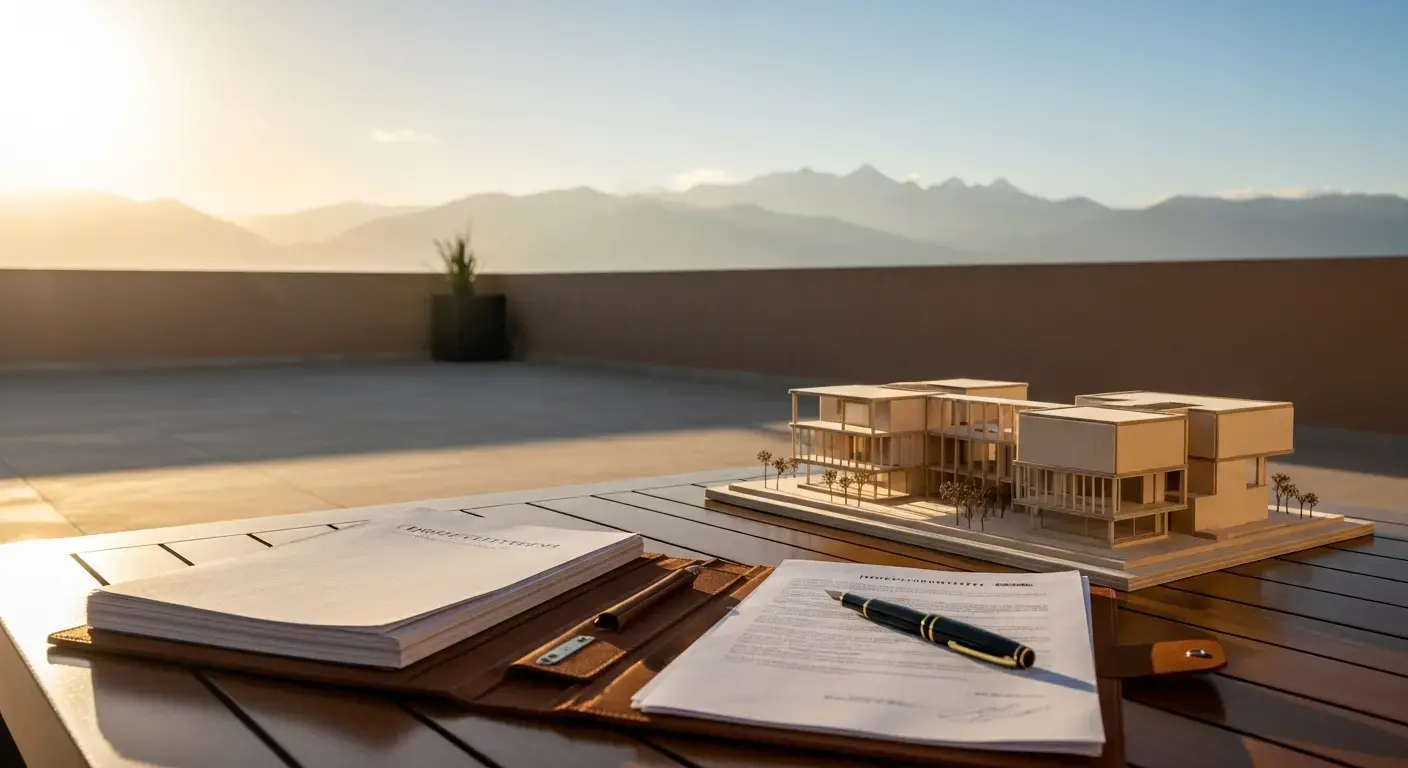
One of the most reassuring aspects of buying property in Marrakech for international investors is that Morocco actively welcomes foreign ownership. There are no restrictions on foreign nationals purchasing residential or commercial property in Morocco, with the exception of agricultural land.
Foreign buyers enjoy the same legal protections as Moroccan citizens and have the right to repatriate the full value of their investment — including rental income, sale proceeds, and capital gains — provided the original purchase was made through a Moroccan bank account using foreign currency transferred into Morocco.
European Union citizens, British nationals, Americans, and buyers from most other countries face no specific restrictions. Some nationalities may require additional documentation — always consult a Moroccan notary or property lawyer before proceeding.
For buyers who also plan to use their Marrakech property as a base for exploring the rest of Morocco, our Morocco road trip guide covers how to get the most from the country as a property owner and regular visitor — from the Sahara to the Atlantic coast.
buying property in Marrakech foreigners legal process notary investment guide
Source: Unsplash.com — search “Morocco real estate signing contract notary”
Financing Your Marrakech Property Investment #financing
Financing options for buying property in Marrakech depend significantly on whether you are a Moroccan resident, a non-resident foreigner, or a Moroccan national living abroad (MRE).
Moroccan residents have access to the full range of Moroccan bank mortgage products. Major lenders including Attijariwafa Bank, CIH Bank, Banque Populaire, and BMCE offer mortgage financing at rates of 4.5–6.5% over terms of 7–25 years. Loan-to-value ratios of up to 70–80% are available for primary residences.
Non-resident foreign buyers face more limited local financing options. Most international buyers purchasing property in Marrakech do so with cash or by leveraging equity from properties in their home country. Some Moroccan banks do offer mortgage products for non-residents, but criteria are strict and rates are higher.
MRE buyers (Moroccans resident abroad) receive favorable treatment from Moroccan banks, with dedicated mortgage products and streamlined application processes designed to facilitate property investment from the diaspora.
For all buyers, understanding the full cost of ownership — including property tax (taxe d’habitation), syndic fees for apartments, maintenance costs, and property management fees — is essential before committing to buying property in Marrakech.
Rental Yields and Return on Investment #roi
Rental income potential is one of the primary drivers of interest in buying property in Marrakech for international investors. The city’s year-round tourism, combined with a growing long-stay and digital nomad market, creates strong and diversified rental demand.
Short-term rental (Airbnb/Booking.com) is the highest-yielding strategy for Medina riads and Palmeraie villas. A well-restored 4-bedroom riad near Djemaa el-Fna can generate 800–1,500 MAD ($80–$150) per night in mid-season and 1,500–3,000 MAD ($150–$300) per night in peak season (April, October, Christmas/New Year). Annual occupancy rates of 60–75% are achievable with professional management, delivering gross yields of 8–12% on invested capital.
Long-term residential rental in Guéliz and Hivernage targets the expat and professional market. A modern 2-bedroom apartment in Guéliz rents for 5,000–9,000 MAD ($500–$900) per month, delivering gross yields of 5–7%.
Guesthouse operation — running a restored riad as a boutique maison d’hôtes — is the highest-potential but most operationally intensive strategy. Successful guesthouses in prime Medina locations generate 15–25% gross returns on investment but require full-time management, staff, and hospitality expertise.
Understanding Morocco’s tourism peak seasons is critical to maximizing rental income from your investment. For a detailed breakdown of when visitors come and what they spend, read our guide to the best time to visit Morocco — essential reading for any property investor modeling rental income projections.
Common Mistakes to Avoid When Buying Property in Marrakech #mistakes
Even well-prepared buyers make avoidable errors when buying property in Marrakech. Here are the most common pitfalls and how to sidestep them:
Not verifying the titre foncier. Some properties in the Medina are sold without a clean registered title. Never proceed without your notary confirming full title registration at the Conservation Foncière.
Underestimating renovation costs. Unrenovated riads look romantic but can hide structural problems, outdated plumbing, and electrical systems that need complete replacement. Always commission a structural survey before agreeing a price on a property requiring restoration.
Using unlicensed intermediaries. Informal property fixers are common around tourist areas of Marrakech. They typically inflate prices significantly and offer no legal protection. Always use a licensed agent and a qualified notary.
Skipping the Moroccan bank account step. Foreign buyers who pay cash directly without routing funds through a Moroccan bank account lose the legal right to repatriate their money when they eventually sell. This is a critical and irreversible mistake.
Buying without visiting in different seasons. A riad that feels magical in October may feel oppressively hot in August or unexpectedly damp in February. Visit your target neighborhood in more than one season before committing. Our guide to the best time to visit Morocco explains seasonal conditions across all Marrakech districts in detail.
Ignoring property management. If you are buying property in Marrakech as a non-resident investment, budget for professional property management from day one. Self-managing a rental property remotely from another country rarely ends well.
buying property in Marrakech mistakes to avoid riad renovation investment tips
Source: Unsplash.com — search “Marrakech riad renovation restoration Morocco”
Useful Resources #resources
Before proceeding with buying property in Marrakech, these authoritative external resources will support your research and due diligence:
External resource: Conservation Foncière — Morocco Land Registry — Verify property titles and ownership records officially.
External resource: Moroccan Ministry of Finance — Property Tax Information — Understand taxe d’habitation, taxe de services communaux, and capital gains tax obligations.
External resource: Savills Morocco — Marrakech Market Reports — Independent international property market analysis.
External resource: UK Foreign Office — Living in Morocco — Essential reading for British buyers on residency, legal rights, and financial regulations.
Conclusion: Is Buying Property in Marrakech Right for You?
Buying property in Marrakech in 2026 offers a rare combination of lifestyle appeal, cultural richness, strong rental demand, and still-accessible prices that few other destinations in the Mediterranean or North African region can match. The legal framework is transparent, foreign ownership is welcomed, and the city’s growth trajectory — underpinned by World Cup investment and structural tourism growth — provides genuine long-term confidence.
Whether you are drawn to a romantic riad in the Medina, a luxury villa in the Palmeraie, or a modern apartment in Guéliz, the key to a successful investment is preparation, professional guidance, and a clear understanding of your goals.
Begin your research thoroughly, visit the city across different seasons, work with licensed professionals, and allow yourself time to find the property that truly fits your vision. Marrakech rewards patient, well-prepared investors with returns — financial and personal — that far exceed expectations.
Have questions about buying property in Marrakech? Leave a comment below or explore our related guides to help you plan your Morocco investment journey — including our Morocco road trip guide, Morocco travel cost guide, best time to visit Morocco, and things to do in Morocco.
Comments